
How Daycare Centers Will Operate During Power and Heating Outages
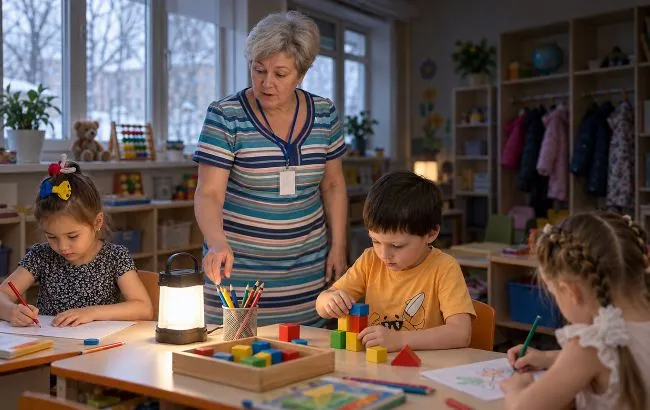
The Ministry of Education and Science has explained how kindergartens should operate during power, water, or heating outages. The mere fact that the power is out does not mean that a kindergarten must close immediately: it all depends on whether it is safe for children to remain there. If there is no heat, water, lighting, or the ability to feed the children properly, the facility may reduce its hours or temporarily stop accepting children.
The Ministry of Education and Science has prepared recommendations for preschools for the fall-winter period of 2026–2027. The document outlines how preschool institutions should respond during power outages, interruptions in water and heat supply, and other hazardous situations. The letter from the Ministry of Education and Science is dated September 18, 2026. The main principle is simple: the safety of children and staff must come first. Therefore, the decision on whether to continue operations, shorten the children’s stay, or temporarily suspend admissions altogether is made by the director of the specific kindergarten. They must assess the actual conditions at the facility and determine whether it is safe to keep children there.
When a Preschool Can Operate Even Without Power
A brief power outage does not in itself mean that children must be taken home immediately. If the preschool has sufficient natural or backup lighting, drinking water, functioning restrooms, a normal temperature, and the ability to provide meals, children can remain at the facility. At the same time, staff must continue to supervise the children as usual and have access to shelter.
Generators, battery systems, and other backup power sources may be used to maintain operations during a power outage. However, they must be operated in compliance with safety requirements. In other words, backup power alone does not solve the problem if, due to the outage, it is still impossible to ensure normal conditions for the children. The director must also verify that there is sufficient lighting in the building and that the necessary systems can be used safely. Special attention should be given to the operation of ventilation, the kitchen, and other systems essential for the children’s well-being at the preschool.
When the kindergarten’s operations are reduced or suspended
The situation changes if the power outage causes serious problems. For example, the building becomes too dark or cold, there is no water, or the ventilation or kitchen are not working. In this case, the director must reassess the conditions and decide whether the children can remain at the preschool. If safe conditions cannot be ensured, the facility may switch to a reduced schedule. This means that the children will spend less time at the preschool than usual.
Another option is to end the children’s stay early that day. If the problem is serious or may persist for a long time, the preschool may temporarily stop accepting children. If necessary, they may also be moved to another safe location within the facility. The Ministry of Education and Science specifically emphasizes that operating hours must be adjusted if even one of the critically important conditions cannot be met. These include safe facilities, proper supervision, access to shelter, water, sanitary conditions, safe food, a normal temperature, and adequate lighting.
What happens if there is no water at the preschool
A lack of water is a distinct problem, especially for a preschool. The director must verify whether there are sufficient supplies of drinking water and whether children can maintain a normal drinking regimen. It must also be possible to wash hands, use restrooms, clean the premises, and prepare food. Without these, the kindergarten’s normal operation may become impossible.
If normal sanitary conditions cannot be guaranteed or children cannot be fed safely without water, the facility’s operating schedule must be adjusted. In such a situation, the children’s stay may be shortened or ended early. In other words, simply bringing a few bottles of water is not enough if, due to an accident, it is impossible to adequately meet all the facility’s needs. The director must assess the entire situation holistically.
What happens if the heat goes out
The Ministry of Education and Science’s recommendations specifically address heating. The kindergarten must maintain a safe temperature for the children, so the director must monitor the situation after the heat supply is cut off. If the heating is out for a short time and the temperature inside remains safe, operations can continue. However, if the rooms cool down quickly and it is impossible to maintain normal conditions, children should not remain there for the entire day.
In that case, the preschool may shorten the children’s stay or end the day early. In the event of a prolonged problem, the facility may temporarily suspend accepting children. In other words, in winter, what matters is not the fact that the heat is turned off, but how cold it gets inside the rooms and whether it is safe to care for the children.
What operating options are available?
The Ministry of Education and Science has outlined several scenarios depending on the situation. A preschool can operate as usual if all necessary conditions are met. If conditions have deteriorated but remain acceptable, the facility may shorten the children’s stay. If necessary, the day may be ended early or the admission of new children may be temporarily suspended.
Children may also be moved to another safe area within the kindergarten. And if an immediate threat arises, the facility must organize shelter or evacuation in accordance with the approved protocol. For parents, this means that decisions may vary even between two kindergartens in the same city. It all depends on whether a specific facility has a generator, a water supply, a functioning heating system, a shelter, and other necessary conditions.
What Parents Should Do During an Air Raid Alert
If an “Air Raid Alert” signal sounds, children and staff must proceed to a shelter via a designated route. Staff will organize the movement, take roll call, and supervise the children until the danger has passed. Special attention should be paid to the needs of each child. If the alarm catches parents with their child on the way to the preschool, the first priority is to ensure safety and proceed to the nearest available shelter. If the kindergarten’s shelter is the nearest available shelter, parents may enter it on their own with their child and hand the child over to a staff member in charge.
Important note: Daycare staff must not leave the shelter during an alert to meet parents. They remain with the children and continue to supervise them until the danger has passed. If a dangerous situation arises right when children are being dropped off, the preschool may suspend drop-off if continuing it poses a threat. Children who are already at the facility remain under the supervision of staff.
What happens if parents can’t pick up their child in time
If the daycare center has announced an early closure, parents may be asked to pick up their child earlier. But if a mom or dad cannot arrive immediately, the child will not be left alone. Until they are picked up, they remain under the supervision of the facility’s staff. Children are not allowed to leave the daycare on their own.
Therefore, it is important for parents to stay informed about updates from their child’s preschool. The preschool must notify parents of changes to its operating schedule through designated communication channels—by phone, in parent chat groups, via email, on the website, or by any other available means.
What Parents Should Know Right Now
In fact, the Ministry of Education and Science does not establish a rule whereby every power outage automatically means the kindergarten must close. On the contrary, the facility may continue to operate if it is able to provide children with normal and safe conditions. However, if several essential services are simultaneously unavailable—for example, there is no electricity, water, or heating; the kitchen is not operating; or sanitary conditions cannot be maintained—the preschool must adjust its operating schedule.
The Ministry of Education and Science advises administrators to prepare for such situations in advance and to check backup power sources, water supplies, shelters, and communication protocols with parents. For parents, the most important thing is to know exactly where the kindergarten will post urgent announcements and under what circumstances they will be asked to pick up their child early. Thus, during the winter, a kindergarten’s operations will depend not on the power outage itself, but on whether the facility can, at any given moment, provide children with heat, water, electricity, food, safety, and proper care. This information comes from a letter from the Ministry of Education and Science regarding the operation of educational institutions during the fall and winter of 2026–2027.




