
Mushroom Hunter's Calendar for August 3–9, 2026: Where to Find Porcini, Chanterelles, and Butter Mushrooms
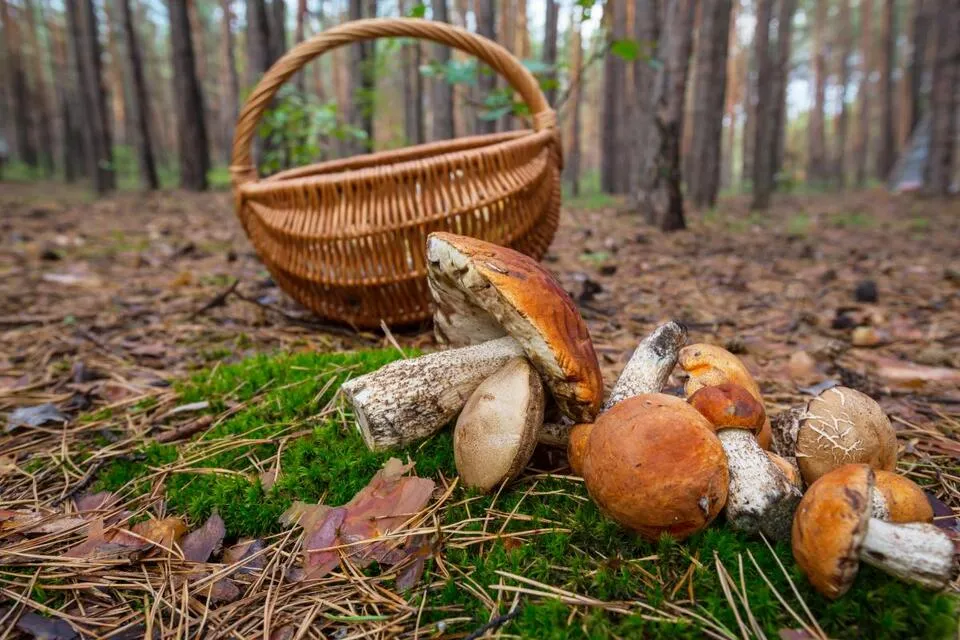
August is one of the most beloved months for fans of “quiet hunting.” During this period, the forest is at the transition between the summer and fall mushroom harvests. The cool nights, abundant morning dew, and August thunderstorms create ideal conditions for the mass growth of the most prized species—from porcini mushrooms to chanterelles and boletes.
Features of the August harvest
Where to Look: In early August, mushrooms migrate depending on humidity. In dry weather, search in low-lying areas, ravines, moss, and near marshes. After heavy rains, mycelium becomes active on sun-warmed forest edges, along forest trails, in clearings, and in young plantings.
Worm damage: Since it’s still warm outside, insects are very active. Even small and sturdy-looking mushrooms may be riddled with pests. Pick young specimens first and inspect them right there in the forest.
Best time to forage: It’s best to head into the forest at dawn (between 6:00 and 7:00 a.m.). First, the sun’s rays at that angle illuminate the caps well among the grass; second, you’ll beat other mushroom hunters to the spot and gather the freshest harvest.
August 3–4: Searching for the “king of the forest”—porcini and oak mushrooms
Outlook: The beginning of the week is a great time to explore mature forests where sufficient moisture has accumulated.
Top finds: Porcini (white mushrooms), oak mushrooms, and birch mushrooms.
Where to look:
Old oak and hornbeam groves: Look for the net-like cap of the white boletus and oak boletes.
Old pine forests with a moss cover: This is where the first sturdy boletus mushrooms appear.
Forest edges and clearings: Places where the soil warms up well in the sun.
August 5–6: The perfect time to harvest chanterelles and butter mushrooms for frying and pickling
Outlook: After localized August rains, species that grow in large clusters become more active.
Top finds: Chanterelles, larch butter mushrooms, late butter mushrooms, and moss mushrooms.
Where to look:
Young pine and spruce plantations: Butter mushrooms appear in abundance here. Pick them before the caps exceed the size of a three-kopeck coin—these are the tastiest when marinated.
Mixed forests (birch, pine, oak): Look for golden patches of chanterelles in the moss and fallen leaves. Chanterelles are almost never worm-eaten and handle transport very well.
August 7–8: Hunting for honey mushrooms and russula mushrooms
Outlook: By the end of the week, a second wave of red-capped boletes and colorful russulas will be appearing in mixed and deciduous forests.
Top finds: Red-capped boletes, russulas (green, edible, wavy), and birch boletes.
Where to look:
Aspen groves and birch stands: The bright red-orange caps of red-capped boletes are visible from a distance. They prefer to grow near the roots of young trees and in damp grass.
Moist, mossy lowlands: Dense clusters of milk caps appear here in large numbers. Pick specimens with cap edges curled inward—they’re less likely to crumble in your basket.
August 9: Summer honey mushrooms and preparing mushrooms for winter
Outlook: A good day to explore old clearings, fallen trees, and stumps.
Top finds: Summer honey mushrooms, oyster mushrooms, and wild button mushrooms.
Where to look:
Stumps and rotten trunks of deciduous trees (birch, alder, oak): Honey mushrooms grow in large clusters. If you come across a good stump, you can fill an entire basket right away.
Preparation: The harvest gathered on this day is ideal for drying (white mushrooms, honey mushrooms) or for freezing and pickling.
Secrets and Professional Tips for Mushroom Hunters
The Right Gear: Bring a woven willow basket with you, not plastic buckets or bags. In plastic bags, mushrooms “sweat,” get crushed, and spoil quickly before you even get home. Use a small, sharp knife to cut them off, and immediately dust the cut surface with soil or leaf mold to prevent introducing infection into the mycelium.
The most important safety rule: Check every mushroom! If you’re even 1% unsure about a species—don’t pick it and don’t put it in the shared basket. Beware of the pale toadstool (which inexperienced mushroom pickers confuse with the green russula or the field mushroom) and the bitter bolete (which is often mistaken for the white bolete or the birch bolete).
Initial processing: August mushrooms don’t keep well. You should begin processing your harvest (sorting, cleaning, boiling, or drying) within 4–6 hours of returning from the forest. Be sure to remove the sticky skin from the caps of butter mushrooms, and do not rinse white mushrooms with water before drying—just wipe them with a dry cloth or brush.
See also:
Lunar Planting Calendar for August 2026: When to Sow and Harvest
Winemaker’s Calendar for August 2026: What to Do and Which Fruits to Use for Wine
Fisherman’s Calendar for August 2026: Night Fishing Times and Changes in Fish Behavior


