
Callas Announced New Sanctions Against Russia
The European Union is preparing a new package of sanctions against Russia over its war against Ukraine. The plan is to add up to 1,600 people to the list, with the main focus aimed at the Russian military-industrial complex and those who help circumvent the restrictions.
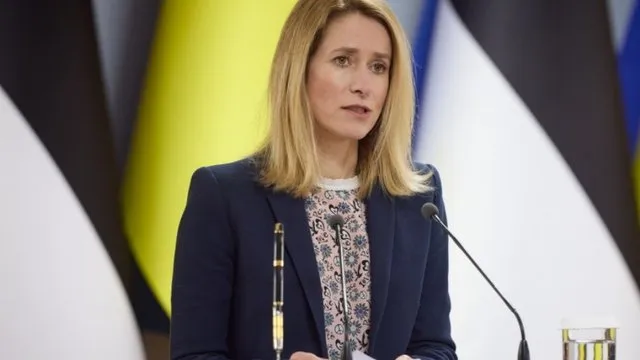
The European Union is preparing new sanctions against Russia. This was announced by the EU’s High Representative for Foreign Affairs and Security Policy, Kaja Kallas, following an informal meeting of EU foreign ministers in Druids Glen, Ireland.
According to her, the new sanctions list could include up to 1,600 individuals. This primarily concerns individuals linked to the Russian military-industrial complex. In other words, the EU aims to increase pressure not only on the Russian state as a whole but also directly on those who help Russia produce weapons and continue the war against Ukraine.
The new list will include up to 1,600 people
Kallas reported that work on the new restrictions is already underway. The upcoming package is intended to be another step in the sanctions campaign against Russia. “Up to 1,600 individuals will be added to the new list, and it is aimed at the Russian military-industrial complex,” Kallas said. People associated with Russia’s defense production, military enterprises, and other entities that help Moscow maintain its military capabilities may be subject to EU sanctions.
Such restrictions typically involve the freezing of assets in EU countries and a ban on entry into EU member states. Other financial and economic restrictions may also apply to certain individuals. The new list is intended to supplement the sanctions already in place against Russia. The European Union has been gradually expanding these sanctions since the start of the full-scale invasion in 2022.
The EU wants to block attempts to circumvent sanctions
A separate challenge for Europe remains the fact that Russia continues to receive Western technology and components, despite the sanctions. Kaja Kallas stated that the EU must take a tougher stance against schemes designed to circumvent the restrictions. “At the same time, we must resolutely put an end to sanctions evasion,” she emphasized.
According to the EU High Representative, Ukraine has identified more than 5,500 Western and Asian components in Russian weapons. This means that even after the imposition of numerous sanctions, some parts manufactured outside Russia still end up in Russian military production.
Specifically, these include components that can be used to manufacture missiles, drones, communications systems, and other military equipment. That is why the EU wants not only to add new individuals to the sanctions lists but also to better control the flow of goods and technologies. “Ukraine has identified more than 5,500 Western and Asian components in Russian weapons. After four years of war, this is unacceptable. These components should not be there,” Kallas stated.
They want to make sanctions more effective
The problem of sanctions evasion remains one of the main issues for the European Union. Russia is looking for ways to obtain necessary goods through third countries and intermediaries. Some of these goods may first be shipped to countries that have not imposed the same restrictions, and from there on to Russia. It is through such schemes that the Russian defense-industrial complex continues to obtain foreign components.
The EU wants to tighten controls on such shipments. This involves not only new sanctions lists but also ensuring that existing restrictions are effectively enforced. “Together with the Commission, we are working on new proposals to strengthen the enforcement of sanctions,” Kallas said. In other words, Brussels plans to work on two fronts simultaneously: expanding sanctions against individuals and companies linked to the Russian military machine, and closing loopholes that allow existing restrictions to be circumvented.
Who Attended the Meeting
An informal meeting of EU foreign ministers took place in Druids Glen, Ireland. The Ukrainian foreign minister and representatives from Canada, Iceland, Norway, the United Kingdom, and Switzerland also joined the talks.
Participants discussed continued support for Ukraine, Russia’s war, and international pressure on Moscow. The inclusion of non-EU countries in the meeting shows that the issue of sanctions against Russia is being discussed beyond the European Union.
Why This Is Important for Ukraine
For Ukraine, the effectiveness of sanctions is directly linked to Russia’s ability to continue the war. If Russian companies can obtain foreign components without hindrance, they retain the ability to produce new weapons. Therefore, Kyiv constantly urges its partners to cut off supply channels for such goods to Russia.
Kallas’s statement indicates that this issue remains relevant for the European Union as well. The new sanctions could affect a large number of people—up to 1,600 individuals. At the same time, the EU wants to tighten controls on goods and technologies that could be used by the Russian military-industrial complex.
Thus, the European Union is preparing another round of sanctions against Russia. The main targets are expected to be individuals linked to the Russian military-industrial complex, as well as the channels through which Moscow obtains foreign components for its weapons.
The European Union’s foreign policy chief, Kaja Kallas, stated that the foiled drone attack near the Leipzig-Halle Airport bears all the hallmarks of state-sponsored terrorism. She made this statement after Germany blamed the Russian Federation—an aggressor state—for the incident, according to Politico Europe.


