
During the war, the Kyiv Metro lost half of its passengers
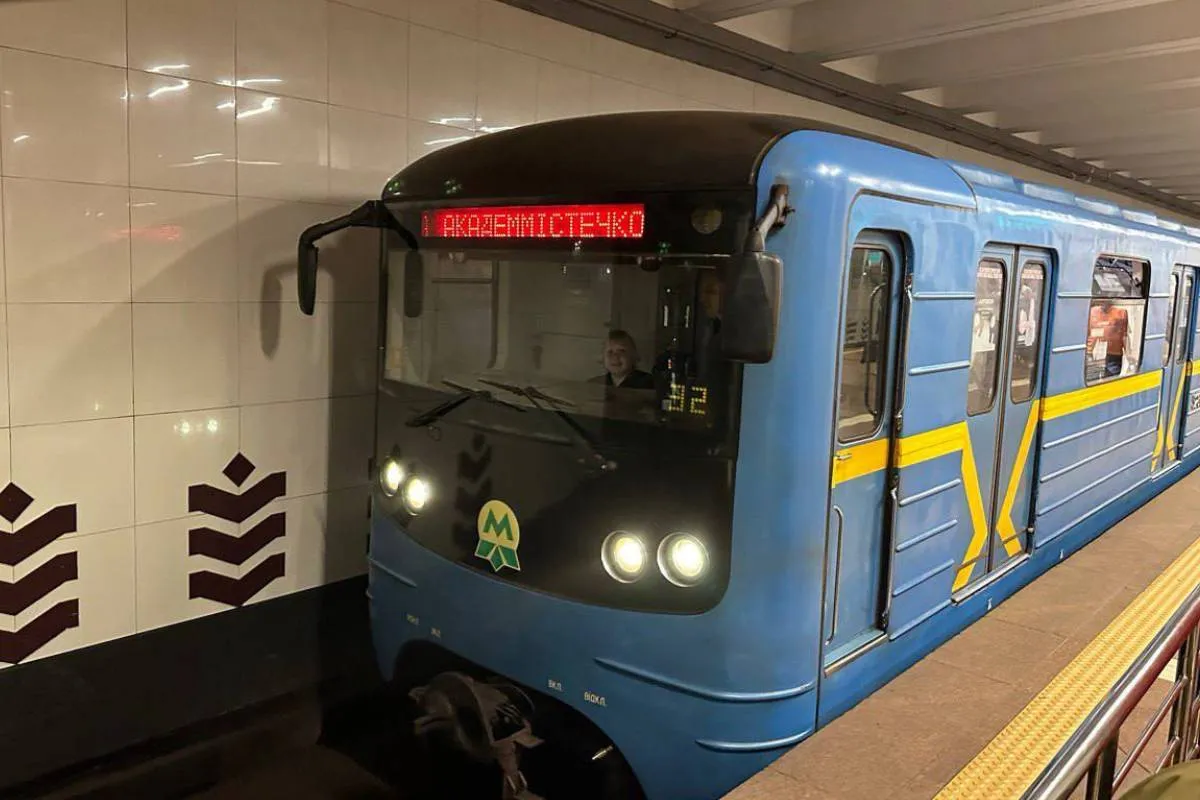
Passenger traffic on the Kyiv Metro has nearly halved over the past six years, which has directly led to a sharp rise in the cost of underground transportation in the capital.
This is stated in an analytical report by Glavkom.
Experts cite the consequences of the pandemic, the full-scale war, and a significant deterioration in the overall quality of public transportation as the main causes of the municipal enterprise’s financial crisis.
The decline in passenger volume appears critical for the utility’s finances.
In 2019, before the war, the capital’s metro carried 495.3 million passengers. In 2024, this figure fell to 241 million, and in 2025, it rose slightly to 249.1 million.
Despite this, experts estimate that Kyiv’s population has effectively returned to pre-war levels, and commuter traffic from the suburbs—Brovary, Vyshhorod, Boryspil, Obukhiv, and Fastiv—remains stable.
In other words, there are potential passengers in the city, but they are using the subway less and less frequently.
Experts emphasize that this trend directly impacts the metro’s finances, as a significant portion of expenses is fixed and does not depend on passenger numbers.
The situation has arisen where infrastructure maintenance costs remain consistently high, while revenue from ticket sales is constantly decreasing.
“A halving of passenger traffic effectively doubles the cost of transportation. If there were the same number of passengers now as in 2019, the cost of transporting one passenger, taking into account actual expenses, would be about 10 hryvnias,” explains urban planning expert Heorhii Mohylnyi.
According to him, city authorities are not doing enough to restore trust in the metro, instead responding with fare hikes.
“If people don’t trust the metro, we need to win them back first, rather than raising fares for those who remain,” he adds.
The first phase of the customer exodus was the COVID-19 pandemic in 2020–2021, when a portion of city residents switched en masse to alternative modes of transportation, and the habits formed at that time became firmly entrenched.
The second factor was the full-scale war that began in 2022: regular service interruptions during air raid alerts reduced the predictability of the metro, causing some passengers to stop using it for their daily commutes, explains transportation planning expert Dmytro Bespalov.
Lukyanivska Metro Station Resumes Operations After Russian Attack
Petition to rename the “Pochaina” metro station to “Banderivska” failed to gain enough votes


