
The Constitutional Court has ruled on payments to judges who have been mobilized
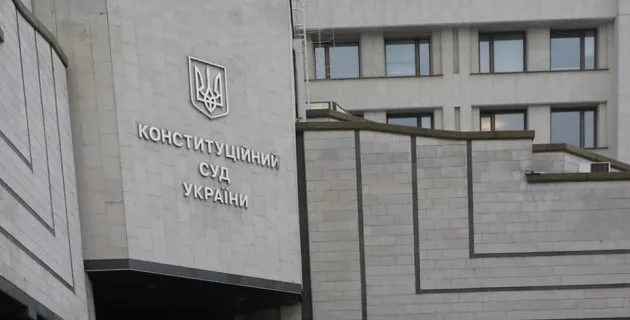
The Constitutional Court of Ukraine ruled that a judge’s mobilization for military service cannot serve as grounds for suspending the payment of his judicial compensation. Thus, performing military service does not deprive judges of their right to receive the corresponding payments.
The Second Senate of the Constitutional Court issued this ruling following its review of constitutional complaints filed by Grigory Sergeyevich Sivukhin and Taras Vasilyevich Andreychuk regarding the constitutionality of the third part of Article 119 of the Labor Code of Ukraine, which addresses guarantees of judicial compensation for judges who have temporarily acquired the status of military personnel.
“Having examined the issues raised in the constitutional complaints, the court found Part 3 of Article 119 of the Code to be constitutional, while establishing that its application by the courts as a basis for suspending the payment of judicial remuneration to judges called up for military service during mobilization was based on an interpretation that does not comply with the Constitution of Ukraine,” the statement reads.
As noted, the basis for the appeal to the Constitutional Court of Ukraine was the amendments to the third part of Article 119 of the Code, introduced by Law No. 2352–IX of July 1, 2022, which, effective July 19, 2022, abolished the guarantee of average earnings for employees called up for military service.
By applying this provision to judges who performed military service during mobilization, the appellate courts concluded that there were no grounds for paying them judicial compensation.
It is reported that the Constitutional Court, in considering the case, proceeded from the premise that a judge’s remuneration is both a subjective property right of the judge and an objective guarantee of the independence of the judiciary. It constitutes an inseparable element of a judge’s constitutional status and, by its legal nature, differs from an employee’s salary, the payment of which is regulated by labor law. The Court emphasized that guarantees of judicial independence are not personal privileges for judges but are intended to ensure everyone’s right to judicial protection by an independent and impartial court.
In its decision, the Constitutional Court noted that all issues related to determining the amount, conditions, and grounds for the payment of judicial remuneration—including its reduction, suspension, termination, or replacement with another form of payment—must be governed exclusively by the law on the judicial system. This constitutional requirement applies not only to the legislature but also to the courts: they may not derive grounds for the termination or reduction of judicial remuneration from other laws if such grounds are not established by the law on the judicial system.
The Court emphasized that, in the absence of a specific provision in the Law “On the Judicial System and the Status of Judges” of June 2, 2016, providing for the termination, suspension, reduction of judicial remuneration, or its replacement with another payment, the general rules governing its payment apply. The absence of such a provision cannot be interpreted as permission to suspend a constitutional guarantee.
The Decision emphasizes that a judge’s constitutional status is continuous throughout the entire period of his or her tenure. A judge’s conscription into military service during mobilization and temporary release from the administration of justice do not terminate his or her status as a judge or the constitutional guarantees associated with it.
Separately, the Constitutional Court drew attention to the relationship between labor law and legislation governing the judicial system. Provisions of labor law may apply to judges, but such application is supplementary in nature and may serve only to ensure the constitutional status of a judge. They cannot serve as a legal basis for restricting or terminating the guarantees that constitute elements of a judge’s constitutional status.
After analyzing the content of Part 3 of Article 119 of the Code, the Constitutional Court concluded that the removal in 2022 of the provision regarding the preservation of average earnings for mobilized employees could not have altered the legal regime governing judicial compensation. Since Law No. 1402 did not provide for the termination of such payments in connection with a judge’s call-up for military service during mobilization, there were no legal grounds for such termination.
The Constitutional Court of Ukraine noted that, in the applicants’ cases, the Sixth Administrative Court of Appeal had extended the application of Article 119(3) of the Code to matters concerning the payment of judicial remuneration, which the Constitution classifies as falling exclusively within the scope of the law on the judicial system. Such an interpretation contradicts the second part of Article 130 of the Constitution in conjunction with the first part of Article 126 thereof.
Following its review of the case, the Constitutional Court of Ukraine (CCU) ruled that Part 3 of Article 119 of the Code is constitutional in terms of its compliance with Part 2 of Article 130 of the Constitution.
At the same time, the Constitutional Court of Ukraine determined that this provision, as applied in the rulings of the Sixth Administrative Court of Appeal dated April 14, 2025, in the case of Hryhorii Syvukhin, and dated August 19, 2025, in the case of Taras Andreichuk, was interpreted in a manner inconsistent with the Constitution.
The decision of the Constitutional Court is binding, final, and not subject to appeal.
Oleksandr Vodyannikov served as the reporting judge in the case.
The full text of the decision will be published on the Constitutional Court’s website on November 5.
This was reported with reference to the Constitutional Court’s press service.
The Ministry of Defense has specified who is eligible for a deferment from mobilization in 2026.
Who is eligible for a deferment from mobilization in Ukraine starting November 1.
As a reminder, parents with multiple children in Ukraine are eligible for a deferment from mobilization, but this is not automatically guaranteed.
Meanwhile, the head of the National Police stated that law enforcement officers’ participation in mobilization activities is not their direct duty and has negative consequences. According to him, this practice affects the public’s perception of the police.




