
Archaeologists have discovered Roman burial sites containing unique artifacts in the Odesa region
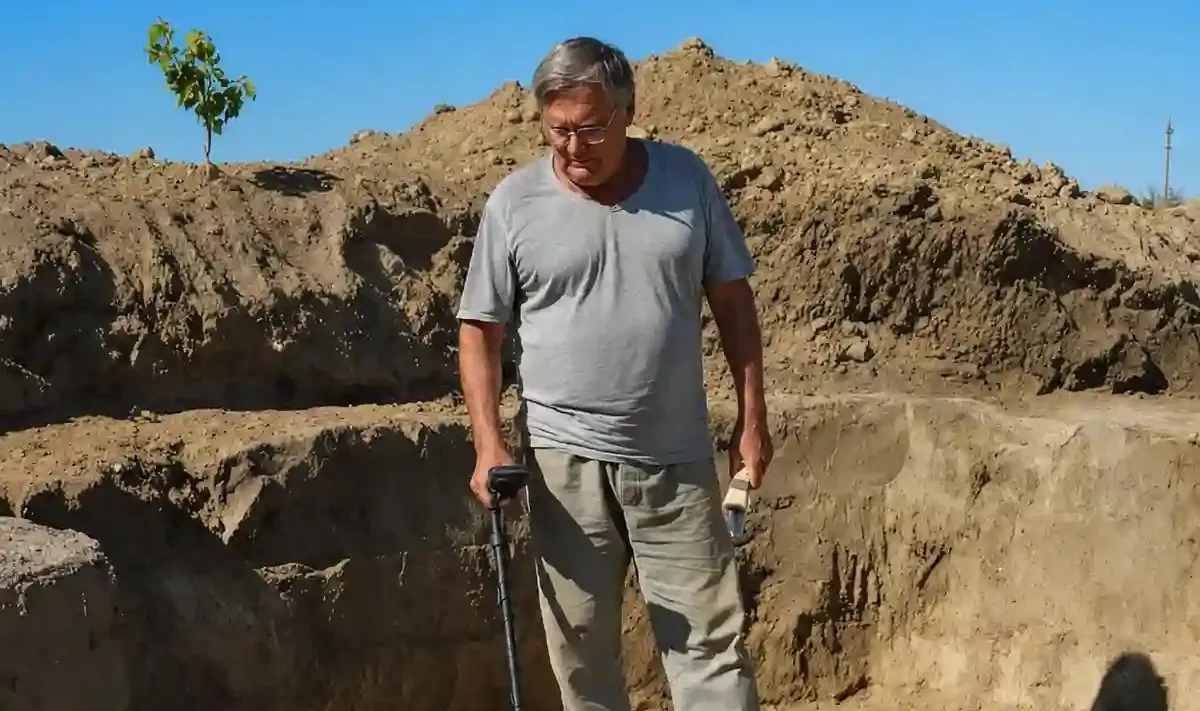
During excavations at the Kartal archaeological site near the village of Orlivka in the Odesa region, archaeologists discovered several Roman-era burials. Among the finds were a grave showing signs that the bones had been removed after death and a burial containing rare ceremonial horse tack.
Archaeological research is being conducted at the Kartal site near the village of Orlivka in the Izmail District of the Odesa region. This year, an expedition from the K. D. Ushynsky South Ukrainian National Pedagogical University was given the opportunity to explore an area that had long been inaccessible due to a vineyard.
“For a long time, the area under the vineyard was inaccessible to us, but this year the landowner was accommodating and allowed us to conduct an excavation. We hoped that here, at the ‘Kartal III’ site, we would find a continuation of the Early Iron Age burial ground. That’s exactly what happened—we found two characteristic burials,” said expedition leader Professor Ihor Bruyako.
According to him, archaeologists have already excavated 530 Early Iron Age burials. These are characterized by the burial of individuals on their right side with their heads facing south. At the same time, several Roman-era burials were discovered nearby this year, in which the deceased lay in an extended position with their heads oriented toward the north or northwest.
The researcher emphasized that there is a time gap of nearly a millennium between these two groups of burials. While the Early Iron Age burials date to the 8th century BCE, the Roman ones date to the 2nd–3rd centuries CE.
“This proximity of the burials is a coincidence. When the Romans came here and founded their fortress, they, of course, did not know what had been here before them and simply established their own necropolis,” explained Bruyako.
In the Roman graves, archaeologists found grave goods, including red-lacquered pottery, which was traditionally placed in burials. Researchers speculate that the vessels may have contained food or beverages, though this can only be confirmed after laboratory analysis.
The burial of a man laid to rest with his arms crossed over his chest attracted the most attention from the scientists. During the examination, it was discovered that the skeleton was missing the femur and one of the tibia bones of the right leg, while the foot remained in place.
“We cannot say that the man lost his leg during his lifetime—if that were the case, it would be completely missing. We can see that the foot is still in place. There are also no signs of interference by ‘black archaeologists.’ It is likely that the two bones were removed after death. I can speculate that this procedure was dictated by the status of the deceased—he was, as it were, ‘neutralized’ by having part of his leg removed,” the professor noted.
Another unusual find was a high-status burial from the Early Iron Age, where archaeologists discovered a ceremonial horse breastplate and metal elements of horse harness. The leather straps have not survived, but the metal parts make it possible to reconstruct the harness.
According to Igor Bruyak, in nearly three decades of working at the site, this is the first time he has encountered such a find.
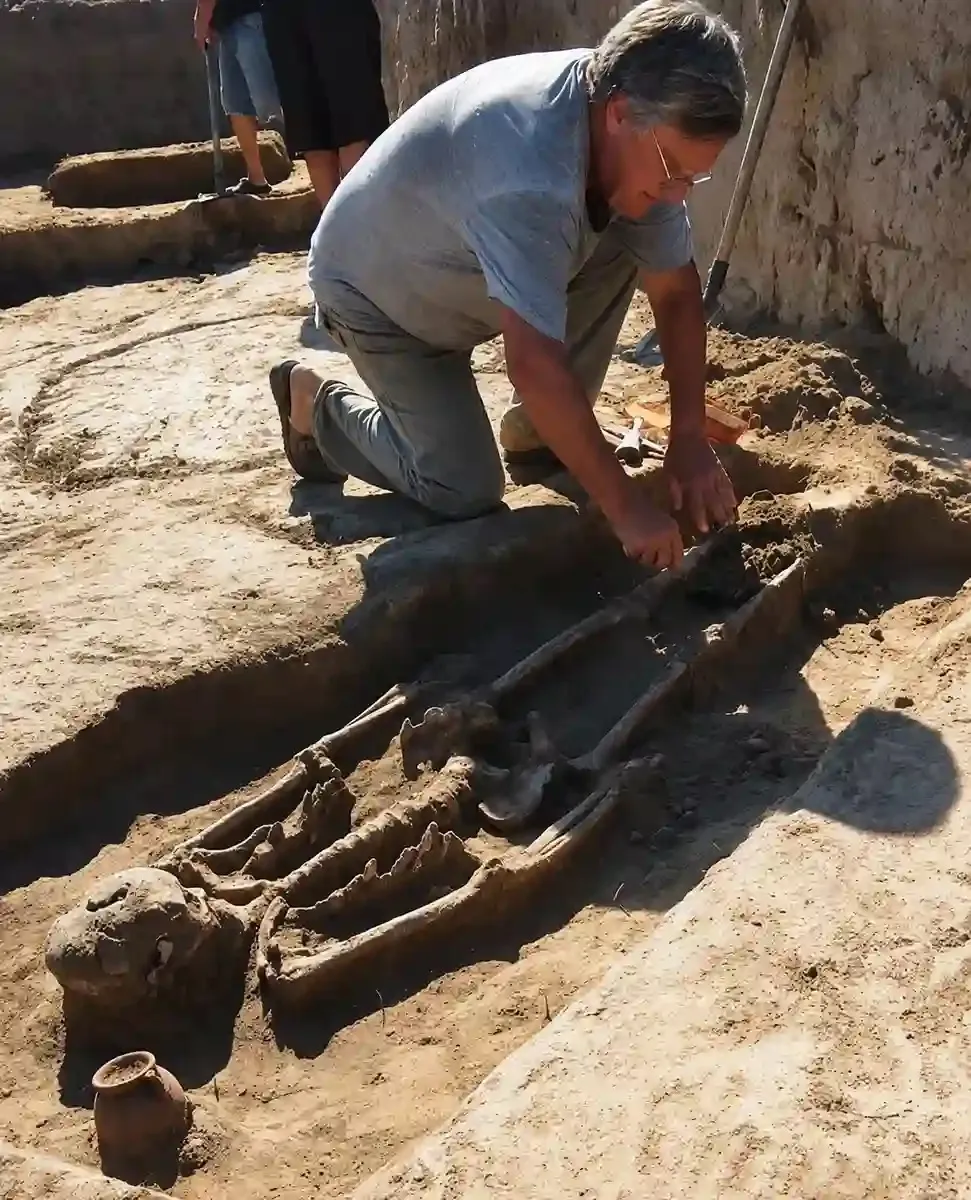
“I’ve been excavating this site for 27 years, but I’ve never once seen horse harness in a burial from the Cimmerian period. I can assume that the person buried here had a special status. While clearing the grave, I already spotted a long metal object, but I don’t know what it is yet,” said the archaeologist.
Research on the burial site is currently ongoing. Archaeologists believe that further excavations may yield new discoveries and help shed more light on the people who lived in what is now the Odesa region during the Early Iron Age and the Roman period.
Source: “Odessa Life”
Previously, archaeologists discovered that the kings of Urartu used bronze bowls for propaganda purposes.
As a reminder, gold jewelry dating back to before the Bronze Age Collapse was discovered in Cyprus.
Near Halych, archaeologists have discovered unique medieval artifacts.


