
Passenger traffic across Ukraine's border fell by 9.3%
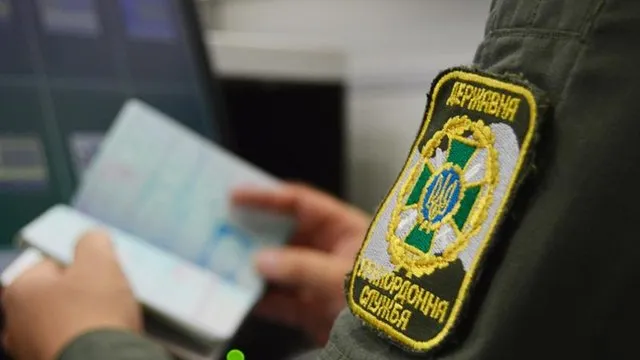
Since the start of the new school year, the number of crossings at Ukraine’s western border has dropped significantly. During the week of August 29 through September 4, passenger traffic decreased by 9.3% to 685,000 crossings.
Passenger traffic across Ukraine’s western border decreased by 9.3% at the start of the new school year. During the week from August 29 to September 4, 685,000 people crossed through border checkpoints. By comparison, 755,000 border crossings were recorded the week before. In other words, over the course of seven days, the total flow decreased by approximately 70,000.
Both the number of people leaving Ukraine and the number of those returning decreased. Outbound crossings totaled 344,000 for the week, compared to 364,000 the week before. The number of people entering the country fell even more sharply—to 341,000, compared to 391,000. Thus, the difference between the number of people leaving and entering this week was small—only about 3,000 border crossings in favor of those leaving.
When did people cross the border most frequently?
The highest number of people left Ukraine on Saturday. On that day, border guards recorded about 56,000 outbound crossings. Sunday was the busiest day for inbound travel—about 68,000 people crossed the border into Ukraine over the course of the day.
The fewest outbound crossings occurred on Tuesday—approximately 42,000. For inbound crossings, the lowest numbers were recorded on Tuesday and Thursday. On each of these days, there were about 39,000 border crossings. Following the start of the school year, this trend may be linked to changes in seasonal travel patterns. At the end of summer, many Ukrainians return home before school starts, and the number of trips abroad gradually decreases.
Fewer Cars Crossed the Border
It wasn’t just passenger traffic that decreased. The number of vehicles crossing the Ukrainian border this week fell to 137,000. A week earlier, the figure was 145,000.
The number of vehicles carrying humanitarian aid also decreased. Over the course of the week, 416 such vehicles passed through border crossing points, compared to 433 the previous week. At the same time, lines were still forming at some border crossing points.
Where vehicles were waiting
As of 12:00 p.m. on Sunday, the longest line for vehicles heading to Poland was at the “Ustyluh” border crossing—50 passenger cars were waiting there. There were about 20 cars at the “Ugryniv” checkpoint, and 10 cars and four buses at “Krakivtsi.” At the border with Slovakia in “Maly Berezno,” 20 cars were waiting. Another 30 or so cars had accumulated at the “Uzhhorod” checkpoint.
Among the border crossing points on the border with Hungary, the largest number of vehicles was at “Luzhanka”—40 cars. Twenty-five cars were waiting at “Tisa,” and 20 at “Kosyno.” There were 10 cars each at the “Dzvinkove” and “Vilok” checkpoints. On the Romanian side, 15 cars were waiting in line at the “Porubne” checkpoint. At the border with Moldova, there were no lines at that time.
How the situation has changed over the past year
This is not the first time passenger traffic has declined at the start of the school year. During the same week last year, the number of border crossings also decreased—by approximately 10%. But at that time, the total figure was slightly higher, at 692,000 crossings. At the same time, last year there was a noticeably greater difference between outbound and inbound traffic.
Outbound crossings outnumbered inbound ones by about 32,000. This year, the difference was only about 3,000. After that, last year the flow continued to decline. The following week, it fell by another 12.4%, and then remained at around 600,000 crossings for two weeks. In other words, the current decline in early September does not seem unusual. Similar seasonal trends have been observed before.
What’s Happening with Outbound and Return Travel
The overall picture in recent years is more complex than mere weekly fluctuations. After the full-scale war began in 2022, millions of Ukrainians left the country. In May of that year, the situation began to change: for a time, the number of people entering Ukraine exceeded the number of those leaving. But starting in late September 2022, outbound travel once again began to outnumber inbound travel.
In the following years, this difference fluctuated. According to the State Border Guard Service, during the second year of the full-scale war, the number of outbound border crossings exceeded the number of inbound crossings by 25,000. In the third year, the difference was already 187,000, and in the fourth year, 221,000.
Since the start of the fifth year of the full-scale war, the difference has been about 44,000 border crossings, 31,000 of which occurred since the beginning of summer. These figures do not mean that the same number of people have left Ukraine permanently. They specifically refer to the difference between border crossings, and a single person may cross the border multiple times.
What the National Bank Forecasts
The National Bank of Ukraine is also monitoring the migration situation and its impact on the economy. In its July inflation report, the NBU maintained its estimate of the net outflow of the population from Ukraine in 2025 at around 300,000 people. For comparison, in 2024 this figure was estimated at approximately 500,000.
Among the factors influencing migration, the National Bank cites the deterioration of the security situation at the end of last year and the relaxation of exit rules for young people. For 2026, the NBU forecasts a net outflow of about 200,000 people. At the same time, the National Bank expects the situation to begin changing starting in 2027. By then, it forecasts a net return of about 100,000 people. In 2028, according to the NBU’s forecast, this figure could rise to approximately 500,000 people.
How many Ukrainians are currently abroad
According to the Office of the United Nations High Commissioner for Refugees, as of June 30, 2026, there were approximately 5.159 million Ukrainian refugees in Europe. The total number of Ukrainian refugees worldwide was approximately 5.687 million. For comparison, at the end of April, there were about 5.213 million Ukrainian refugees in Europe, while the global total was approximately 5.687 million.
At the same time, a significant number of people were displaced within Ukraine. According to the latest UN data, in July 2026, there were approximately 3.80 million internally displaced persons in Ukraine. In January, there were about 3.70 million such people, and in July 2025, approximately 3.34 million.
This indicates that the migration of Ukrainians continues both abroad and within the country. Meanwhile, border statistics from early September show a short-term decline in activity. During the week of August 29 through September 4, 685,000 people crossed the western border—9.3% fewer than the previous week. At the same time, the difference between departures and arrivals remains small. This means that during this particular week, the flow of people across the border was significantly more balanced than a year ago. This is evidenced by daily statistics from the State Border Guard Service.




