
A petition against the new Civil Code gathered signatures in a single day
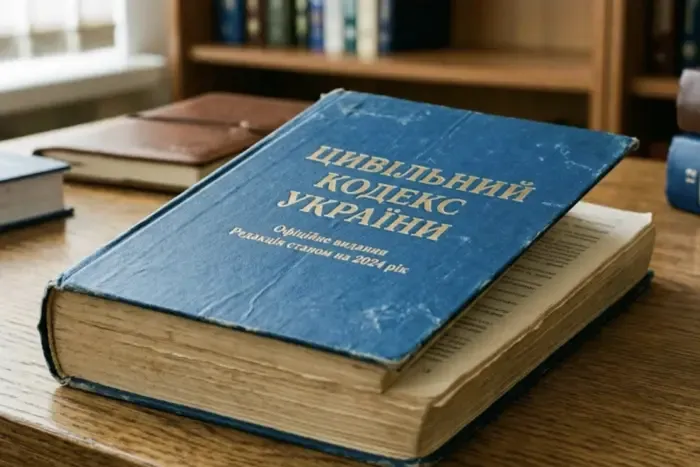
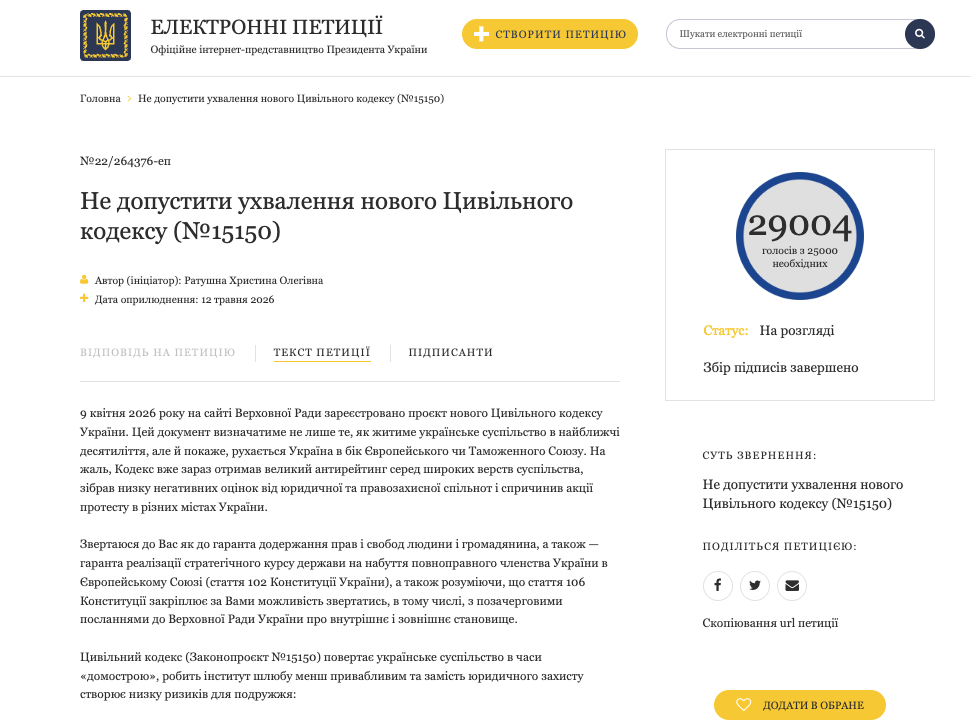
A petition opposing the revised Civil Code of Ukraine rapidly gathered the required number of signatures in less than a day and has already reached the stage of official consideration. The author of the petition demands that the bill be withdrawn from consideration or vetoed if it is ultimately adopted in its entirety. This is according to data from the Office of the President’s website.
As of May 13, the petition had been signed by 29,004 citizens, exceeding the required threshold of 25,000 votes. The initiator of the petition is Khrystyna Ratushna, who calls on the president to halt consideration of the bill and return it for revision with the involvement of human rights defenders, lawyers, and professional communities.
The author of the petition draws particular attention to the new term “good conduct,” which, she notes, is mentioned over 45 times in the bill and is defined as “generally accepted notions of proper behavior established in society.” In her view, this formulation is vague, leaves room for ambiguous interpretation, and may pose risks to legal certainty.
The petition also addresses the potential consequences for certain social groups, particularly the risks of discrimination and potential restrictions on military personnel’s access to digital services, electronic signatures, and government online services. Additionally, the provision regarding a “de facto family union”—defined in the draft as a union between a man and a woman—is criticized, as the author believes this contradicts some of Ukraine’s European integration commitments.
The petition also notes that certain provisions could pose risks to the management of state and natural property, including cultural heritage sites and nature reserves. The author asserts that some of the comments from experts and human rights organizations were not taken into account during the drafting of the document, and that there was virtually no broad public discussion.
The Verkhovna Rada supported in the first reading draft Civil Code No. 15150, which poses risks to transparency and freedom of speech. The document provides for an expanded “right to be forgotten,” allowing the removal of information about an individual if, in their opinion, it has “lost public interest.”
Stefanchuk explained the introduction of the term “good morals” in the Civil Code.
No one really needs the new Civil Code
The Civil Code needs to be revised; otherwise, there will be more misunderstandings


