
The Strawberry Moon will rise over the Earth: when can it be seen?
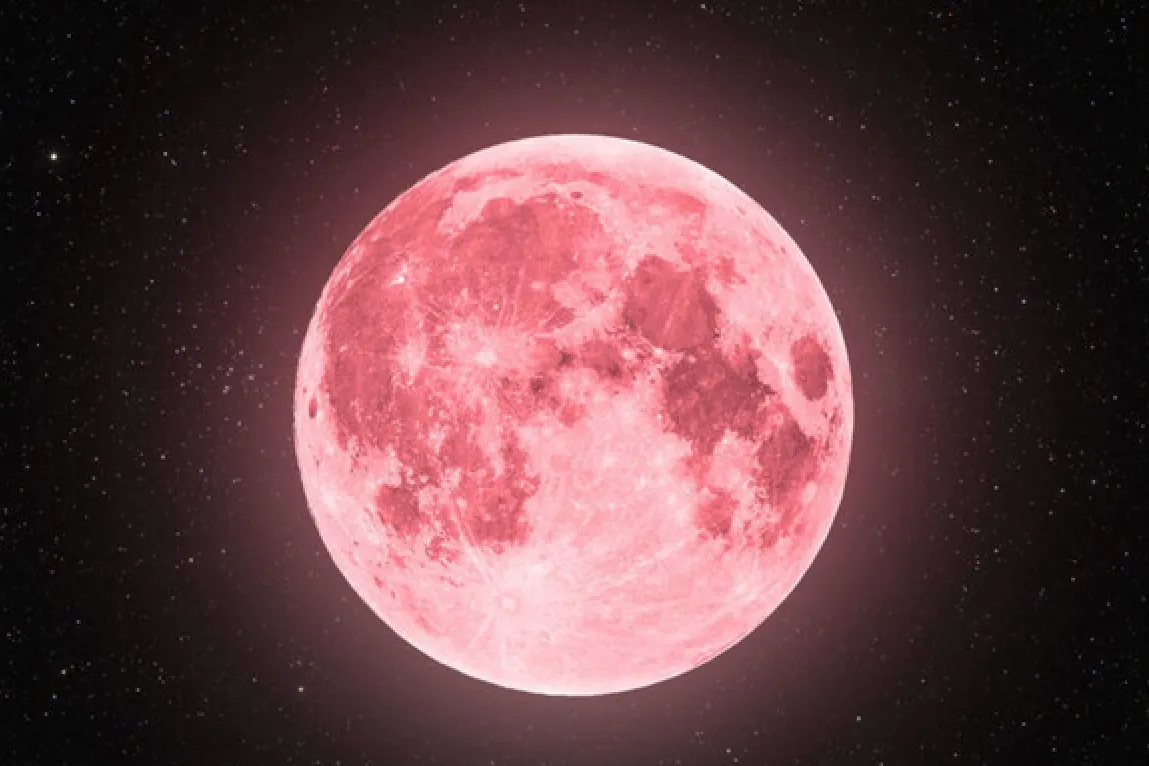
The upcoming full moon in June 2026 will be one of the smallest on record. Despite this, it may appear larger to observers due to an optical illusion. This astronomical phenomenon is known as the “Half-Moon” and will be visible during a specific period in June.
Forbes reports on this.
"The full 'Strawberry Moon' will be visible on the night of June 29, 2026. Astronomers call it special for several reasons: it will be the first full moon of summer in the Northern Hemisphere, one of the lowest above the horizon in the year, and the second smallest full moon of 2026," writes Forbes.
The Moon will reach its full phase on June 29 at 7:58 p.m. Eastern Time. The best time to observe it will not be at the peak of the full moon, but at moonrise in the evening, when it appears low above the southeastern horizon.
Astronomers explain that this full moon is a so-called “micromoon.” This occurs when the full moon happens near apogee—the point in the moon’s orbit where it is farthest from Earth. As a result, it appears about 12–14% smaller and dimmer than usual.
The name “Strawberry Moon” is not related to the Moon’s color. It comes from the traditional strawberry harvest season. In some cultures, the June full moon was also called the “Green Corn Moon,” the “Hot Moon,” or the “Ripe Berry Moon.”
Despite its status as a micro-moon, it may appear unnaturally large at moonrise. The reason is the so-called “moon illusion.” According to NASA, the human brain perceives the Moon as larger near the horizon due to the presence of buildings, trees, and other objects for scale comparison.
Another distinctive feature will be the full Moon’s very low position above the horizon. Due to its proximity to the summer solstice, the Moon will trace a low arc across the sky and may take on warm yellow or orange hues.
The next full moon after the “Honey Moon” is expected on July 29, 2026—it will be the so-called “Buck Moon.”
Previously, the Japanese probe Hayabusa-2 delivered organic compounds from the asteroid Ryugu. And NASA researchers have detected organic compounds, including sugar molecules, in samples brought back from the asteroid Bennu.
The Curiosity rover has identified more than 20 types of organic molecules, including a nitrogen-containing compound structurally similar to the building blocks of DNA.


