
The SBU detained a military officer suspected of working for the FSB
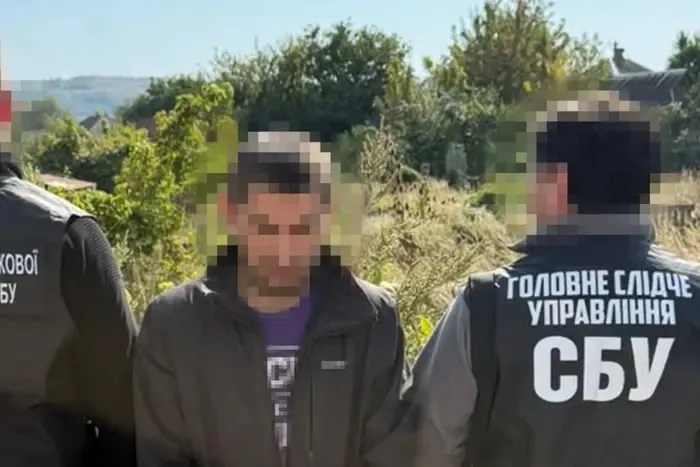
The SBU detained a servicemember suspected of passing information to Russia’s FSB about the positions of Ukrainian troops in Donetsk Oblast. According to the investigation, a machine-gunner from one of the Unmanned Systems Forces brigades transmitted data on the unit’s movements, its combat missions, and the results of Russian strikes. He also marked the locations of troops and equipment on digital maps and photographed military facilities.
The Security Service of Ukraine has detained a servicemember suspected of working for a Russian intelligence agency. According to investigators, he passed information to the FSB about Ukrainian positions in the Kramatorsk area. The soldier in question is a machine-gunner with one of the brigades of the Ukrainian Armed Forces’ Unmanned Systems Forces, which is carrying out missions in the Donetsk region.
According to investigators, the soldier provided the Russians with information about the movement routes of Ukrainian troops and the combat missions of the company in which he served. Separately, he reported on the consequences of Russian attacks on his unit’s deployment sites. Investigators believe this information could have been used to plan and direct strikes against Ukrainian troops.
How the soldier may have been recruited
According to the SBU and the prosecutor’s office, contact with the Russian intelligence service began via Telegram. There, the soldier met a woman who introduced herself as a Ukrainian servicemember. Their communication took place on a channel where people were seeking romantic relationships.
According to the investigation, during their conversations, the woman gradually coaxed information out of him about Ukrainian military units. Law enforcement officials believe he may have been used in this way to serve the interests of Russian intelligence agencies, and that at first he may not have realized exactly who he was passing the information to. After that, according to the case file, the soldier began gathering information about Ukrainian defenders.
What exactly did he pass on?
According to the SBU, the soldier marked the geolocations of Ukrainian troops and military equipment on Google Maps. This included, in particular, the positions of his own unit in the Kramatorsk area. He also, according to the investigation, secretly photographed military facilities using his cell phone.
Another aspect of his activities, according to law enforcement officials, was the transmission of information about the consequences of Russian attacks. In other words, the Russian side could have received data not only on the locations of Ukrainian forces but also on the results of strikes that had already been carried out. According to the Office of the Prosecutor General, the transmission of such data took place from September 4 to 16, 2026. It was during this period, according to the investigation, that the soldier relayed information to his contact regarding the positions of Ukrainian troops and military equipment.
The SBU detained him while he was preparing a new report
SBU counterintelligence officers, according to their own account, uncovered the soldier’s activities at an early stage. Law enforcement officers detained him as he was preparing another report for the Russian intelligence service. During a search of the soldier’s person, authorities seized a cell phone on which, according to the SBU, they found evidence of his communications and the transmission of information.
The Office of the Prosecutor General clarified that the soldier was exposed on September 19, 2026.
What punishment does he face?
Investigators informed the soldier that he is suspected of violating Part 2 of Article 114-2 of the Criminal Code of Ukraine. This provision concerns the unauthorized dissemination of information regarding the movements, redeployments, or locations of the Armed Forces of Ukraine or other military formations during a state of war or a state of emergency. This part of the article provides for a sentence of five to eight years of imprisonment.
The suspect was taken into custody without the right to post bail. At the same time, the SBU reports that investigators are additionally examining the possibility of classifying his actions under the article on treason. This is an important point: at this stage, we are dealing specifically with a suspicion, not with guilt established by a court. The final legal assessment of the soldier’s actions must be made by a court.
The SBU regularly exposes Russian agents in the Donetsk region
The Kramatorsk area remains one of the regions where Russian intelligence services are attempting to gather information on Ukrainian forces. For example, in June, the SBU reported the arrest of an FSB agent who was collecting data on the positions of the Ukrainian Defense Forces near Druzhkivka in the Donetsk region. According to the investigation, he surveyed the area, identified the necessary coordinates, and stored the information on his phone for subsequent transmission to his Russian handler. In that case, the man was charged with treason.
In September, the SBU also reported the neutralization of an FSB spy network whose members were transmitting the coordinates of Ukrainian military units in the Kramatorsk area. According to the security service, the case involved three agents who operated independently of one another but had a single handler from Russian military counterintelligence. The current case differs in that the suspect was himself a military serviceman and, according to investigators, had access to information about his own unit.
The investigation is ongoing. Law enforcement officials must establish all the circumstances surrounding the transfer of data and verify whether there were other instances of collaboration with Russian intelligence and whether this information could have been used to launch attacks on Ukrainian positions. This was reported by the SBU and the Office of the Prosecutor General.
In Volyn, a special regime has been introduced within the first kilometer of the state border with Belarus. To enter this zone, stay within it, move about, or carry out any work, one must obtain a separate permit from border guards.
Belarus is once again activating repeaters for Russian “Shaheeds,” according to the State Border Guard Service.




