
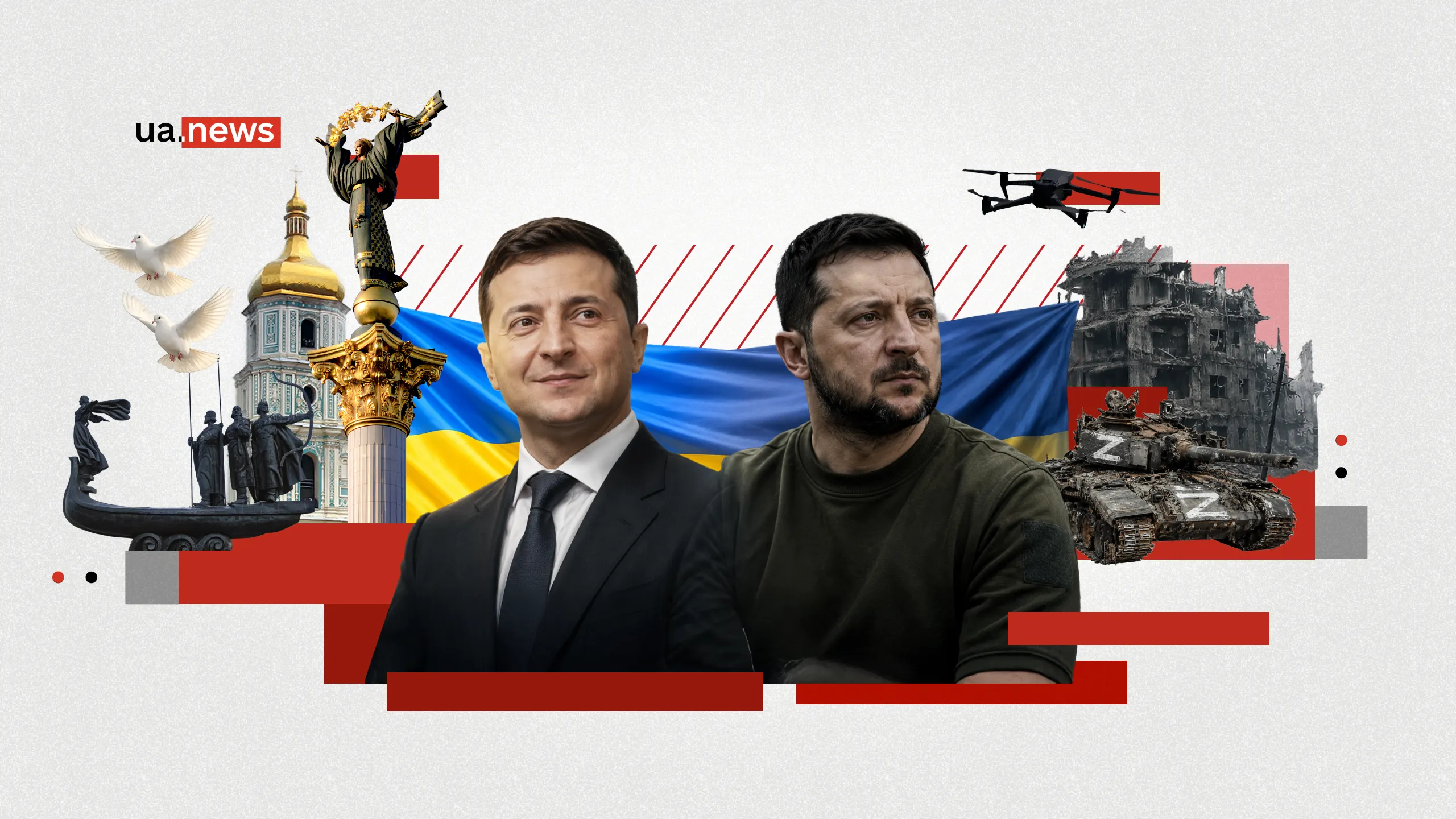
May 20, 2026, marks exactly seven years since Volodymyr Zelenskyy took the oath of office before the Ukrainian people and became the sixth president of Ukraine. It is a journey that began with promises to end the war and completely transform the state, but has turned into a period of utterly unprecedented trials. Due to Russia’s full-scale invasion, Zelenskyy’s term has been extended indefinitely, making him the longest-serving leader to face the greatest number of crises and challenges in the history of independent Ukraine.
Each of these seven years, among other things, left behind a high-profile scandal that repeatedly forced society to ask the government uncomfortable questions. This is the story of how the agenda of scandals has shifted—from foreign policy storms to domestic corruption cases that, over the years, have crept ever closer to the center of presidential power.
The head of state was not personally involved in every single case. However, the problems of his inner circle are, quite predictably, extrapolated onto the president himself.
Today, we’ll look back at the most high-profile scandals from each year of Volodymyr Zelenskyy’s presidency. Read more in this UA.News article.
2019: “Ukrainegate”—a phone call that nearly destroyed relations with the U.S.
Volodymyr Zelenskyy’s presidency began with an international scandal that, it seems, no one expected. On July 25, 2019, just two months after his inauguration, he had a phone conversation with then-U.S. President Donald Trump, who was wrapping up his first term. What was supposed to be a routine diplomatic call turned into the “case of the decade” for American politics. As later revealed by leaked information and a published transcript, Trump directly asked Zelenskyy for a “favor”—to initiate an investigation into Joe Biden, his main political opponent, and his son Hunter, who had previously served on the board of directors of the Ukrainian company Burisma.
This call, dubbed “Ukrainegate” in the U.S., set in motion a process that led to the House of Representatives’ first impeachment of Donald Trump. The young Ukrainian president found himself at the epicenter of a devastating political storm, balancing the need to preserve U.S. military aid—which the Trump administration had suspended at the time—against the risk of becoming a pawn in a foreign election.
For Zelenskyy, this story was a “wake-up call”: it exposed his vulnerability to the realities of high-stakes international politics. However, the head of state himself has repeatedly and publicly denied feeling any pressure from Trump, attempting to distance himself from internal American “power struggles.”

2020: “Yermak’s Tapes”—the first major test for the new inner circle
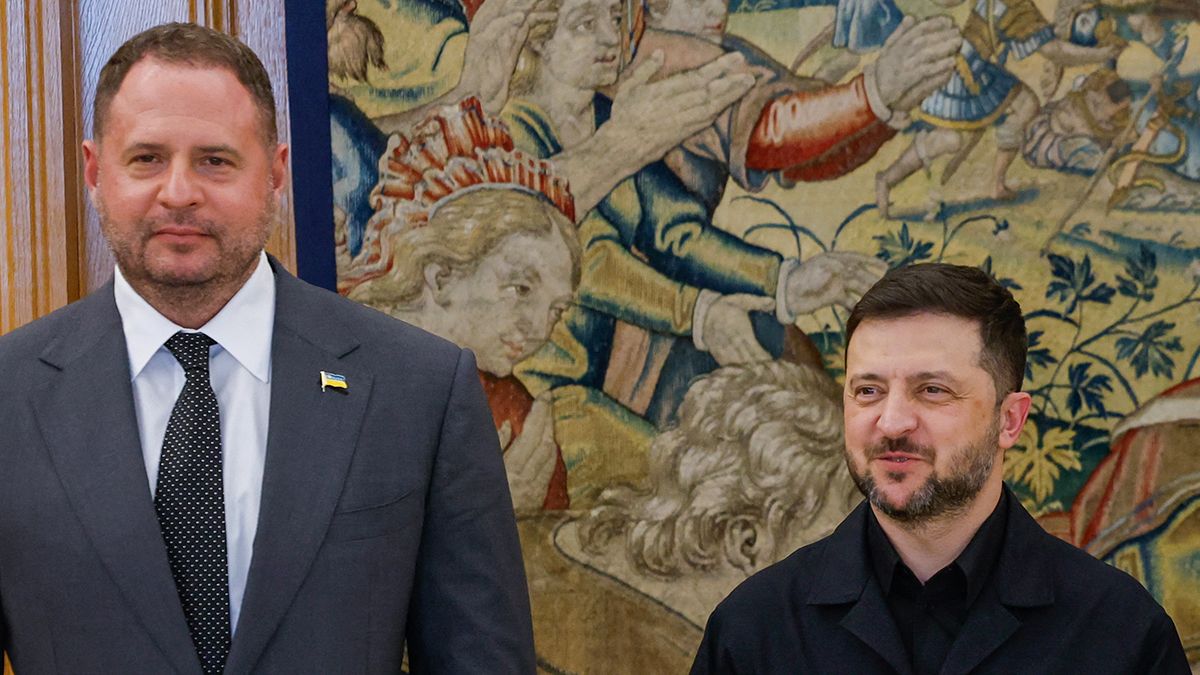
In 2020, the center of the scandals shifted to the domestic front, hitting the man who was already becoming the most influential figure in Zelenskyy’s team—Andriy Yermak. In the spring of that year, Geo Leros, a member of parliament from the “Servant of the People” party, released a series of video recordings dubbed the “Yermak tapes.” In these recordings, a man resembling the brother of the head of the Office of the President, Denys Yermak, discussed appointing people to government positions in exchange for monetary compensation.
The essence of the allegations was that the brother of the head of the Presidential Office was openly trading government positions. Andriy Yermak, who had taken a key position in the Office of the President just a few months earlier, rejected all accusations, calling the released materials “clips taken out of context” and a planned operation against him. Although the scandal never received a proper legal assessment and was gradually “run down,” it revealed a negative trend: the president’s inner circle began operating by its own rules, while the president himself proved unwilling to respond publicly and forcefully to compromising materials regarding his associates.
2021: “Wagnergate”—a special operation that didn’t go according to plan
2021 erupted with a national security scandal that temporarily cast doubt on the professionalism and resolve of the Ukrainian authorities in their confrontation with Russia. This refers to the so-called “Wagnergate”—a covert special operation by Ukrainian intelligence agencies to expose and detain militants from the Russian private military company “Wagner” involved in the war in Donbas and the downing of the Malaysian Boeing in 2014.
The essence of the operation was to lure a group of “Wagnerites” to Belarus under a false pretext and then extradite them to Ukraine. However, at the decisive moment, the operation was postponed, which led to its failure. Former Head of the Main Intelligence Directorate Vasyl Burba and investigative journalists personally blamed Andriy Yermak for derailing the operation, alleging that he had ordered its postponement, which led to the leak of information. In response, President Zelenskyy called the operation’s organizers and Burba personally “a swindler and an adventurer,” stating that he could not approve a plan that required him to effectively mislead the international community. This scandal laid bare the conflict between the country’s political leadership and military intelligence.
2022: “Barbecues in May”—Fatal Complacency Before Disaster
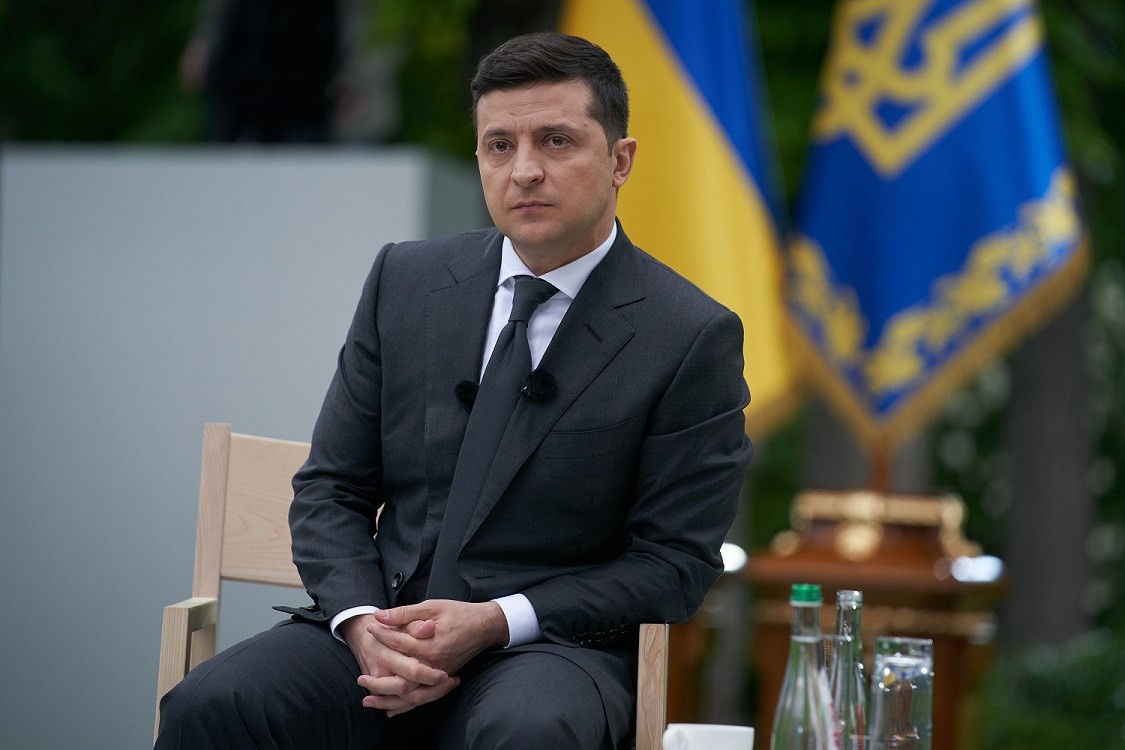
In early 2022, when Western intelligence agencies were publicly sounding the alarm and warning of an imminent full-scale Russian invasion, Volodymyr Zelenskyy chose a different strategy: publicly reassuring the nation. In his addresses, he repeatedly urged Ukrainians not to panic, assuring them that the situation was under control and there was no cause for fear. The culmination of this rhetoric was a phrase he uttered less than a month before the war began.
“What will happen tomorrow, what will happen in the future?... I’ll tell you. On January 22, we will celebrate Ukrainian Unity Day. We will open the Zaporizhzhia Bridge. In a year, we will build the largest highway in Ukraine from Uzhhorod to Luhansk.We will build roads, bridges, schools, stadiums, train cars, airplanes, and tanks… In April, we will celebrate Easter. In May, as always—sunshine, weekends, barbecues, and of course—Victory Day. And then summer…,” the president said at the time.
These words, intended to ease social tensions, turned into a very sad meme after the war began, symbolizing the authorities’ fatal underestimation of the threat. At dawn on February 24, Ukrainian cities were shaken by rocket explosions, and columns of Russian military equipment crossed the border—since then, the infamous “barbecues in May” have become a bitter reproach to the head of state. Critics still cite this phrase as proof that Ukraine’s top leadership either did not believe in the invasion (which, in that case, would indicate total incompetence), or—far worse—deliberately concealed the terrible truth from the people, as a result of which people were simply unable to prepare for the Russian Federation’s aggression (for example, by leaving the country) with all the ensuing consequences.

2023: The Ministry of Defense’s “Golden Eggs” — Corruption at the Expense of Ukrainian Soldiers
As the war entered its second year and society rallied to support the front lines, a journalistic investigation dealt a devastating blow to public trust in the government. In January 2023, it emerged that the Ministry of Defense, then headed by Oleksiy Reznikov, was purchasing food for military personnel at significantly inflated prices.
The most striking symbol of this scandal was eggs, which the Ministry of Defense was purchasing for 17 UAH apiece (!) at a time when the market price was a maximum of 5–7 UAH. The public, which had been raising funds en masse for drones and vehicles for the front lines, was furious. Under public pressure, Reznikov stepped down as head of the Ministry of Defense—but that was the extent of it. President Zelenskyy responded to the events by promising “fair decisions.” However, no systemic solutions were ever actually implemented, and all the key figures involved in the “egg scandal” remain at large.

2024: Conflict with Zaluzhny and a rift at the top
The year 2024 was marked by a public rift between the country’s political and military leadership, which culminated in the resignation of Valeriy Zaluzhny, Commander-in-Chief of the Armed Forces of Ukraine. The conflict between the president and the general—who had become a national hero thanks to the successful defense of Kyiv and the liberation of the Kharkiv and Kherson regions—had been brewing for a long time. The catalyst was the publication of Zaluzhny’s article on CNN, in which he outlined his own vision of the war for 2024, which diverged from the position of the Office of the President.
Political experts warned that dismissing the extremely popular commander-in-chief would be a major political mistake, as Zaluzhny’s public approval rating rivaled that of the president. Despite this, on February 8, 2024, Zelensky signed a decree dismissing Zaluzhny and appointing Oleksandr Syrsky to replace him. Zaluzhny himself subsequently became Ukraine’s ambassador to the United Kingdom and, according to persistent rumors, has his own political ambitions and high approval ratings.

2025: “Mindichgate”—energy corruption that led to Yermak’s downfall
In the fall of 2025, one of the largest corruption scandals in the history of Ukraine’s independence erupted, dubbed “Mindichgate.” NABU and the SAPO exposed a criminal organization linked to large-scale fraud in the energy sector, with businessman Timur Mindich as a key figure.
The investigation revealed that vast sums of money from state-owned energy companies were being siphoned off through complex corruption schemes. The scandal grew to such proportions that it triggered a political crisis. Under pressure from the opposition, some members of parliament, and the public, the head of the Presidential Office, Andriy Yermak, was forced to resign. “Mindichgate” also dealt a powerful blow to the president’s own reputation, as it demonstrated once again that corruption had penetrated the inner circle of the country’s top official, and Zelenskyy himself tried until the very end to keep his ally in office, ignoring the public’s demand for justice.
2026: The “Dynasty” Cooperative—a Mansion for “Vova” and a Shadow of Suspicion Over the President
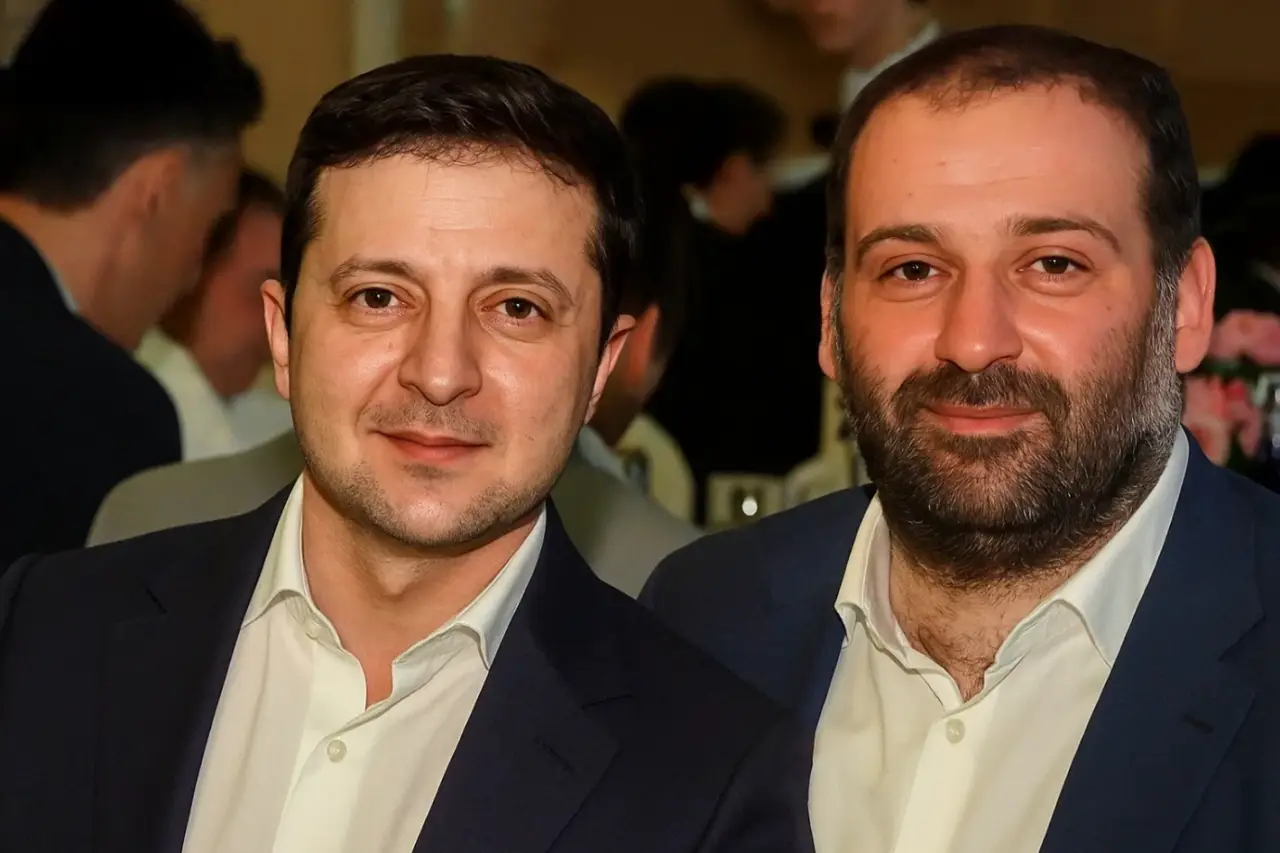
The story unfolding right now, in the spring of 2026, has become the logical and most scandalous continuation of previous revelations. Even after his resignation, Andriy Yermak received new charges from NABU and SAPO, this time regarding the legalization of assets obtained through criminal means. The case involves his involvement in the construction of a luxurious residence in the elite “Dynasty” cooperative near Kyiv.
According to investigators, even before the war, Yermak used funds obtained illegally to pay for the construction of his own estate, personally oversaw the progress of the work, and even approved the interior design. The estimated value of this residence is several million dollars, and the total amount involved in the case is 460 million hryvnias. However, another detail caused a real storm in society: according to investigators, one of the houses in “Dynasty” was built for a person referred to in the case files and unofficial conversations as R1, “the boss,” or “Vova.” This sparked a wave of speculation that the person in question is the president himself.

It should be emphasized right away: officially, there are no charges against Volodymyr Zelenskyy in this case. NABU and the SAPO have separately noted that the head of state does not appear in the case—at the very least because he is legally immune while in office.
However, the very appearance of the mysterious R1, combined with Yermak’s long-standing role as the president’s “right-hand man,” has created an extremely toxic backdrop. The “Dynasty” case has finally shattered faith in the promises to fight corruption and posed a key question to society: did Volodymyr Zelenskyy know the true nature of his closest subordinates? If so, why did he not act accordingly? The investigation must provide the final answer to this.
In summary, it is worth noting that during such a long and eventful term (which, moreover, is not yet over), there have certainly been many scandals. The seven cases mentioned above are just the tip of the iceberg and a chronology of the transformation of power, which has gone from the euphoria following the election victory to the severe trials of war, internal strife, and systemic corruption. Each of them, in its own way, tested the resilience of Ukrainian statehood and left its mark on the still-unfinished history of Volodymyr Zelenskyy’s presidency.


