
The court eased the restrictions on Yermak but left the ankle monitor in place
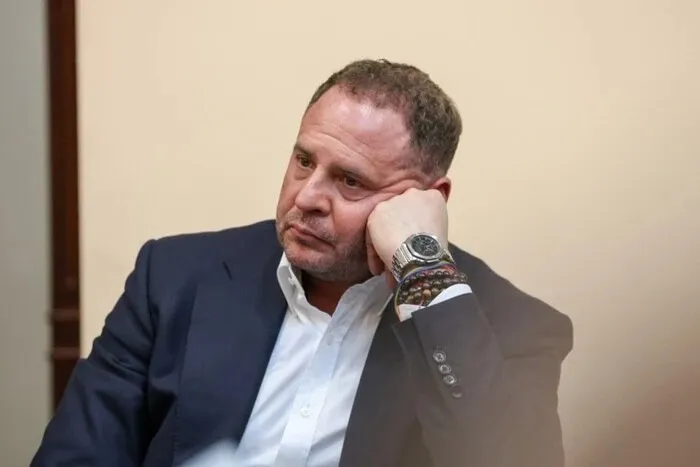
The High Anti-Corruption Court has expanded the area within which former Head of the President’s Office Andriy Yermak may move without obtaining separate permits. At the same time, the court did not lift the requirement to wear an electronic monitoring device, a decision with which his lawyers disagree.
The High Anti-Corruption Court has amended the conditions of the preventive measure imposed on former Head of the President’s Office Andriy Yermak. He is now permitted to travel within a larger area without having to obtain separate permission each time. Yermak’s defense team announced this on August 10. According to his lawyers, Yermak will now be able, in particular, to travel to regions where the Committee of the National Bar Association of Ukraine, which he heads, operates.
The defense team considers this important for his professional activities. According to the lawyers, expanding the permitted territory will enable Yermak to more fully carry out his duties as a lawyer and as chair of the relevant UNAU committee. Specifically, this involves participation in the “Lawyer+” project, which provides legal assistance to military personnel.
The lawyers say that Yermak has complied with all requirements
The defense team emphasized that during the nearly three months that the pretrial measure has been in effect, Yermak has not violated any of the rules established by the court. According to his lawyers, he appeared for all required court appearances, complied with the established restrictions, and did nothing that could hinder the investigation.
This, in the defense’s view, was one of the arguments in favor of expanding the area within which Yermak is permitted to move. At the same time, the court did not lift all restrictions.
The electronic ankle monitor remains in place
Despite the easing of movement restrictions, Yermak must continue to wear an electronic monitoring device. His attorneys consider this restriction unfounded and state that they see no risks that would require continued electronic monitoring. “The defense’s position regarding the electronic monitoring device remains unchanged: there are no risks that would justify this restriction,” the lawyers’ statement reads.
The defense plans to continue seeking the removal of this requirement. At the same time, the court’s current ruling stipulates that the electronic monitoring device remains part of Yermak’s pretrial condition. Thus, the court has partially eased the restrictions on the former head of the Office of the President: his permitted area of movement has been expanded, but the requirement to wear an electronic ankle monitor remains in place. Further changes to the conditions of the pretrial measure will depend on subsequent court decisions. This is stated in a statement by Andriy Yermak’s defense team dated August 10.
The National Anti-Corruption Bureau of Ukraine (NABU) confirmed that in July it allowed the suspect, former head of the President’s Office Andriy Yermak, to temporarily leave Kyiv to provide legal assistance to military personnel. At the same time, according to the anti-corruption center “Mezha,” during this trip he also met with the then-Commander-in-Chief of the Armed Forces of Ukraine, Oleksandr Syrskyi, although such a meeting was not mentioned in the motion for permission.
The Appeals Chamber of the High Anti-Corruption Court upheld the decision to freeze the assets of former Head of the President’s Office Andriy Yermak. The court rejected the defense’s appeal.
Investigators insist on keeping Yermak in custody with a probable bail of 180 million hryvnias, given the scale of the financial transactions in the “Dynasty” cottage community. The judge is continuing to review procedural issues and is setting a schedule for further hearings.
On the evening of May 11, after receiving a notice of suspicion from the Specialized Anti-Corruption Prosecutor’s Office, former Head of the Office of the President of Ukraine Andriy Yermak stated that he would not comment on the matter during the investigation.


