
Holiday on August 23, 2026 — Ukrainian National Flag Day: What You Need to Know
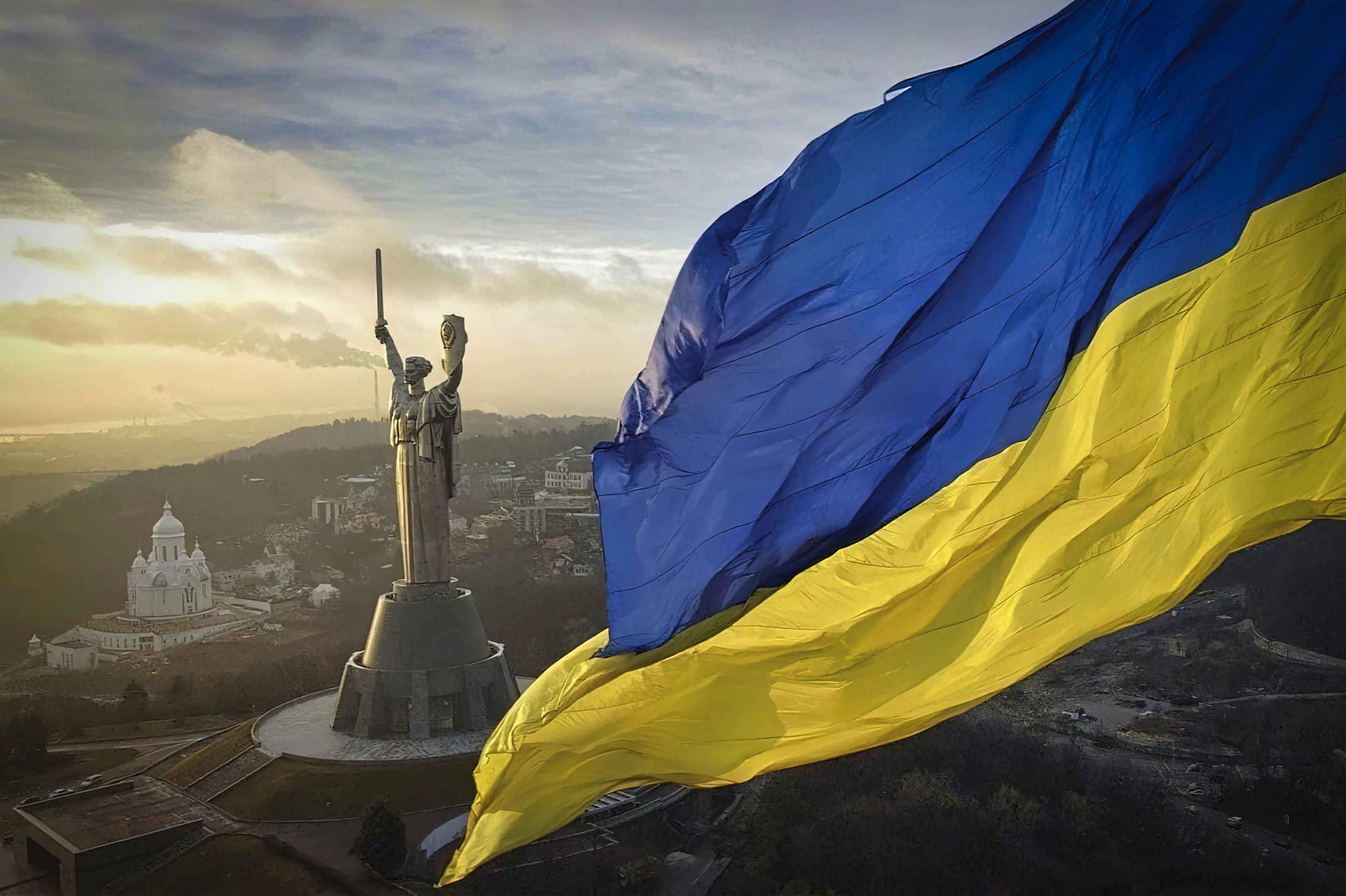
On August 23, 2026, Ukraine will celebrate National Flag Day. On the eve of Independence Day, Ukrainians honor the blue-and-yellow flag as one of the main symbols of the state, freedom, and the struggle for independence. On this day, flag-raising ceremonies, commemorative events, and educational activities take place throughout the country.
Ukraine’s National Flag Day is observed annually on August 23. In 2026, the holiday falls on a Sunday. This day was officially added to the Ukrainian calendar in 2004. At that time, President Leonid Kuchma signed a decree establishing August 23 as Ukraine’s National Flag Day. The decree stated that the holiday was introduced to honor the centuries-old history of Ukrainian statehood and to foster respect for state symbols.

Later, the rules for holding festive events were clarified. Specifically, in 2009, provisions were made for annual official ceremonies to raise the national flag on August 23 at 9:00 a.m. in Kyiv, regional and district centers, and other settlements. It was also recommended to hold lectures, conferences, roundtables, and other events dedicated to the history of Ukrainian symbols. Flag Day is celebrated immediately before Ukraine’s Independence Day. This proximity is no coincidence: the blue-and-yellow flag is closely linked to the restoration of Ukrainian statehood in 1991.
The History of the Ukrainian Flag
The colors blue and yellow have a long history in Ukrainian tradition. Their combination was used as far back as medieval Rus’ and in subsequent historical periods, although the flag’s modern design evolved gradually. In the 20th century, the blue-and-yellow flag became one of the main symbols of the Ukrainian national movement. It was used by supporters of Ukrainian statehood, and during the Soviet era, displaying the national flag could lead to persecution.
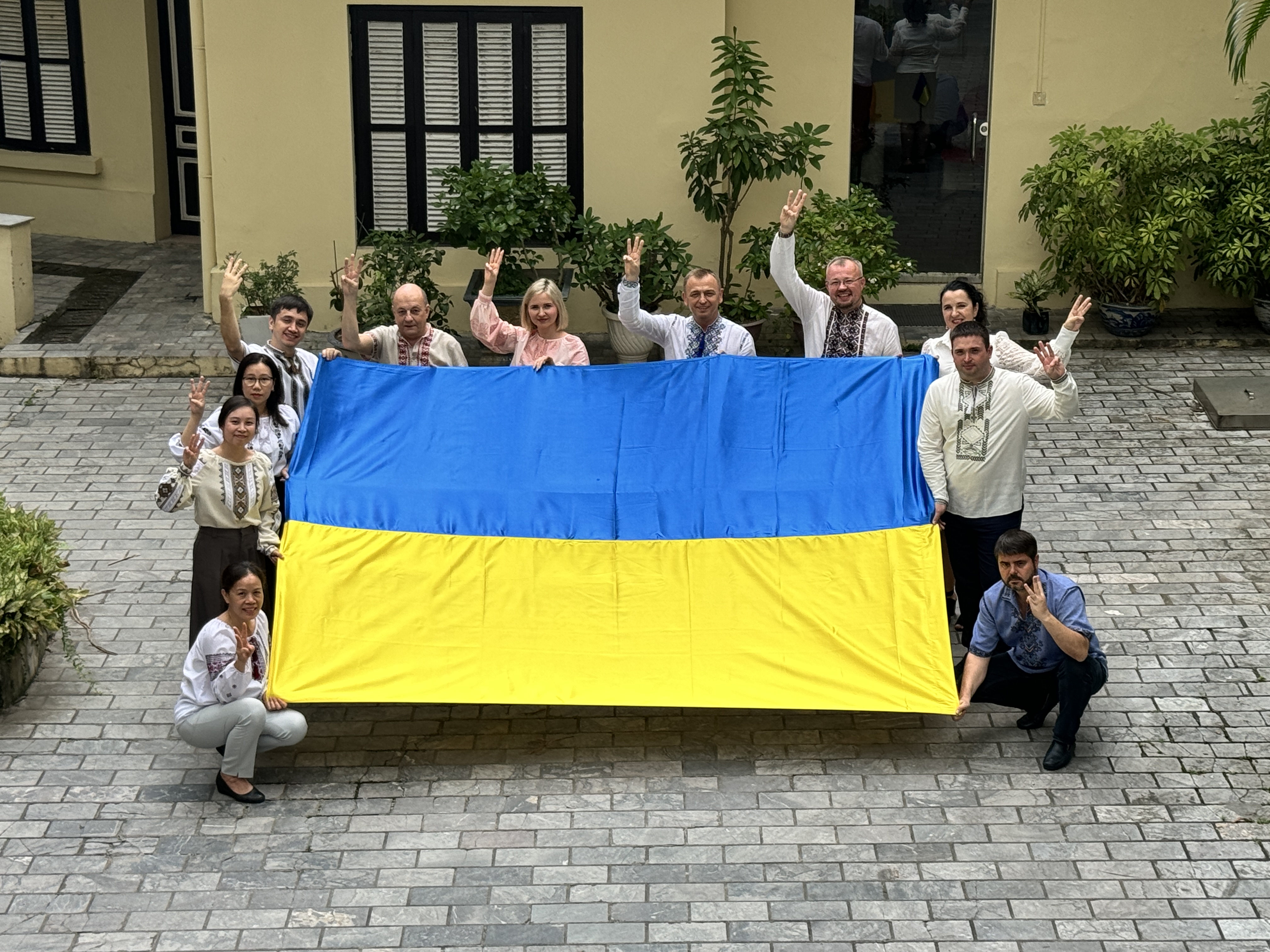
In the late 1980s and early 1990s, blue-and-yellow flags began to reappear en masse in public spaces. A key moment occurred on July 24, 1990, when the Ukrainian flag was raised outside the Kyiv City Council building. According to the Verkhovna Rada, more than 200,000 people gathered for this event as part of a nationwide campaign. And on August 24, 1991, the day Ukraine declared its independence, the blue-and-yellow flag was solemnly carried into the session hall of the Verkhovna Rada. This became one of the symbolic moments in the restoration of Ukrainian statehood.
When the Flag Became a State Symbol
After independence was declared, it was necessary to officially establish the state symbols. On January 28, 1992, the Verkhovna Rada adopted a resolution designating the blue-and-yellow national flag as the State Flag of Ukraine. The document also defined its appearance: the rectangular flag consists of two horizontal stripes of equal width. The upper stripe is blue, and the lower one is yellow. The ratio of the flag’s width to its length is 2:3.
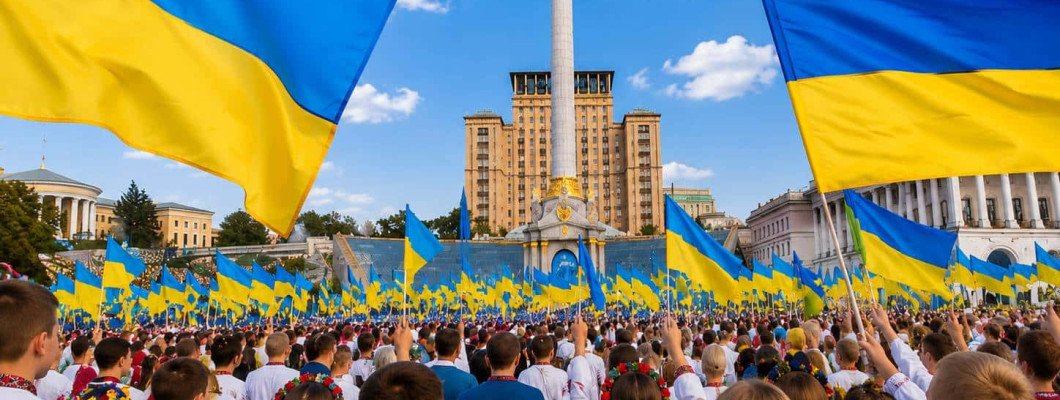
Today, the State Flag is one of Ukraine’s three state symbols, along with the State Emblem and the National Anthem. The blue and yellow colors are often interpreted as representing the blue sky and golden wheat fields. At the same time, in modern Ukrainian society, the flag has a much broader significance. It has become a symbol of freedom, independence, dignity, and resistance.
Why Flag Day Is Important During War
Since the start of Russia’s full-scale invasion, the blue-and-yellow flag has taken on even greater symbolic significance. Ukrainian flags are being raised in liberated towns and villages by military units, volunteers, and civilians alike. Images from de-occupied towns and villages, where Ukrainian troops are raising the national flag again after months or years of Russian occupation, have become a particularly powerful symbol.
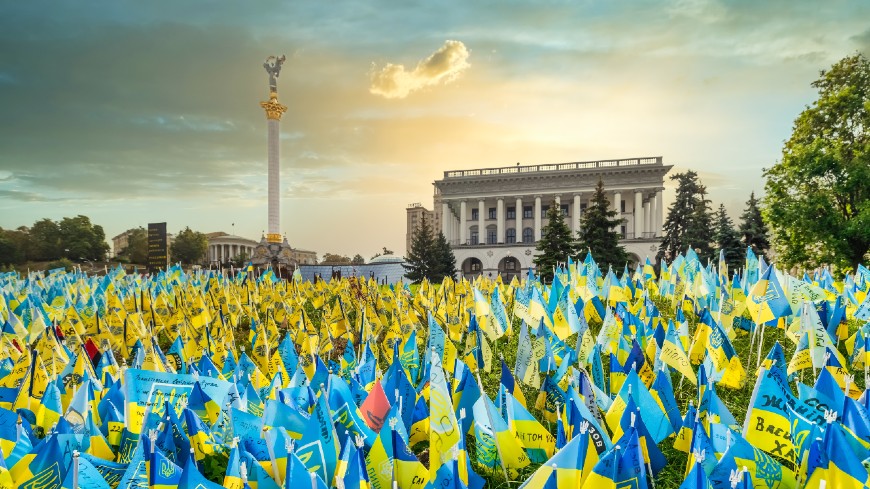
The blue-and-yellow flag can also be seen outside Ukraine. It is displayed by Ukrainians abroad, foreign supporters of Ukraine, international organizations, and cities that support our country.

The Verkhovna Rada emphasizes that the flag has become a symbol of unity, resilience, and the Ukrainian people’s quest for freedom. That is why Flag Day today is not just a formal date on the calendar. For many Ukrainians, it is a reminder of those who fought for independence and those who continue to defend it today.
How Flag Day Is Celebrated
The main tradition of the holiday is the ceremonial raising of the National Flag. Such ceremonies are held in Kyiv, regional centers, cities, and towns across Ukraine. They are typically attended by military personnel, government officials, veterans, community leaders, schoolchildren, and local residents. Official events may also include the singing of the national anthem, laying flowers at monuments to those who fought for Ukraine’s freedom and independence, exhibitions, lectures, themed gatherings, and cultural events. These formats have been used during Flag Day celebrations in previous years.
Educational institutions traditionally hold themed lessons and teach children about the history of Ukrainian symbols. Museums and libraries organize exhibitions and lectures. It has become a tradition to fly the Ukrainian flag on homes, government buildings, businesses, and other public places. In 2009, a presidential decree explicitly authorized the display of flags on August 23 and August 24.
For ordinary Ukrainians, this day can also be very simple: hanging a flag near their home, participating in a local ceremony, attending a commemorative event, or simply reflecting on the history of the people thanks to whom Ukraine has its own state.
Interesting Facts About the Ukrainian Flag
The Flag of Independence has a special history. It was the blue-and-yellow flag that was brought into the session hall of the Verkhovna Rada on August 24, 1991, during the adoption of the Act of Declaration of Independence of Ukraine. Today, this historic relic is kept in the Verkhovna Rada.
On September 4, 1991, the blue-and-yellow flag was raised for the first time over the Verkhovna Rada building. At that time, the flag of the Ukrainian SSR was still flying alongside it, but eventually, only the Ukrainian blue-and-yellow flag remained flying over the parliament.
The flag has clearly defined proportions. According to a resolution of the Verkhovna Rada, the ratio of its width to its length is 2:3. The upper stripe is blue, and the lower one is yellow.
Flag Day came into existence later than the national symbol itself. Ukraine officially adopted the blue-and-yellow flag as its national flag in 1992, but a separate holiday in its honor was not established until 2004.
The holiday precedes Independence Day. On August 23, Ukrainians honor the national symbol, and the following day, August 24, they celebrate the anniversary of Ukraine’s declaration of independence.
What the Blue-and-Yellow Flag Means Today
Over the years of independence, the blue-and-yellow flag has become part of everyday life for Ukrainians. It can be seen on government buildings, in schools, at sporting events, international gatherings, and military ceremonies. But during the Russia-Ukraine war, the flag’s significance has become particularly poignant. For the military, it symbolizes the land they are defending. For civilians, it represents the country where they want to live. For those who were forced to flee abroad, the Ukrainian flag has often become a way to show where they are from.

That is why August 23 is not just a day about the colors of the flag. It is a day about the nation that Ukrainians have defended for generations, and about the independence that continues to be fought for today. Ukraine’s National Flag Day in 2026 will be celebrated on August 23, on the eve of the 35th anniversary of Ukraine’s declaration of independence.




