
Holiday on September 9, 2026 — Physical Culture and Sports Day in Ukraine
Physical Culture and Sports Day in Ukraine is celebrated annually on the second Saturday of September. In 2026, the holiday falls on September 12. It was established in 1994 by a presidential decree to support the development of physical culture, sports, and a healthy lifestyle. This day is dedicated not only to professional athletes but also to coaches, physical education teachers, sports schools, and everyone who simply loves to be active and stay in shape.
The date of this holiday changes every year, as it is tied not to a specific date but to the day of the week. According to a presidential decree issued by Leonid Kravchuk on June 29, 1994, Physical Culture and Sports Day is celebrated on the second Saturday of September. This rule remains in effect today. Therefore, the holiday falls on different dates from year to year. For example, in 2021 it was celebrated on September 11, in 2022 on September 10, and in 2023 on September 9. In 2026, the second Saturday in September will be the 12th.
It’s important to keep this in mind, as calendars sometimes simply list September 9 as the date. While that has indeed been the date of the holiday in some years, it is not a fixed date. The official rule remains unchanged—the second Saturday in September.
How the Holiday Came to Be
Physical Culture and Sports Day was established in the early years of Ukraine’s independence. On June 29, 1994, President Leonid Kravchuk signed Decree No. 340/94, which officially established this holiday. The document states that the decision was made in support of an initiative by physical culture and sports organizations and civic associations. In other words, the holiday did not simply emerge as just another date on the calendar. Behind its creation was the need to develop the sports movement in the newly independent state and to encourage people to engage in physical activity. Sports were meant to become not just the domain of professional athletes, but a part of everyday life for ordinary people.
From the very beginning, the concept was much broader than just competitions and medals. Physical culture encompasses everyday physical activity, physical education, recreational sports, and taking care of one’s own health. That is why this holiday applies equally to the person who walks or does calisthenics every day and to the athlete who represents Ukraine at international tournaments.
Why This Day Is Important
Sports are often perceived solely as a competition for first place, records, and medals. But physical activity matters far beyond the realm of professional sports. Regular exercise helps maintain physical fitness, improves endurance, and can be part of a healthy lifestyle. The government places particular emphasis on promoting such activity. The National Doctrine for the Development of Physical Culture and Sports identifies physical culture as a key factor in a healthy lifestyle, disease prevention, and meaningful leisure activities. Among its objectives is also the engagement of various segments of the population in regular physical culture and sports activities.
That is why Physical Culture and Sports Day is an occasion to talk about more than just Olympic champions. No less important are children’s coaches, physical education teachers, instructors, and staff at sports schools and clubs. They are often the first to help a child fall in love with sports and realize that physical activity can be fun. The Ministry of Youth and Sports also regularly emphasizes the importance of promoting physical activity among various segments of the population. The ministry describes the holiday as a day that brings together athletes, coaches, physical education teachers, sports schools, and all advocates of an active lifestyle.
How Physical Culture and Sports Day Is Celebrated
There is no single set format for the celebration. In various cities and communities, sports competitions, races, bike rides, open training sessions, master classes, and exhibition performances are held. Often, not only professional athletes but also anyone interested can participate in such events. For example, in Kyiv, as part of the celebrations, sports and dance master classes were held, Ukrainian athletes gave demonstration performances, and numerous sports venues were opened to the public. Participants could try their hand at various sports, including rugby, cycling, track and field, and powerlifting.
In other cities, the programs may be completely different. Some places organize a mass run, others a soccer tournament or volleyball competition, and still others host a sports festival for children. In 2019, for example, Kyiv’s Poznyaki Park hosted a concert program, free sports activities, workshops led by sports federations, and a children’s play area. A traditional part of such events is also the presentation of awards to athletes, coaches, and others working in the sports sector. On this day, the government has repeatedly presented state awards for contributions to the development and promotion of physical culture and sports, as well as for outstanding athletic achievements.
This holiday is not just for professional athletes
The name might give the impression that Physical Culture and Sports Day is only for people with medals and athletic titles. In reality, that’s not the case. Its meaning is much broader—to show that movement and physical activity can be part of everyone’s life. You don’t have to train for a marathon or spend hours at the gym. For some, sports mean playing soccer with friends; for others, it’s swimming, biking, dancing, or a morning jog. Some people work out three times a week, while others simply try to walk more.
This approach is especially important for children. It is during childhood that habits are formed that can last for many years. If a child finds a sport they truly enjoy, physical activity ceases to be seen as a chore. That’s why, on this day, sports organizations often strive to make their events as inclusive as possible. People are given the opportunity not just to watch the athletes, but to try out various disciplines themselves. This is a good way to understand that sports aren’t just about defeating an opponent, but also about enjoying the process itself.
Ukrainian Sports and Great Victories
A special part of this day is hearing stories about Ukrainian athletes who represent the country on the international stage. When a Ukrainian athlete takes the field under the blue-and-yellow flag, their performance becomes important not just for themselves. Millions of people in Ukraine and abroad follow these victories. In his message marking Physical Culture and Sports Day 2023, the President of Ukraine emphasized that thanks to Ukrainian athletes, the national anthem is played and the Ukrainian flag is raised on international stages. At the same time, he noted that many athletes and coaches have stood up to defend Ukraine during the full-scale war.
The war has also significantly altered the country’s sporting life. Part of the sports infrastructure has been damaged or destroyed, and some athletes have been forced to leave their cities or the country. Others continue to train despite air raid alerts, infrastructure problems, and constant risks. At the same time, Ukrainian sports continue to thrive. Athletes compete in international competitions, coaches are training a new generation of athletes, and sports schools are resuming operations wherever possible. That is why, today, athletic victories for Ukraine hold not only professional but also profound social significance.
Sports During the War
Since the start of the full-scale invasion, the role of sports in Ukraine has become even more prominent. Some professional athletes have joined the Defense Forces or are volunteering. Among them are people who, before the war, competed in national and international competitions. In 2022, the President specifically recognized the athletes and coaches who took up arms in the early days of the Russian aggression. He also acknowledged those who provided financial support to the Armed Forces of Ukraine and helped restore sports infrastructure.

For children and adults alike, sports in such conditions can also be a way to restore a sense of normalcy to their lives. Training sessions provide an opportunity to spend time together, unwind after a hard day, and stay in shape. That is why sports fields, swimming pools, sports clubs, and teams remain an important part of community life even during wartime. At the same time, safety remains the top priority for holding any mass events. Organizers must take into account the risks posed by the war, the availability of shelters, and the ability to quickly suspend an event in the event of an air raid alert.
Interesting Facts About the Holiday
Physical Culture and Sports Day in Ukraine has a history spanning nearly 30 years. It was officially established in 1994, just a few years after Ukraine declared its independence. The decree was signed by Ukraine’s first president, Leonid Kravchuk.
Interestingly, the holiday was not tied to a specific date from the very beginning. The presidential decree immediately designated it as the second Saturday in September. Thanks to this, the holiday always falls on a weekend, when it is more convenient to hold large-scale sporting events.
Over the years, dozens of different events have been organized in Ukraine—ranging from professional tournaments to family sports festivals. People could participate in running races, bike races, team games, workshops, and open training sessions. The format depends on the specific city, community, and the organizers’ capabilities.
Another interesting point is that, along with Physical Culture and Sports Day, Ukraine celebrates Ukrainian Cinema Day on the second Saturday of September. It is also designated for this date on the calendar of official holidays.
What You Can Do on This Day
You don’t have to wait for an organized sporting event to join in the celebration. You can go for a walk, ride a bike, visit the pool, or simply do a short workout. If you’ve been wanting to try a new sport for a while, this day could be a great excuse to finally do it.
For families, it’s also an opportunity to spend the day being more active. For example, you can go for a walk together or play badminton, soccer, or basketball. You can suggest that your children choose a new sports class or attend an open practice session together. But the main thing is not to turn physical activity into a race for results. If a person hasn’t been very active before, they shouldn’t set difficult goals right away. It’s much more beneficial to start gradually and choose a level of exertion that matches your age, physical condition, and health.
Why Physical Culture and Sports Day Remains Relevant
Over nearly three decades, the holiday has evolved alongside the country. It has long since moved beyond ceremonial speeches and professional competitions. Today, it’s also an opportunity to discuss access to sports, children’s sports programs, inclusivity, sports infrastructure, and everyday physical activity. The Ukrainian sports system is gradually expanding opportunities for people of all ages and with diverse needs. The 2021 presidential message specifically mentioned the development of conditions for physical education and sports activities for various segments of the population, a healthy lifestyle, and an inclusive approach.
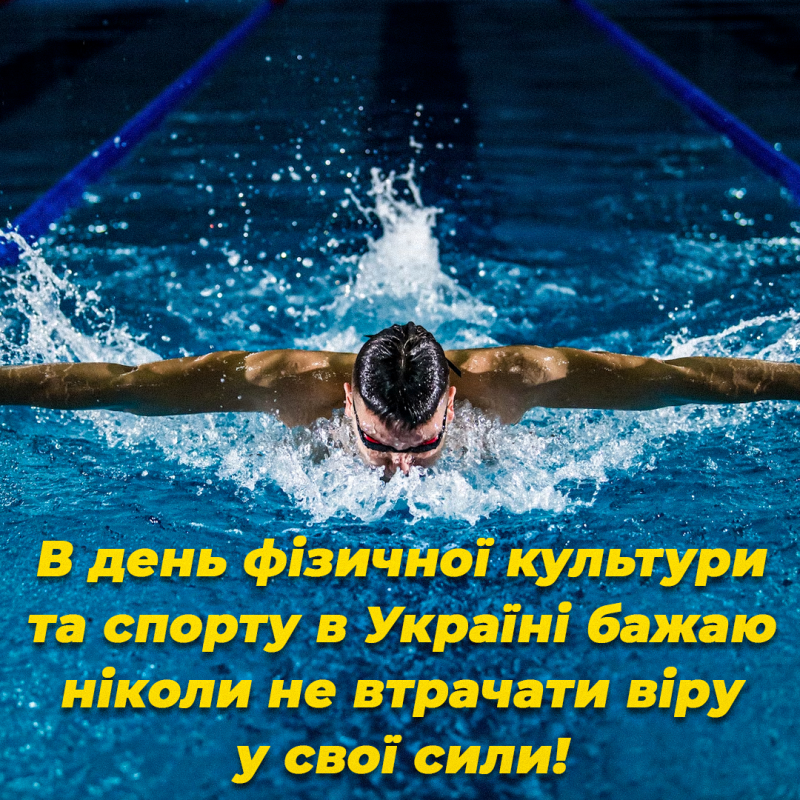
Ultimately, Physical Culture and Sports Day is not just a special day for athletes. It is a reminder of a simple truth: physical activity should be a part of life, and sports can bring people together regardless of age, profession, or skill level. And while a professional athlete might be competing for another medal on this day, for the average person, victory can mean something entirely different—finally going for a run, walking a few extra kilometers, or simply finding an activity that brings joy.




