
The government has allocated 43.7 billion hryvnia to protect critical infrastructure
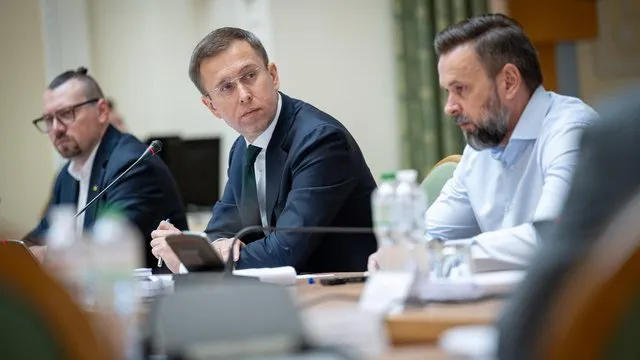
The Cabinet of Ministers has allocated 67.6 billion hryvnias to implement regional and municipal resilience plans. Of this amount, 43.7 billion hryvnias are to be allocated for the engineering protection of critical infrastructure facilities, particularly in the energy sector.
This was announced by Ukrainian Prime Minister Serhiy Koretskyi following a meeting of the operational coordination center responsible for implementing the resilience plans. According to him, despite the limited capacity of the state budget, the government has already allocated 67.6 billion hryvnias for these measures. The largest portion of this amount—43.7 billion hryvnias—is earmarked specifically for the engineering protection of critical infrastructure facilities.
“Despite limited budgetary funding, the government has already allocated 67.6 billion hryvnias for the implementation of resilience plans. Of this amount, 43.7 billion hryvnias is earmarked for the engineering protection of critical infrastructure facilities,” Koretsky wrote. These measures are intended to help vital facilities continue operating even during Russian attacks. Such protection is particularly important for the energy sector and other infrastructure on which the daily lives of cities and regions depend.
Work is behind schedule in some regions
During the meeting, officials compared the actual progress of the work with the schedules set by the National Security and Defense Council. It turned out that work is not proceeding according to plan everywhere. In a number of regions, there are delays in the construction of protective structures and the installation of necessary equipment.
Koretsky instructed the relevant agencies to strengthen oversight of these facilities. This includes the Ministry of Energy, the Ministry of Community and Territorial Development, and the Recovery Agency. “I have instructed the Ministry of Energy, the Ministry of Infrastructure, and the Recovery Agency to strengthen oversight of each specific site and ensure that the work is completed by the specified deadlines,” the prime minister stated. This means that now they must monitor not only overall indicators but also each individual facility and its completion deadlines.
Critical infrastructure must have backup power
Separately, backup power sources were discussed during the meeting. According to the prime minister, these must be maximized. This applies to critical infrastructure facilities, which must continue to operate even if the main power grid is damaged.
Regions must also build up the necessary fuel reserves in advance. This fuel is needed for both critical infrastructure and social services. “Local authorities bear personal responsibility for ensuring backup power for heating, water supply, and wastewater treatment facilities,” Koretsky emphasized. This means that local authorities must ensure autonomous power supply for systems without which cities cannot function normally. First and foremost, this refers to heating, water, and sewage systems.
Ukrzaliznytsia’s Locomotives Will Also Be Restored
Another issue discussed at the meeting was the restoration of Ukrzaliznytsia’s locomotive fleet. The railway lost some of its locomotives due to Russian strikes. Now the government plans to secure funding for their restoration.
According to the prime minister, the Ministry of Finance, together with relevant agencies, must allocate the necessary funds. Thus, the focus is not limited to protecting energy facilities; plans also include supporting the railway infrastructure, which remains vital for the country’s operations during the war.
Insurance is to be introduced for builders of protective structures
Separately, the government plans to address the issue of insurance for personnel and equipment involved in protecting energy facilities in frontline regions. Due to their proximity to combat operations, such work involves increased risk. Therefore, the Ministry of Community and Territorial Development must develop a separate insurance mechanism.
“The Ministry of Infrastructure must also develop an insurance mechanism for workers and equipment involved in the construction of protective structures for energy facilities in frontline regions,” Koretsky added. As a result, the government aims to simultaneously accelerate the construction of protective structures, ensure that facilities have backup power and fuel, and reduce risks to the people and equipment working at these sites.
The key figure announced following the meeting was 67.6 billion hryvnias for regional and municipal resilience plans. Of this amount, 43.7 billion hryvnias has already been allocated for the engineering protection of critical infrastructure. This was announced by Ukrainian Prime Minister Serhiy Koretskyi.
On September 9, 2026, based on materials from the NABU pre-trial investigation, the SAPO prosecutor filed an indictment with the court against the deputy director of the Department of Environmental Safety within the Department of Traffic Safety, Occupational Safety, and Environmental Safety at JSC “Ukrzaliznytsia.”
Alona Shevtsova will moderate a panel on innovations in the payments sector at MEBIS 2026 in Dubai.


