
Ukraine is expecting the peak of the Lyrid meteor shower; when to watch
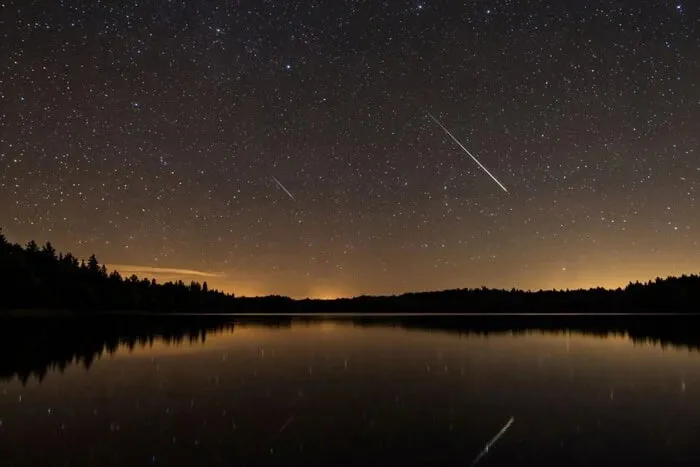
On the night of April 23–24, Ukraine is expected to see the peak of the Lyrid meteor shower—one of the oldest known meteor showers.
It will be best visible in the second half of the night and before dawn, approximately from 3:00 to 5:00 a.m. Under clear skies outside the city, up to 10–20 meteors per hour can be seen.
This was reported by Kharkiv astronomer Volodymyr Kazhanov.
When to expect the most meteors
The best time for observation is the second half of the night and the pre-dawn hours, approximately from 3:00 to 5:00 a.m. It is during this period that the radiant of the shower, located in the constellation Lyra, rises highest above the horizon.
The Lyrids are active every year in mid-April, but these nights are considered the peak.
“This is what people commonly call a meteor shower, although in reality it is the burning up of meteor particles in the atmosphere,” the astronomer explained.
What to look for in the sky
During the peak, you can observe not only brief flashes but also bright fireballs—large meteors that glow for several seconds and can even illuminate the surrounding area.
The particles creating this effect originate from Comet Thatcher and enter Earth’s atmosphere at a speed of about 49 km/s, burning up and forming light trails.
Where and how to watch
The best conditions are outside the city, where there is no artificial lighting. In cities, light pollution makes it much harder to see the meteor shower.
You can observe it with the naked eye; no telescopes or binoculars are needed. It’s important to give your eyes 10–20 minutes to adjust to the darkness. Conditions are favorable this year, as the Moon isn’t too bright and won’t interfere with observations.
An astronaut on the ISS suddenly lost his voice.
As a reminder, the Orion spacecraft with four astronauts on board officially crossed the boundary of the Moon’s gravitational sphere.
The Artemis II mission crew has traveled halfway to the Moon and sent back the first photos of Earth from deep space. This is the first human flight beyond Earth’s orbit since 1972.
