
The Rus Party has been banned in Ukraine, and its assets have been transferred to the state
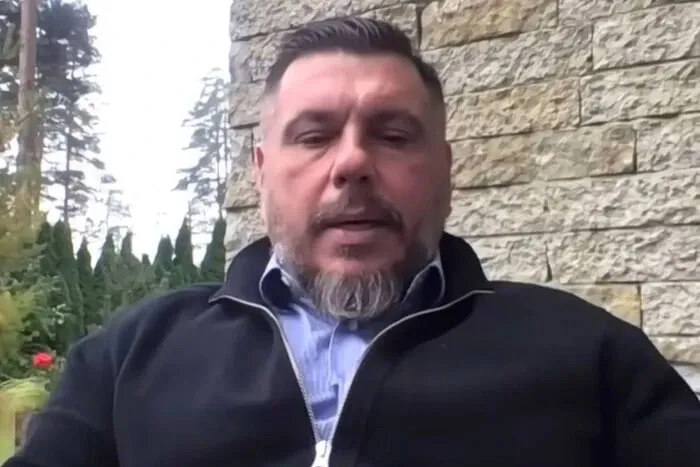
The Eighth Administrative Court of Appeal ruled to ban the activities of the political party “Rus.” The court also ordered that the property, funds, and other assets of the party’s local branches be transferred to state ownership.
In May, the Ministry of Justice filed a lawsuit. In its arguments, the plaintiff cited a letter from the Department for the Protection of National Statehood of the Security Service, which described the unlawful activities of the leadership of the “Rus” party. This refers to the leader of the political party, Denys Shevchuk (now known as Rulav Odd), the biological brother of Stanislav Shevchuk, who served as the head of the Constitutional Court of Ukraine from 2018 to 2019. According to law enforcement, Rulav Odd is suspected of treason. Specifically, he is accused of subversive activities against Ukraine and spreading narratives aimed at dismantling Ukrainian national statehood.
According to the case file, in 2009, Denys Shevchuk (Rulav Odd) became the leader of the “Russian-Ukrainian Union” party, which was later renamed “Rus.” Even then, he began collaborating with Russian representatives, “assisting them in subversive activities against Ukraine.”
The Ministry of Justice presented the court with a series of interviews with Shevchuk-Odd dating back to 2009, in which he discredits Ukrainian statehood; calling the “Ukraine project” flawed, unviable, created solely to oppose Russia, and one that must be shut down, liquidated under the pretext of the need to establish a “new” state that was to integrate into the so-called “Russian world.”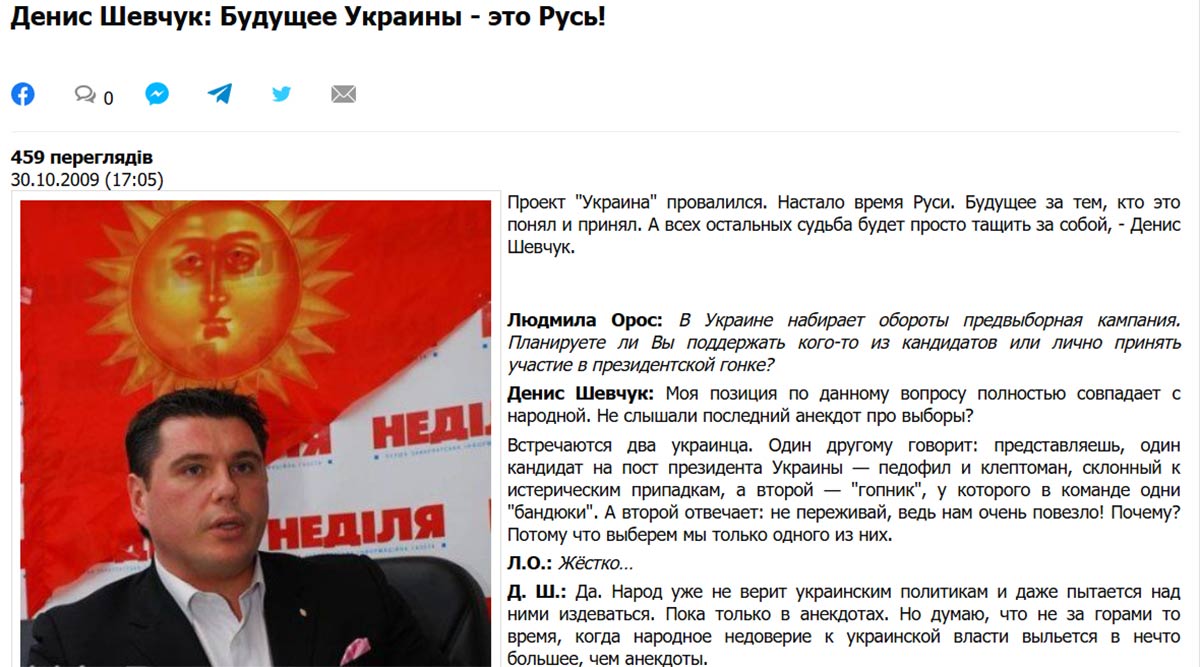
During the Russian Federation’s invasion of Ukraine, the leader of the “Rus” party characterized the Russian army’s actions “as a liberation mission aimed at assisting a brotherly people and freeing Ukraine from foreign occupation.” Rulav Odd identified himself as a citizen of “former Ukraine” and called on all his fellow citizens to unite around the Russian army. He envisions the future structure of the territories seized by the occupiers as the so-called “Republic of Ruthenia”—an autonomous entity within the Russian Federation.
In addition, the Ministry of Justice noted that the “Rus” party opposes Ukraine’s accession to the North Atlantic Treaty Organization (NATO) and the European Union. Instead, it envisions Ukraine in an intergovernmental union with the Russian Federation. The Ministry of Justice insists that the party’s ideas are pro-Russian in nature, and its activities are aimed at changing Ukraine’s territorial structure, eliminating its independence, and undermining the state’s security.
The court upheld the Ministry of Justice’s position and noted that the activities of a political party registered in Ukraine must be aimed at shaping and expressing the political will of citizens, participating in elections, and engaging in other political activities. At the same time, when a party in reality “advocates and promotes anti-Ukrainian—or more accurately, pro-Russian—ideas and thereby assists the occupiers in realizing their intentions… it poses a real threat to national security, the constitutional order of Ukraine, its sovereignty, and territorial integrity,” the court emphasized.
The court also agreed with the Ministry of Justice’s assertions that Rulavu Odda’s “statements are characterized by a Ukrainophobic tone,” and that his presentation of information is characterized by selectivity and elements of manipulation, aimed at discrediting and undermining the authority of Ukraine’s state bodies and institutions.
This is reported with reference to the text of the ruling.
Ukrainianshave named their favorites in the parliamentary elections — a poll.
A Parliament on the Brink of Collapse: What Is Happening to the Supermajority?
Charles III reaffirmed his unwavering support for Ukraine in a speech to Parliament.
The Rada adopted important decisions regarding the EU and funding.


