

Trump’s former special envoy, Kit Kellogg, recently arrived in Ukraine. Among many other statements, he made the following remark: Ukraine, he claimed, supposedly wants very much to be like Israel, and therefore women must also fight. His wife and daughter, according to him, served in Afghanistan and Grenada.
At the same time, Oleksiy Reznikov—the very same former defense minister who is remembered for corruption scandals (the infamous “17-hryvnia eggs” scandal) at the Ministry of Defense—recently spoke out. He, too, believes that women should fight. Reznikov himself, incidentally, is not fighting—nor are any members of his family.
In general, there has been a sudden surge in talk about the mobilization of women lately—and a great deal of it, at that. The Center for Public Diplomacy at the National Security and Defense Council says that Russia is exploiting this narrative—however, discussions about conscripting women are taking place not in Moscow but in Kyiv studios, and are being led by Ukrainian (and, accordingly, American) commentators. At the official level, the authorities firmly deny these plans, but the very fact that such discussions are taking place shows just how deeply the conversation about total war has penetrated the public consciousness.
So who is talking about the mobilization of women, and why? Under what conditions would the mobilization of women even be possible, and why is it highly unlikely right now? UA.News political analyst Mykyta Trachuk, together with experts, examined the issue.
No one has asked either the public or women
There is no social consensus on the issue of women’s mobilization. And, as is customary, no one has asked either society as a whole or women in particular for their input. At the same time, certain commentators are very fond of discussing the “Israeli model.”
The problem is simply that—with all due respect to the State of Israel—not everyone in Ukraine likes the idea of living their entire lives in a “besieged fortress” and a giant military camp. This is eloquently demonstrated by the fact that between 4 and 8 million Ukrainians are living abroad, and people continue to leave. It is also evidenced by the fact that over 2 million men have not updated their registration information and are evading the Military Registration and Enlistment Office. Hundreds of thousands (!) of cases of desertion and absconding from the ranks of the Armed Forces of Ukraine scream this truth—and even more telling is the fact that information about this has been classified.
A society that, in words, is ready to endure “as long as necessary” actually demonstrates a completely different mindset. This is classic Orwellian “doublethink,” and if examined more deeply—a horrific trauma of Soviet totalitarianism: when a person says one thing, thinks another, and does a third for a fourth purpose.
So when we’re offered the Israeli model, it’s worth remembering that universal military service has existed in Israel since the state’s founding. It’s woven into the very fabric of society; from the very beginning, it has been the foundation of their social contract—which is not the case in Ukraine. And yes, women serve in the IDF in large numbers—but mainly in logistical, technical, and administrative units, not in assault brigades on the front lines.
Kit Kellogg, Oleksiy Reznikov, and all those like them—if they’re so eager to fight—can enlist as volunteers—and bring their whole family along. The Ukrainian Armed Forces accept absolutely everyone; there’s no secret here. Any woman can become a volunteer today, and any man can voluntarily go to the front, even if he’s over 60 or a foreigner. There are no obstacles. And, by the way, more than 60,000 women are already serving in the ranks of the Armed Forces of Ukraine, and this is their conscious (not forced) choice. But for some reason, the most ardent advocates of forced mobilization of women are in no hurry to report to the military registration and enlistment office themselves—even though they are men. It’s an interesting paradox.
Ultimately, the mobilization of women—just like mass mobilization in general—will achieve nothing on its own. The problem isn’t with the people; the problem is with technology. Modern warfare consists of drone swarms, thermal imaging traps, guided aerial bombs, electronic warfare systems, artillery duels, and so on. Simply flooding the front lines with people, as in the world wars of the last century, makes no sense today. Only Russia does this, and it’s suffering massive losses—hundreds of thousands killed and wounded. Ukraine, however, if it wants to survive, cannot afford such a luxury—to compete with the Russians, who outnumber it by at least five to one. Add to this the fact that a person mobilized without motivation is a burden, not a fighter. And a forcibly mobilized woman, torn away from her children or her job, creates constant social tension within the unit.
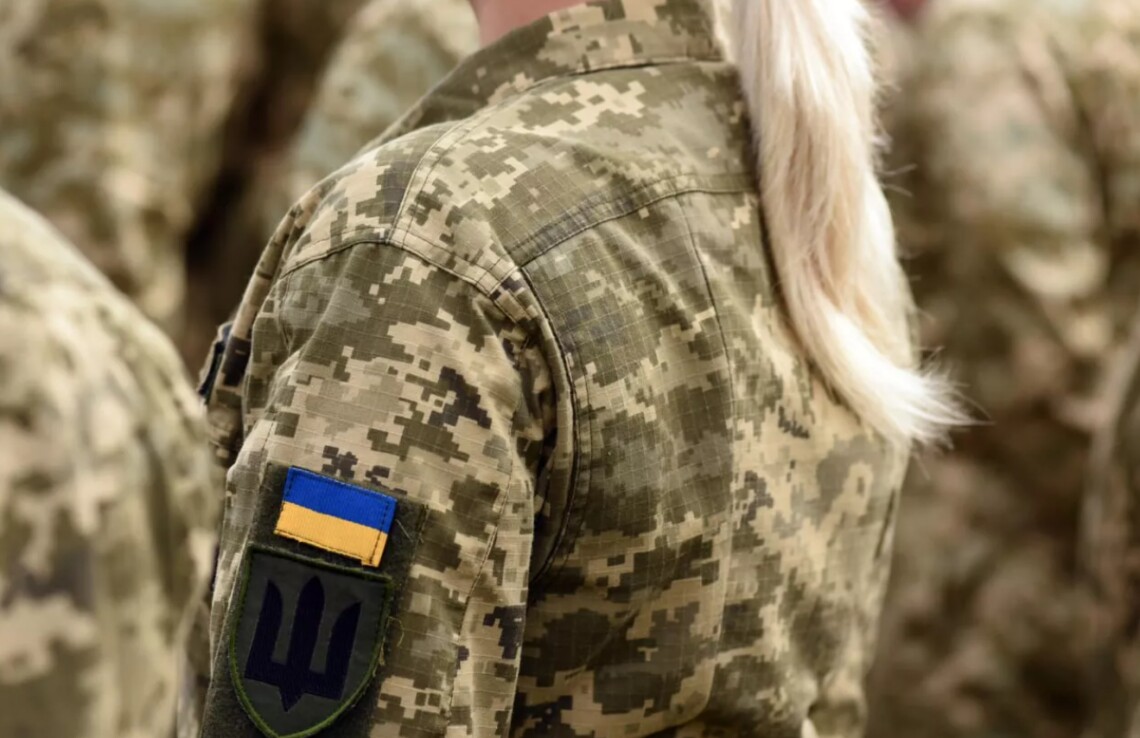
A
“Blind Spot” for the TCC and an Administrative Dead End
At the same time, it’s worth acknowledging that the mobilization of women isn’t entirely impossible. However, it’s extremely unlikely—not only politically, but also purely from an administrative standpoint. This is precisely where the main problem lies, one that few people consider.
Here’s a simple example: all Ukrainian boys aged 16–17 are already registered with the military commissariat. If you’re unlucky enough to be born a man in Ukraine, the TCC knows pretty much everything it needs to know about you starting in your teenage years. And even in this situation, five years into the war, we have millions (!) of men who are evading mobilization and whom they simply cannot find!
Now let’s imagine: women and girls who, in principle, have never been registered with the military. The Military Registration and Enlistment Office doesn’t see them; to it, they’re a “blank spot,” a tabula rasa, and a clean slate. How can they all simply be registered for mobilization? Issue an order for everyone to voluntarily update their information? Let’s assume that millions of women won’t want to and won’t update their information. And then what—will they be hunted down just like the men?
Imagine the scene: burly men—officially recognized as veterans—wearing masks and military uniforms, dragging a frail 25- to 30-year-old woman into a van because she failed to update her information. In the process, they might spray her with pepper spray as a precaution, kick her, or do something even worse. This already looks like a scenario of complete collapse of the state and society.
Even men are often driven off by crowds these days. But everyone will stand up for women: both men and other women. In other words, the state “stumbles” right at the start when it comes to mobilizing women: how are they supposed to register them all, process their paperwork, gather them in one place, and, in fact, mobilize them? From a purely command-and-control perspective, it’s far from certain that the system can handle this—not to mention everything else.
And this is just the beginning. Registering all women of draft age will require enormous resources: expanding databases, increasing the staff of the Territorial Recruitment Centers by at least an order of magnitude, developing new medical standards of fitness for women, and so on. After all, women are physiologically different from men, and military medicine must be prepared for this.
Pregnant women, mothers with young children, women caring for elderly relatives, and others are a separate issue. These are millions of people who cannot be mobilized under any circumstances—and this will further narrow the potential pool.
And what about the legal aspects? To implement the mobilization of women, laws must be amended to define categories, age limits, deferrals, exemptions, and so on. This is not a decision that can be made in a single session of the Verkhovna Rada, but rather requires years of work. And all the while, society will live in a state of uncertainty, which will only intensify panic and drive more women to leave the country. Yet it is precisely women of childbearing age that Ukraine needs for postwar recovery—not to swell the casualty statistics.
A Collapse
Scenario: When the Mobilization of Women Is Theoretically Possible
There is a scenario in which the mobilization of women would become possible. This scenario would occur on the brink of the state’s complete collapse. When the minimum age for men has long since been lowered to 18. When the upper age limit reaches 65–70. When there are no more exemptions, no more deferments, and no more ways to “work things out.” If the war continues for another 3, 5, or 7 years—or even longer—if there are no men left who haven’t been mobilized, if the Russians are already standing on the left bank of Kyiv, preparing to storm the right bank—it is in such a hypothetical situation that the mobilization of women becomes possible. It would be possible in a scenario where collapse is just minutes away—and even then, it most likely wouldn’t help.
History has seen similar examples, and they are very grim. For example, the Volkssturm in Nazi Germany in 1944–1945, when the elderly, teenagers, and women were all drafted into the army, did not save the Third Reich from collapse. North Korea has kept women in the military under compulsory service for decades, but this does not make its army effective or its society happy.
When a state resorts to total mobilization of everyone, it is not a sign of strength. It is a sign of agony. And in modern high-tech warfare, such a move would only hasten defeat, because hundreds of thousands of unmotivated people without proper training would become nothing more than targets for drones.
Since the scenario described above fortunately seems almost fantastical today, the mobilization of women remains extremely unlikely. Why, then, is this even being discussed?
First, a certain segment of society—and the politicians who cater to it—truly believe that absolutely everyone should end up in the trenches. This is their sincere position, even if it is somewhat detached from reality.
Second, such statements are made to keep society “on its toes,” so that people “don’t let their guard down.” It’s cynical, but effective: as long as people are discussing the mobilization of women, they aren’t asking uncomfortable questions about why fortifications still haven’t been built, where the billions allocated for defense have gone, and why those who have been fighting since day one haven’t yet been demobilized. It’s a kind of informational “smoke screen.”
Expert
Opinions
Political scientist and director of the Ukrainian Institute of Politics Ruslan Bortnik is certain: at present, the mobilization of women is nearly impossible; it is extremely unlikely. Although certain categories of women—such as medical professionals—are registered with the military and already face certain restrictions, mobilization of women is, of course, impossible today and is not planned.
“But that’s if we’re talking about today. Looking ahead, if the war continues for another 4–5 years, then sooner or later we’ll have to resort to conscripting women. If it becomes a total war, if the country’s male workforce is completely depleted, then this mobilization could take place in the distant future—around 2029–2030. For now, however, the mobilization crisis will be addressed in a different way: first and foremost, by increasing pressure on those who evade service. In addition, changes to the mobilization age range are possible, with both the upper mobilization age limit—to 58–55 years—and the lower mobilization age limit—to 22–18 years—being lowered simultaneously. Such options are under discussion. At the same time, it is important to understand that parliament does not have full authority in this matter, despite all the statements made by members of parliament. After all, there is a discussion underway about transferring the authority to determine the mobilization age from parliament to the government.
Mobilizing women is currently impossible. Those who bring it up are simply trying to capitalize on the hype. On the other hand, this is the approach of our Western partners, who certainly support it—they do not understand the difference; they do not understand this “affirmative action for women” in the context of the mobilization currently underway in Ukraine. But right now, it’s just hype and the stance of our Western partners—nothing more. “For internal political reasons, the mobilization of women is possible only in the distant future, should the situation on the front deteriorate and the war enter some terminal, absolutely radical, final phase,” noted Ruslan Bortnik.
Political analyst and director of the “Third Sector” Center, Andriy Zolotaryov, says there are currently many rumors circulating about the mobilization of women. But this issue must be considered in the context of what is actually happening.
“There is now much more information indicating that Russia is preparing its own mobilization, and CIA Director Redcliffe’s visit is precisely about that. This is clear confirmation that something is being prepared. And in fact, we see that roundups of men of draft age are not rumors, but reality. It’s clear why the Russians are afraid. They’re afraid that the newly mobilized will be thrown into battle before they’ve had time to receive even minimal training. The new wave of mobilization in Russia isn’t about strengthening the army; it’s about sending thousands of people to their deaths under drone fire. And in the occupied territories of Ukraine, mandatory military registration is already in effect; men are required to register—otherwise, they face either a fine or arrest.
It is unlikely that Putin will act like Stalin: no one will be sent to the front at the ages of 14 or 15. Most likely, there will still be a covert, latent mobilization involving some 300,000 to 400,000 people. And we will need to respond to that. The military has several options on the table. One of them is to lower the age threshold to 21. And in our situation, this is more realistic than fantasies about mobilizing women. And yes, we currently have 60,000 women serving in the Armed Forces of Ukraine, including some directly on the front lines. That is precisely why talk of female mobilization is a distraction designed to divert public attention from issues that are unfavorable to the government. But the decision to carry out further mobilization in Ukraine is inevitable if Russia proceeds with its own mobilization,” Andriy Zolotaryov asserts.

In
summary, the mobilization of women in Ukraine today is more political rhetoric than a concrete plan. It lacks public support, an administrative framework, and even military justification. A society that cannot cope with the mobilization of men is simply not ready for the mobilization of women—neither morally nor organizationally. And statements on this topic are either a complete detachment from reality or a deliberate attempt to keep Ukrainians in a state of constant fear.
And until the war turns into an existential collapse, women in the trenches will remain more of a topic for political speculation than a realistic prospect. And those who speak so passionately about this should first lead by example with themselves and their own families. Only then will it be possible to talk about any kind of justice.


