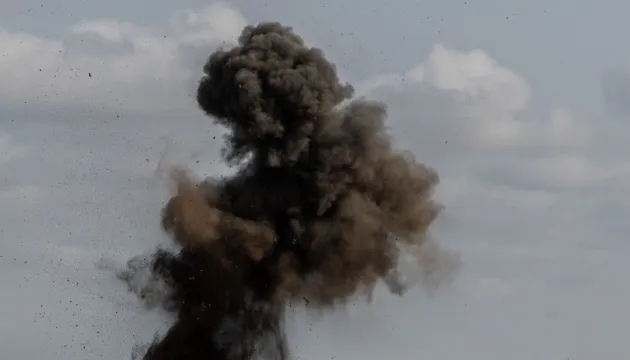
Russian drones attacked an energy facility in the Odesa region this evening. Dozens of communities were left without power as a result of the strike. Oleg Kipper, head of the Odesa Regional Military Administration, reported the attack.
Power companies have already partially restored electricity, but repair work is still ongoing. Critical infrastructure facilities have been switched to backup power. According to Oleg Kipper, the strike targeted energy infrastructure in the Bilhorod-Dnistrovskyi district. “As a result of the UAV attack, an energy facility in the Bilhorod-Dnistrovskyi district was damaged. Fortunately, there were no casualties,” Kipper wrote.
Following the attack, 32 settlements were left without power. In total, more than 15,000 customers lost power. Utility workers began emergency repairs immediately after the strike. As of 9:00 p.m., they had already managed to restore power to about 12,000 customers.
Specialists continue to work to fully restore power supply in the district. Due to damage to the power grid, some critical facilities have been switched to backup power. This refers to critical infrastructure that must operate without interruption even during attacks.
The Odesa region remains a regular target of Russian drone and missile strikes. Energy facilities, ports, and civilian infrastructure are most frequently targeted.
Local authorities have once again urged residents not to ignore air raid sirens and to remain in shelters during the threat of attacks.
Russia cynically called the massive attack on Ukraine a “retaliatory strike”
Over 21,000 customers were left without power due to the Russian attack in the Lviv region
As a reminder, overnight, the Air Defense Forces managed to neutralize 693 aerial targets, including 41 missiles and 652 unmanned aerial vehicles of various types.
Ukrainian President Volodymyr Zelenskyy stated that Russia’s massive attack on Ukraine is not accidental. In this way, Russian leader Vladimir Putin is attempting to divert the world’s attention from international events, particularly U.S. President Donald Trump’s visit to China.