
Shortage of medical armored vehicles on the front lines has reached 80%: the military is sounding the alarm
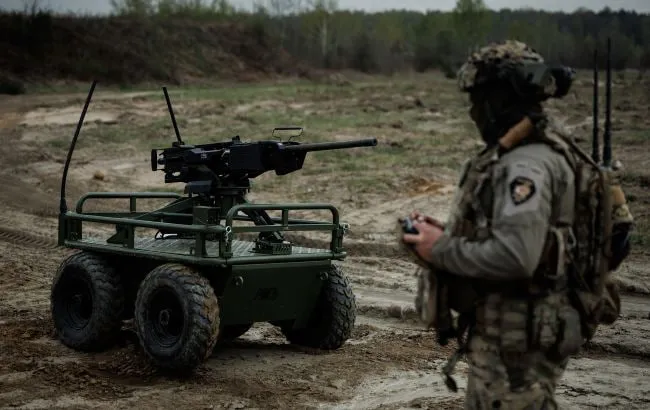
The Ukrainian military faces an acute shortage of armored vehicles for medical evacuation, estimated at 80 percent. At the same time, in 2026, the government significantly increased its focus on the procurement of ground-based robotic systems. Military officials note that RCS are needed on the front lines, but they cannot fully replace armored vehicles at all stages of the evacuation of the wounded.
Medical Evacuation: The Situation Is Critical
According to the publication, in 2026, the government—albeit belatedly—contracted for tens of thousands of ground-based robotic systems. At the same time, almost no new contracts for armored vehicles were signed throughout the year.
This situation is particularly critical for medical evacuation. Military officials explain that robotic ground systems and armored vehicles should not compete with each other but should operate as parts of a single system.
In the most dangerous areas, a robot can pick up a wounded soldier and transport them away from the front lines, after which an armored medical vehicle should quickly take over. This approach simultaneously reduces the risk to the crew and allows for the provision of full medical care to begin much sooner.
A long wait for evacuation costs lives
Commanders of the First Separate Medical Battalion, who directly evacuate the wounded using the NRC, emphasize that a prolonged wait for evacuation can significantly worsen a soldier’s condition.
“Due to severely delayed evacuation, the wounded develop many complications. For example, worsening hypothermia or hemorrhagic shock caused by a loosening tourniquet,” the battalion commanders explained.
Why Mobile Medical Units Cannot Replace Armored Medical Vehicles
Unlike most ground robots, an armored medical vehicle allows intensive care to begin while the vehicle is still in motion.
According to military medics, these armored vehicles are equipped with ventilators, patient monitoring systems, external defibrillators, and cardiac pumps. There have been cases where medics had to begin blood transfusions and perform cardiopulmonary resuscitation right inside the vehicle.
The armor also allows the evacuation team to take greater risks if the casualty’s condition deteriorates rapidly.
"“If a casualty fails to respond and loses consciousness inside an NRK capsule, the armored vehicle must drive out to meet them and provide assistance as quickly as possible,” explained the commanders of the First Separate Medical Battalion.
Significant Shortage of Armored Vehicles
At the same time, military personnel from various sections of the front line interviewed by “UP” report a significant shortage of armored vehicles. Due to this shortage, units are forced to conserve the vehicles they have and are not always able to deploy them closer to the front lines.
The most telling assessment comes from Bohdan Korylchuk, head of the medical service of the 2nd Corps of the National Guard of Ukraine “Charter.” According to him, the shortage of armored medical vehicles for the second stage of evacuation currently stands at 80%.
“We need enough medical armored vehicles for the second phase of evacuation, but we currently have an 80% shortage,” Korylchuk stated.
Ihor Lutsenko, a military officer and co-founder of the “Aerial Reconnaissance Support Center,” noted that modern armored personnel carriers (APCs) often fail to meet the requirements for evacuating the wounded due to their low speed and vulnerability.
Even fast medical evacuation vehicles are not a universal solution
Oleksandr Yabchanka, head of the robotic systems unit of the “Da Vinci Wolves” battalion of the 59th Brigade of the Armed Forces of Ukraine, also points out that even fast UAVs are not a universal solution. On the actual battlefield, their speed is limited by road conditions, terrain, and communication quality.
According to “UP,” negotiations have been underway since the beginning of the year with one of Ukraine’s partner countries regarding funding for the production of a large number of Ukrainian medical armored vehicles. The publication reached out to the deputy defense minister in charge with a request regarding the current status of this project but did not receive a response.
As the strike zone of Russian FPV drones expands, the speed of evacuation and the ability to provide assistance to the wounded even before they arrive at a stabilization point directly affect their chances of survival.
This is reported in an article by “Ukrainska Pravda. Obronka,” which interviewed military personnel, medical professionals, and representatives of the defense sector.
Over the course of August 20, Russian forces carried out 1,069 strikes on 51 settlements in the Zaporizhzhia region. Four people were wounded as a result of the enemy attacks.
On the evening of August 20 and overnight on August 21, Russian troops attacked the Nikopol, Synelnykiv, and Pavlohrad districts of Dnipropetrovsk Oblast with drones. Local authorities reported on the consequences of the strikes.
On the night of August 20–21, Russian troops attacked the village of Lebyazhe in the Chuhuiv district with six strike drones. Two women were killed in the attack, two others were injured, and private homes were damaged or destroyed.
On the night of August 21, Russia launched a massive drone strike on the Sumy region, targeting Sumy and Konotop. The shelling damaged residential buildings, and at least two people were injured.


