
Flash explained what the problem remains with intelligence data from the U.S.
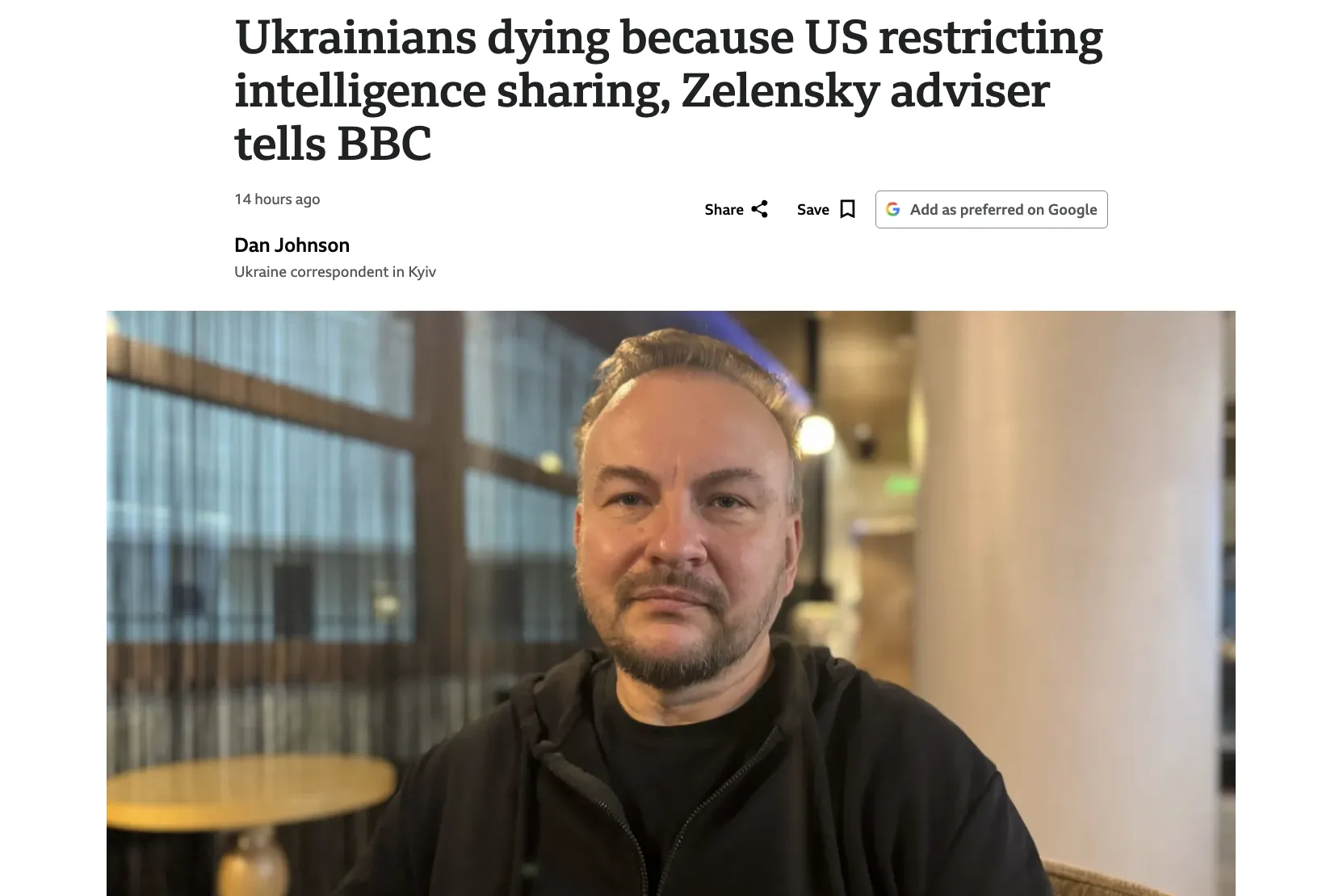
Intelligence data from the U.S. continues to come in, and the issue concerns only air raid warnings. This was stated by radio technology expert Sergey “Flash” Beskrestnov.
The presidential adviser said there were casualties because there was not enough time to warn citizens about the ballistic missile strikes.
According to him, U.S. intelligence remains incomplete and inconsistent, and the U.S. has not provided a clear explanation for the problem.
“This seems very strange. Sometimes we receive this information before an attack, sometimes we don’t. For example, last night we received it, but just one minute before the attack,” the adviser noted.
At the same time, according to Beskrestnov, other forms of cooperation with the U.S. are continuing.
“Intelligence continues to come in, and the problem concerns exclusively the air raid alert component,” he said.
The adviser also noted that Ukraine has its own radar data, which provides some limited warning of approaching attacks. Regarding the timing of the issues with intelligence data and the restrictions on the use of Starlink, Beskrestnov said that this is likely a deliberate move to put pressure on Ukraine.
“It’s likely that the U.S. is trying to tell us: let’s talk, negotiate with Russia, you need to find a compromise,” he told the BBC.
Earlier, Flash explained why Russia is collecting video footage of Geran drone strikes.
Russian jet-powered drones have reached ranges of up to 880 km—Flash warned of a new threat.
The U.S. is sharing data with Ukraine on Russian ballistic missile launches — Flash




