
Ignat explained why it is difficult to shoot down the new Russian jet drones
Russian jet-powered drones are significantly faster than conventional “Shaheds” and can fly at higher altitudes. As a result, Ukrainian mobile fire teams and interceptor drones often cannot catch up with them, and more expensive air defense systems must be deployed to destroy such targets.
Russia is gradually changing its tactics for deploying strike drones. In addition to conventional gasoline-powered “Shaheds,” the Russian military is increasingly using jet-powered models, which have significantly higher speeds.
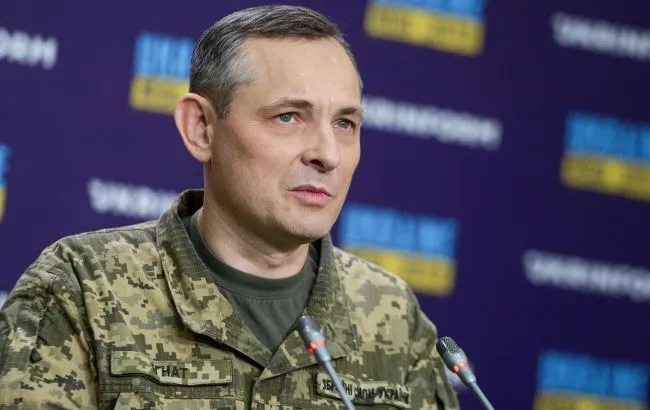
Yuriy Ignat, head of the Communications Department of the Ukrainian Air Force Command, explained why such drones are more difficult to intercept. According to him, the main problem lies precisely in their speed and flight altitude.
How jet-powered drones differ from conventional ones
One such drone is the “Geran-4.” According to Ignat, its cruising speed is about 320 km/h, and its flight altitude can reach 4 km.
The “Geran-5” is even faster. It can accelerate to approximately 450–600 km/h and climb to an altitude of up to 6 km.
By comparison, the standard “Geran-2”—known in Ukraine as the “Shahed”—is slower. That is precisely why, over the years of full-scale war, the Ukrainian military has been able to develop a relatively inexpensive system to intercept it.
Conventional drones of this type are often shot down by mobile fire teams armed with machine guns. Interceptor drones are also actively used against them.
According to Air Force estimates, the effectiveness of countermeasures against traditional gasoline-powered “Shaheds” exceeds 90%.
But jet-powered models are changing the situation. “It is precisely these characteristics that significantly limit the range of means available to combat them,” Ignat explained.
Why Machine Guns Don’t Always Help Anymore
Mobile fire teams have become one of the main methods for countering conventional “Shaheds.” Their advantage lies in the relatively low cost of such interception.
However, the situation is completely different when facing a fast jet-powered drone. A machine gun team must quickly detect the target, aim their weapon, and open fire. If the drone is flying fast, there is much less time to do so.
There’s another problem: altitude. If a jet-powered drone climbs several kilometers, a machine gun can no longer effectively engage such a target.
Therefore, according to Ignat, conventional machine-gun teams are not the primary means of combating jet drones. The same problem arises with some interceptor drones.
Interceptor drones may not be able to catch up with the target
Ukraine actively uses interceptor drones to combat Russian attack UAVs. This is a significantly cheaper option than wasting an expensive anti-aircraft missile on every “Shahed.”
This approach works very well against slower drones. The interceptor can catch up to the target, close to the required range, and destroy it.
But if the target is moving at a speed of 450–600 km/h, such an interceptor may simply not be up to the task. It must not only catch up to the drone but also have enough speed to maneuver.
Because of this, jet-powered UAVs pose a new challenge for Ukraine’s air defense. Systems that worked well against conventional “Shaheds” are no longer always suitable for this new, high-speed target.
Can Jet-Powered Drones Be Shot Down with MANPADS?
Man-portable air defense systems (MANPADS) cannot be completely ruled out in the fight against such drones. Ignat explained that if a jet-powered drone is flying low enough and slowly enough, it can be intercepted by a MANPADS.
There have already been such cases. However, the Russian military is trying to exploit the advantage of jet-powered drones—flying them at higher speeds and altitudes.
Ignat gave a specific example. According to him, a MANPADS is capable of engaging targets at altitudes of up to approximately 4.5 km. If, however, a drone is flying at an altitude of 5 km or higher, such a system can no longer reach it.
“A MANPADS can fire up to 4.5 km, but if a jet-powered drone is flying at an altitude of 5 km or higher, it can no longer be hit by such a system. Therefore, the chances of shooting down jet-powered drones with MANPADS are lower,” Ignat explained.
Thus, even where a MANPADS could theoretically be effective, everything depends on the drone’s specific flight path.
How Ukraine Shoots Down Jet-Powered Drones
Due to the speed and altitude of jet drones, the Ukrainian military has to resort to other means. According to Ignat, the main tools currently remain electronic warfare, aviation, and anti-aircraft missile systems. Electronic warfare can be used to interfere with the drone and its navigation. However, the effectiveness of this method depends on the specific drone model, its control systems, and flight conditions.
Aircraft play a distinct role. Ukrainian pilots attempt to intercept jet-powered drones not only with missiles but also with aircraft cannons. This allows them to avoid wasting an anti-aircraft missile on every target. At the same time, the use of aircraft has its limitations. “At the same time, aircraft cannot operate simultaneously in the same area as ground-based air defense systems,” Ignat noted. Therefore, the command determines on a case-by-case basis which air defense system is best to use in a specific area. This decision is influenced by weather conditions, the drone’s flight altitude, its route, the presence of other targets, and the situation in the air.
Why This Poses a Problem for Air Defense
The main problem with jet-powered drones is not just that they are harder to shoot down. They force Ukraine to use more expensive and scarcer resources. A standard “Shahed” can be targeted with a machine gun or a relatively inexpensive interceptor drone. In the case of a jet-powered target, the options are often much more limited.
This means a greater burden on anti-aircraft missile systems and the air force. Ukraine has limited stockpiles of missiles for its air defense systems, particularly the Patriot, NASAMS, and IRIS-T. Missiles for aviation are also needed. That is precisely why it is important for Ukraine not only to shoot down more drones but also to do so in a way that avoids wasting overly expensive missiles where cheaper alternatives can be used. “The military and political leadership is doing everything possible to ensure that our partners provide us with more defensive capabilities,” Ignat said. This includes anti-aircraft guided missiles for short- and medium-range systems, as well as various types of air-to-air missiles for aircraft. This information comes from a statement by Yuriy Ignat, head of the Communications Department of the Air Force Command.
Earlier, Zelenskyy called for strengthening Ukraine’s air defense and protection against ballistic missiles via PURL.
The occupiers have intensified their attacks in the Kupiansk direction.
As a reminder, Russia attacked warehouses and energy facilities in the Odesa region.
Earlier, drones attacked Ozon logistics centers in two regions of Russia simultaneously.
Drones also struck Krasnodar, causing a fire at a warehouse.
Earlier, warehouses caught fire in Akulovo, near Moscow.
How effective is the interception of jet-powered drones right now?
According to Ignat, the overall interception rate for jet drones is currently just over 60%. This is significantly lower than the rate for traditional gasoline-powered “Shaheds,” which exceeds 90%.
At the same time, the statistics depend on the specific attack. For example, on September 1, the Air Force reported that during one of the daytime attacks, out of 72 jet drones launched, 57 were shot down or neutralized. That’s nearly 80% of the targets. In other words, Ukrainian air defense is already finding ways to counter this new type of threat more effectively, although the average rate remains significantly lower for now. Ignat emphasizes that the Ukrainian military’s task is to gradually improve interception efficiency.
What Might Change Next
Russia continues to develop strike drones and deploy various modifications of them. For Ukraine, this means a constant need to adapt its air defense system. One of the main tasks is to increase the number of systems capable of engaging fast-moving targets. This involves not only missiles but also aircraft, modern electronic warfare systems, and new interceptor drones.
At the same time, it is important to maintain an effective defense against conventional “Shaheds.” If expensive missiles are used against every slow drone, this will quickly place an additional strain on air defense stockpiles. Therefore, the Ukrainian military is effectively building a multi-tiered system. Cheaper systems are intended to destroy the targets they can handle, while more sophisticated and expensive systems are designed to engage fast and high-altitude drones.
On August 30, Volodymyr Zelenskyy stated that the interception rate for all types of Russian UAVs must be raised to over 90%. He specifically cited jet-powered drones as one of the most challenging targets for Ukrainian air defense. Thus, the emergence of jet-powered “Shaheds” is changing the familiar pattern of air attacks. While previously a significant portion of such drones could be destroyed using relatively inexpensive means, their speed and altitude now force Ukraine to rely more frequently on aircraft, air defense missile systems, and other more sophisticated systems.


