
A surgeon explained how FPV drones have changed the nature of injuries
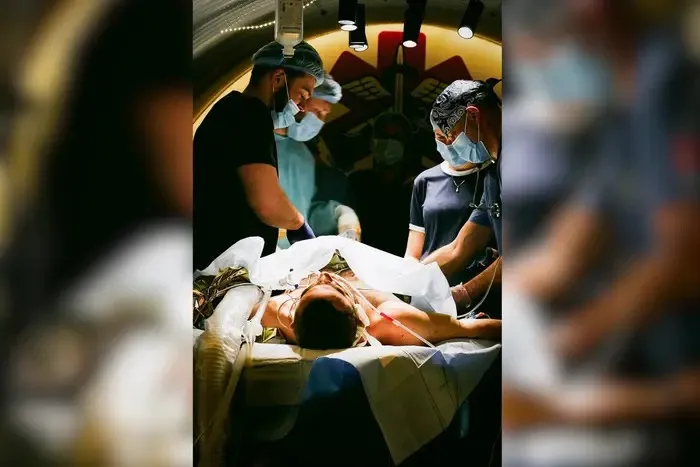
Over the years of full-scale war, Ukrainian medical professionals have increasingly had to treat injuries caused by FPV drone attacks. Hassan El-Kafarna, a surgeon with Doctors Without Borders, explained that such strikes often leave a large number of small fragments in the body, and the injuries can be accompanied by burns.
The nature of the injuries that doctors treat in frontline areas has changed significantly. At the start of the full-scale war, medical personnel most often treated patients with injuries from artillery shelling. Now, a significant portion of these cases involves injuries resulting from FPV drone attacks. FPV drones cause a distinct type of injury. When they explode, they can scatter a large number of small fragments. As a result, a significant area of the body may be affected. “We noticed that in the early stages of the war, we saw more people with shrapnel wounds resulting from artillery shelling. But now we’re seeing more attacks by FPV drones, and these injuries have a specific nature,” El-Kafarna noted.
Why These Injuries Are Difficult to Treat
The problem isn’t just the number of fragments. Some of them can penetrate deep into the tissue. As a result, doctors have to treat a large number of injuries in different parts of the body at once. Such injuries can be difficult to debride and treat further. Medical professionals must remove damaged tissue, treat the wounds, and ensure that infections do not develop.
The situation is further complicated by the fact that patients may sustain burns along with shrapnel wounds. In other words, a single explosion can cause several types of injuries at once. According to the surgeon, a direct hit from an FPV drone can have particularly severe consequences. These include severe limb injuries and, in some cases, traumatic amputations. “These can be severe limb injuries that require amputation, or traumatic amputations of the limbs,” the doctor explained. An explosion can also cause penetrating wounds to the chest or abdomen. In such cases, internal organs and major blood vessels may be damaged.
A large amount of debris poses an additional risk
Another problem is that not all foreign objects and damaged tissue can be easily detected and removed. If debris or dead tissue remains in the wound, it can increase the risk of further complications and infection.
Therefore, treatment for such patients often requires more than one surgery. The patient may need repeated surgical procedures, long-term monitoring, and rehabilitation. For frontline hospitals, this means an additional burden. Medical staff must simultaneously treat large numbers of seriously wounded patients while working in wartime conditions.
Frontline hospitals are facing a shortage of medical staff
Against this backdrop, the healthcare system near the front lines faces another serious problem—a shortage of staff. Robin Meldrum, chief coordinator of “Doctors Without Borders” in Ukraine, Robin Meldram, said during the presentation of the organization’s report “No Place to Run” that the number of doctors and nurses in frontline hospitals has fallen by approximately 60% compared to pre-war levels.
At the same time, the need for medical care there is only growing. Doctors treat both military personnel and civilians who have been wounded by shelling, drone attacks, and other combat operations. Under these conditions, every healthcare worker faces a significantly heavier workload. This is particularly challenging for hospitals located close to the combat zone.
The war is also changing the work of medical professionals
Over the years of full-scale war, Ukrainian doctors have been constantly adapting their approaches to treating combat injuries. Changes in the nature of attacks mean changes in the nature of the injuries they see every day. FPV drones have become one of the main factors driving this change. Their use results in a large number of complex injuries, where a patient may simultaneously suffer from shrapnel wounds, burns, and internal organ damage.
For medical professionals, this means more complex surgeries and longer treatment. And for patients, it means a difficult journey from being saved after an injury to full recovery. At the same time, the shortage of medical personnel in frontline areas makes the situation even more challenging. According to “Doctors Without Borders,” the number of doctors and nurses there has dropped significantly, even though the need for medical care remains high. Thus, the war has changed not only the weapons and methods of attack but also the very nature of the injuries that Ukrainian surgeons treat every day. For medical professionals, this means new challenges, and for the wounded, it means more complex treatment and a longer recovery. Hassan El-Kafarna, medical operations manager for the “Doctors Without Borders” hospital team in eastern Ukraine, spoke about this in a comment to “Glavkom.”
On Thursday, September 10, Russian troops struck the “Gulliver” shopping center in Pavlohrad, Dnipropetrovsk Oblast. Earlier reports indicated four people were killed and 62 wounded, including three children aged 13, 14, and 15.
President Volodymyr Zelenskyy responded to the massive Russian attack on Ukraine and described the consequences of the strike on Pavlohrad in the Dnipropetrovsk region.




