
Prison guards at the Isolation Center were notified that they are suspected of torturing Ukrainians
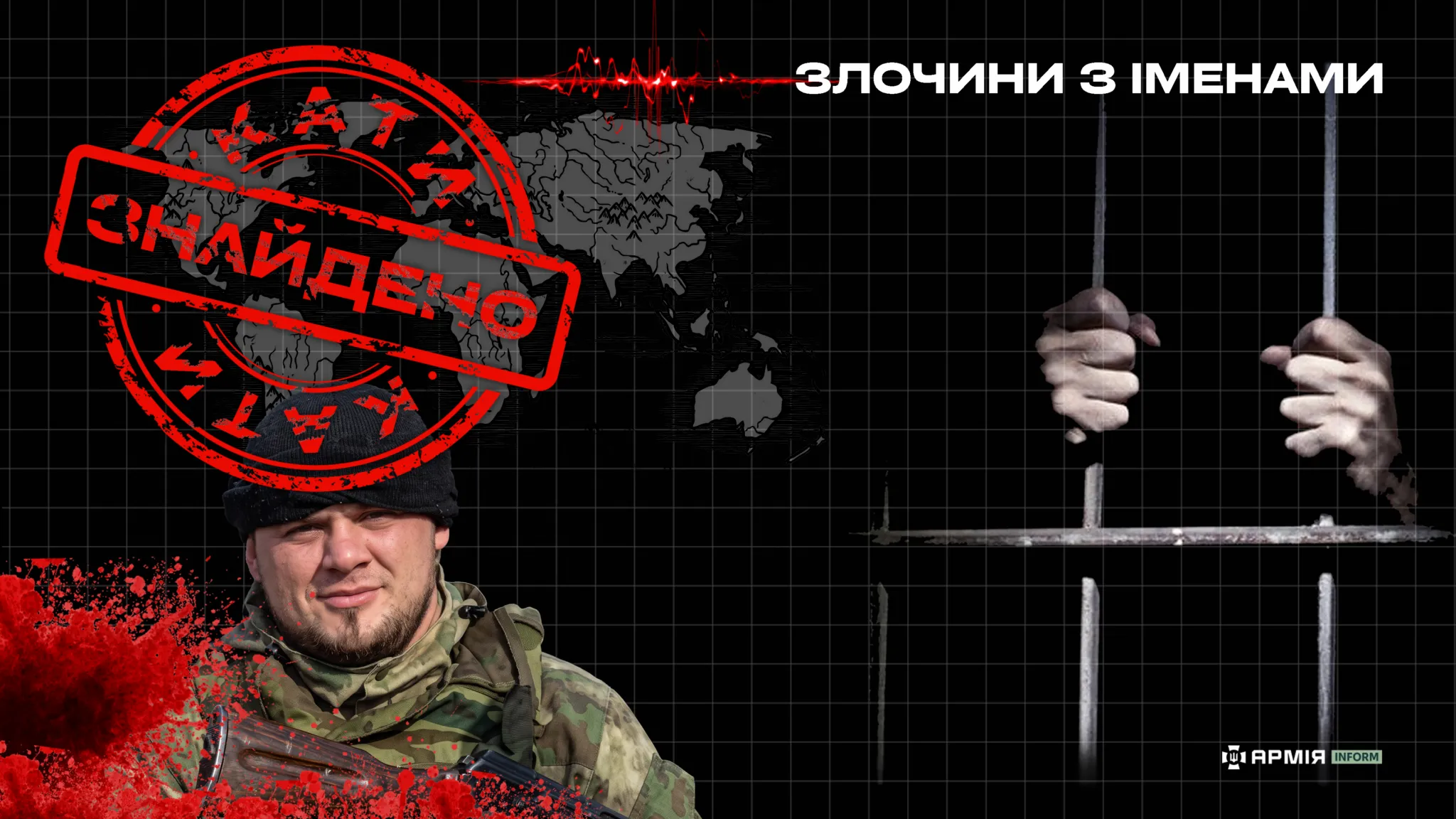
Ukrainian law enforcement officials have charged a former guard at the illegal “Izolyatsia” prison in Donetsk. He is accused of involvement in the torture of civilians who were illegally detained in the occupation prison.
According to the investigation, the suspect participated in the activities of the so-called “torture chamber,” where prisoners were subjected to physical and psychological abuse.
Law enforcement officials are currently continuing to gather evidence and establish all the circumstances of the crimes committed against illegally detained Ukrainians.
The investigation has established that he participated in the cruel treatment of prisoners and civilians, violating the norms of international humanitarian law. The Book of Torturers of the Ukrainian People published an article about the charges filed, which marked another step toward holding accountable those involved in the operation of one of the most notorious Russian torture chambers in the temporarily occupied territory of Ukraine.
On June 24, 2026, the Main Directorate of the National Police in Donetsk Oblast announced that charges had been filed under Art. 438 of the Criminal Code of Ukraine against one of the prison guards who worked in the so-called “DNR Ministry of State Security” in the occupied territory of Donetsk Oblast and tortured civilians at the “Izolyatsia” prison.
Who is the suspect?
Mykhailo Volodymyrovych Kulynich (born August 25, 1987) — a native of the city of Donetsk.
He served as a guard on the premises of the so-called “DNR Ministry of State Security” base, which was illegally established by the occupying authorities on the site of the former insulation materials plant (PJSC “Izolyatsiya”) in the Budyonivskyi district of Donetsk, at 3 Svitlyi Shliakh Street.
Another indictment against him is already pending in the Obolonskyi District Court of Kyiv on a number of serious charges under the Criminal Code, including: the creation of a terrorist group or organization (Part 1 of Article 258-3 of the Criminal Code), the creation of armed formations not provided for by law (Part 1 of Article 260 of the Criminal Code), human trafficking (Part 1 of Article 149 of the Criminal Code of Ukraine), and the formation of a criminal organization (Part 1 of Article 255 of the Criminal Code of Ukraine).
Circumstances of the Crime
In early October 2017, a local resident was detained in Donetsk on suspicion of collaborating with Ukrainian law enforcement agencies.
The man was placed in one of the cells at the “Izolyatsia” prison, where Kulynich directly participated in the brutal torture of the victim.
In order to coerce him into cooperating and extract a confession, Kulynich first beat the detainee, whose hands were handcuffed behind his back at the time.
After that, the man was laid on a metal table, taped to it with duct tape, had electric wires attached to his toes, and was subjected to electric shocks for several hours while being doused with water.
Following this interrogation, the victim was held at the “Izolyatsia” facility until August 2018, during which time he was systematically subjected to physical and psychological abuse.
In addition, under threat of being transferred to a cell without sanitary conditions or being deprived of food, the victim was forced to perform various tasks on the grounds of the “Izolyatsia” base, including cleaning the grounds and collecting scrap metal.
Charges
The investigation classified Kulinich’s actions as cruel treatment in the form of torture, which constitutes a violation of several articles of the Geneva Convention relative to the Protection of Civilian Persons in Time of War of August 12,1949 and its Additional Protocol.
He was notified of the suspicion under Part 1 of Article 438 of the Criminal Code of Ukraine—violation of the laws and customs of war.
The criminal case was entered into the Unified Register of Pre-trial Investigations under No. 12014100080007021 on August 13, 2014.
This was reported by the Office of the Prosecutor General.




