
In the Donetsk region, the Ukrainian Armed Forces and the Azov Regiment thwarted a major Russian assault
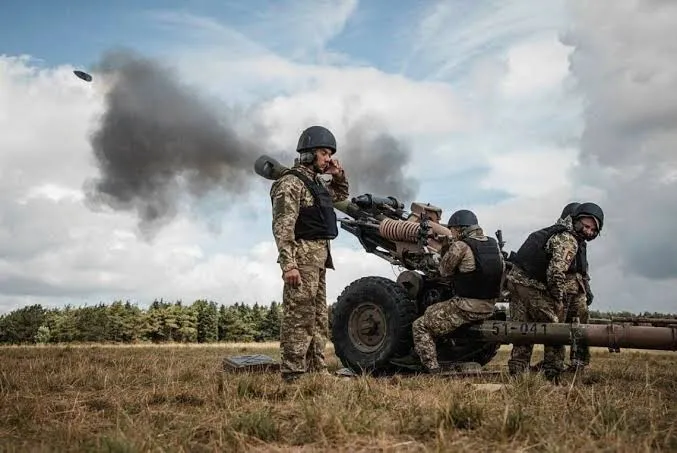
Ukrainian defenders repelled a large-scale mechanized offensive by Russian forces in the Donetsk region. According to Oleksandr Pivnenko, commander of the Ukrainian National Guard, forces from two Russian armies and a tank division took part in the assault, but the attack ended with significant losses for the occupiers.
In the Donetsk region, Ukrainian troops thwarted one of the Russian army’s largest mechanized attacks in recent times. According to Oleksandr Pivnenko, commander of the Ukrainian National Guard, on July 22, Russian troops attempted to break through Ukrainian defenses in an area under the responsibility of the National Guard’s 1st “Azov” Corps, together with adjacent units of the Defense Forces.
According to Pivnenko, the Russian command deployed forces from the 8th and 41st Combined Arms Armies, as well as the 90th Guards Tank Division, for the assault. The occupiers used dozens of armored vehicles and light transport for the attack, hoping to quickly break through Ukrainian positions. One part of the Russian forces advanced from the Novoeekonomichne area, while another came from the direction of Vozdvyzhka. The main target was the area around the village of Shakove. For four hours, the occupiers attempted to advance and establish a foothold in the settlements, but the Ukrainian military prevented them from doing so.
During the offensive, Russian troops actively deployed “Gerbera” and “Lancet” strike drones in an attempt to provide aerial cover for their convoys. In addition, to support the assault, they used multiple launch rocket systems, including the modern “Tornado-S” MLRS. However, the Ukrainian defense was prepared for such a scenario. Minefields and explosive barriers were pre-positioned along the routes of the advancing Russian equipment. Key crossings were also damaged by strikes from tactical aviation, which significantly hampered the movement of the advancing forces.
During the battle, Russian forces attempted to set up pontoon bridges to restore the movement of their equipment. However, these attempts were also thwarted—the pontoons were destroyed by tactical aviation of the Ukrainian Air Force before they could be used. “As a result of the professional actions of all units involved under the command of the 1st Corps of the National Guard of Ukraine ‘Azov,’ using barrel artillery, multiple launch rocket systems (MLRS), and strike UAVs, 7 tanks, 6 armored fighting vehicles, 1 BM-21 ‘Grad’ MLRS, 1 ‘Tornado-S’ MLRS, 3 pieces of specialized equipment, and 47 units of light equipment were destroyed. A total of 123 occupiers were killed, and another 29 were wounded. “The mechanized assault was repelled,” Oleksandr Pivnenko reported.
According to him, the offensive was successfully halted thanks to the joint efforts of several units of the Ukrainian Defense Forces. Servicemen from the 1st Corps of the National Guard of Ukraine “Azov,” the Security Service of Ukraine’s Special Operations Center “A,” the Unmanned Systems Forces, the Ukrainian Air Force, units of the State Border Guard Service—including the “Phoenix” Main Unmanned Systems Division—as well as other units of the National Guard and the Armed Forces of Ukraine.
As a result, the Russian offensive ended in failure. The occupiers lost a significant number of armored vehicles, multiple launch rocket systems, specialized equipment, and vehicles. Additionally, according to the commander of the National Guard of Ukraine, Russian troops suffered significant casualties.
Ukrainian military officials emphasize that such coordinated actions by various branches of the military make it possible to effectively repel even large-scale mechanized enemy attacks. The use of minefields, attack drones, artillery, and aviation made it possible not only to halt the enemy’s advance but also to inflict substantial losses on them even as they approached Ukrainian positions. This was reported on Facebook by Oleksandr Pivnenko, commander of the National Guard of Ukraine.
As a reminder, a Russian port on the Black Sea has halted oil loading operations.
Prior to this, Russia reported a drone attack on the night of July 25. In the city of Engels in the Saratov region, following reports of a drone threat, a fire broke out, likely near a military facility. Russian authorities have not officially reported on the cause of the fire or the possible consequences of the attack.


