
The occupying authorities in Crimea have introduced additional checks
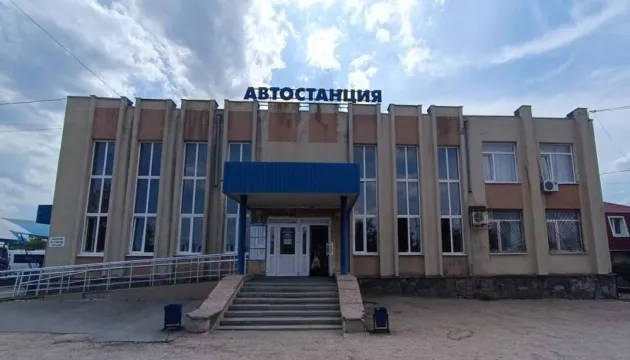
In Crimea, bus stations have introduced stricter checks on passengers traveling on long-distance buses. People are being forced to pass through scanners and metal detectors, and vehicles are being subjected to additional inspections. Officially, this is explained as a security measure, but in reality, it amounts to tighter control over civilians. The resistance movement “Yellow Ribbon” reported this on Telegram.
In Simferopol and at other bus stations in occupied Crimea, additional checks are being introduced for long-distance bus passengers, making trips longer and more controlled, and turning the boarding process itself into a mandatory procedure involving baggage inspection and document checks.
This was reported by the “Yellow Ribbon” resistance movement, which cites data from its activists on the peninsula, noting that controls at transportation hubs have noticeably intensified recently. “Activists from the ‘Yellow Ribbon’ movement report that at bus stations in Simferopol, the occupying administration has introduced additional checks for passengers on long-distance buses,” the statement reads.
According to available information, passengers are being forced to exit the vehicles with their belongings and pass through scanners and metal detectors, while the buses themselves undergo more detailed technical and security inspections, which significantly slows down intercity transport.
Formally, these actions are explained by the need to strengthen security amid the overall situation in the region; however, reports emphasize that in practice, this amounts to an expansion of the system of control over the civilian population and the movement of people within the peninsula, where any travel is increasingly accompanied by additional restrictions and checks.
Russian troops continue to launch massive attacks on the Kherson region. Over the past day, one person was killed in the region, and another 20 were wounded. Kherson and more than three dozen other settlements came under fire.
Over the past day, 13 civilians were injured due to Russian attacks in the Sumy region. Dozens of settlements in the region came under fire, and Russian drones attacked civilian vehicles, homes, and farms.
Russian troops continue to shell the Donetsk region. Over the past day, seven civilians were wounded in the region. Authorities emphasize that the number of war casualties in the region continues to rise almost daily.
Mykolaiv was again under attack by Russian drones, which struck the city and the region. An administrative building was damaged in the shelling, but there were no casualties. The enemy also repeatedly attacked communities in the region with FPV drones and artillery.
The Zaporizhzhia region has endured one of the most intense attacks in recent times, as Russian troops launched hundreds of strikes on dozens of settlements. One man was killed and two others were wounded as a result of the shelling. Both frontline communities and areas further inland came under fire.
Russian drones attacked two districts of the Dnipropetrovsk region simultaneously, damaging a high-rise building, administrative buildings, and utility structures. Despite the strikes, there were no casualties. Air defense forces destroyed some of the enemy drones in the sky over the region during the night.


