
A reserve colonel has suggested a more effective way to de-occupy Crimea
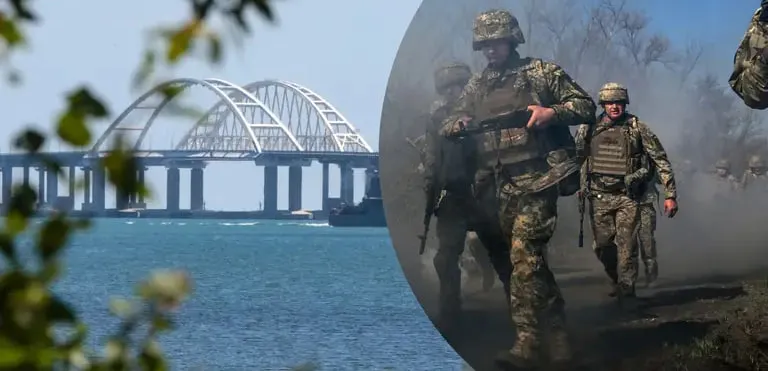
The Russians have already demonstrated several times what happens to such advances without sufficient reinforcements. In 2022, their bridgehead on the right bank of the Dnipro ended in a retreat because they had nothing with which to expand it. Similar attempts near Dobropillia and in Kupiansk also ended in the rout of Russian units.
If a landing force is deployed in Crimea, it must hold the bridgehead until the main forces arrive. Otherwise, our landing force there will simply be destroyed, emphasized the retired Ukrainian Armed Forces colonel.
A direct advance onto the peninsula under such conditions could be too costly. First, we need to create the conditions to support the operation; otherwise, the landing will not mark the beginning of liberation but merely a risky isolated operation.
Crimea must be liberated without a direct assault
At this stage, the systematic destruction of Russian military infrastructure is more effective than a landing on the peninsula. Crimea has both stationary and mobile military facilities that can be detected and struck with long-range weapons. This allows for the gradual elimination of the Russian presence without putting Ukrainian troops at risk in a ground operation.
Crimea must be liberated at this stage using long-range strike capabilities and airpower, Svitan explained.
According to him, there are about 150 stationary military facilities on the peninsula and another hundred or so mobile ones. When there are means to strike them, there is no point in risking lives in risky amphibious scenarios.
Crimea can be liberated from the Russian military presence even without entering Crimea itself,” emphasized the retired Ukrainian Armed Forces colonel.
Operational drones have already reached a level where they can engage some of these targets. Therefore, the issue is not a symbolic entry onto the peninsula, but the systematic destruction of what allows Russia to maintain a military presence there.
The left bank could be the next stage
Another line of reasoning concerns the left bank of the Kherson region. An operation there could make sense if it is supported by an air component and strike capabilities. This is not about a rapid advance into Crimea, but about creating a foothold that will allow us to gradually change the situation in the southern direction.
We can indeed take control of the left bank. This operation has been ready for a long time; we are waiting for reinforcements from the air component, Svitan noted.
If the Ukrainian Armed Forces receive enough aircraft and weapons, they will be able to secure the bridgehead at the required depth. Next, an advance toward Skadovsk and the cutting off of the Kinburn Spit is possible.
In that case, it will be more difficult for the Russians to maintain their entire defensive configuration in the south.
Controlling the land corridor with operational-level strike assets gives us the opportunity this year to land on the left bank and cross the Dnipro, the military expert explained.
At the same time, Svitan emphasized that an advance into Crimea this year is impossible for various reasons. The most realistic objective remains applying pressure on the land corridor, striking military targets on the peninsula, and preparing the conditions for subsequent stages.
Roman Svitan, a reserve colonel in the Ukrainian Armed Forces, flight instructor, and military expert, spoke on Channel 24.
Drones attacked occupied Crimea, and explosions were heard in several areas.
Russian forces attacked three districts in the Dnipropetrovsk region
Russia attacked Kharkiv and the region overnight; there are casualties
Over the past day, 291 combat engagements were recorded on the front lines between the Ukrainian Defense Forces and Russian troops, with the most intense fighting continuing in the Pokrovsk direction.
Over the past day, the Russian army lost another 1,430 soldiers in the war against Ukraine. Ukrainian defenders also destroyed dozens of artillery systems, hundreds of vehicles, and nearly 1,800 drones.


