
The President of Finland believes that Ukraine has begun to gain the upper hand on the battlefield
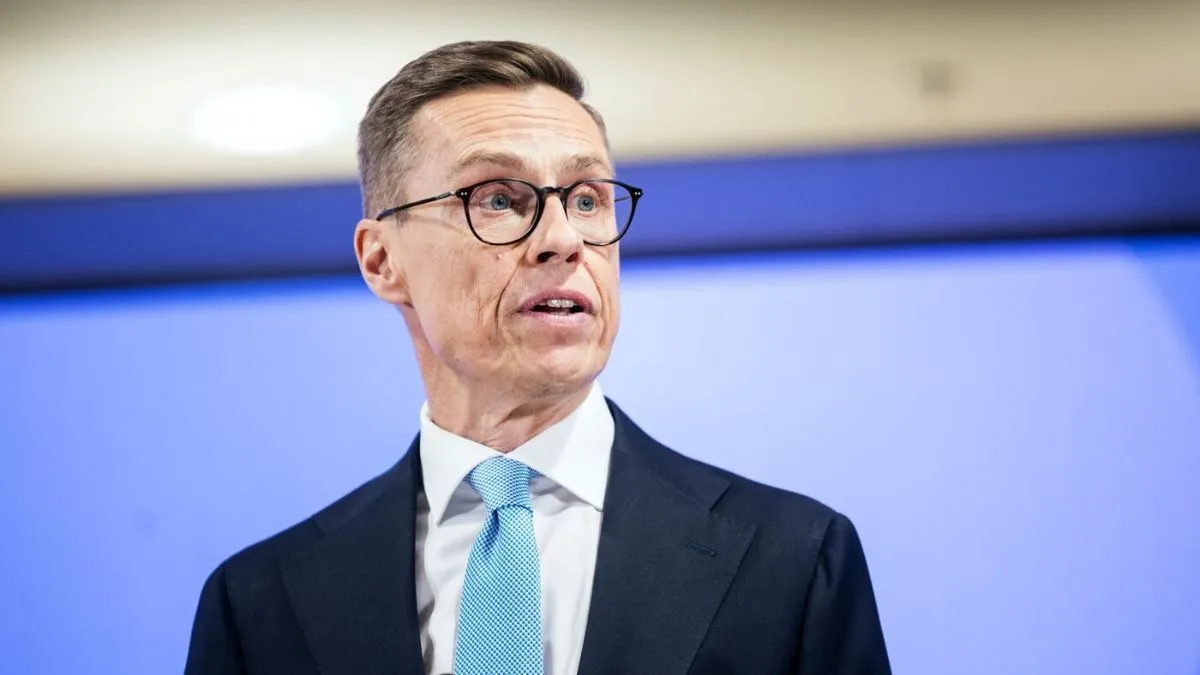
Finnish President Alexander Stubb stated that, for the first time since the start of the full-scale invasion, Ukraine is in a stronger military position than Russia.
In an interview with the Swiss newspaper NZZ, he noted that after the first year of survival and the following three years of resilience, the war has turned into a matter of mathematics on the battlefield. To support this, the Finnish leader cited seven key factors:
Monthly losses among Russian troops (killed and wounded) amount to about 35,000 people, and this level has remained stable for the past six months.
Russia is only able to recruit about 27,000 men per month, creating a constant shortage of personnel.
The ratio of battlefield casualties has shifted significantly in Ukraine’s favor—whereas in December it was one to three, it now stands at one Ukrainian soldier to eight Russians.
Direct combat engagements are becoming less frequent, as 95% of all casualties result from drone strikes and missile attacks.
On the eastern and southern fronts, a so-called “kill zone” 20–40 kilometers wide has formed, where the mortality rate for those who enter it is about 95%. The Russian command is sending infantry there in small groups of one to seven soldiers, while Ukrainian forces are avoiding such suicidal tactics.
In March, Ukraine fired more missiles and drones into Russian territory than the Russian air defense system could shoot down, and Ukrainian drone production is currently ramping up to 10 million units per year.
In April, for the first time since the start of the full-scale war, the Ukrainian Armed Forces regained more territory than they lost.
Given these facts, Alexander Stubb called on the European community to remain calm and expressed skepticism regarding fears of a possible Russian attack on NATO countries. He drew a historical analogy, noting that during World War II, it took Moscow four years to cover 1,600 kilometers to Berlin, whereas in the war against Ukraine, over a similar four-year period, Russian troops have only managed to advance about 60 kilometers. Stubb, citing intelligence reports, suggested that hybrid attacks or cyber sabotage would continue, but ruled out a real kinetic threat to the Alliance.
The President of Finland also noted the growing internal weakness of the Russian Federation. According to him, the majority of the Russian population is already opposed to the war due to regular Ukrainian strikes deep into Russian territory (particularly in the direction of Moscow and St. Petersburg), as well as the government’s forced blocking of popular messaging apps Telegram and WhatsApp, which has begun to create inconvenience in citizens’ daily lives.
Regarding potential diplomatic steps, Stubb emphasized that negotiations with the Kremlin are possible only if Russia itself is in a weak position. He stressed that European leaders must act in concert with the U.S., but the EU must be prepared to take the initiative and lead this process if U.S. foreign policy at some point ceases to fully align with Europe’s security interests.
Source: NZZ.
Russia could attack Europe if China invades Taiwan, according to the NATO Secretary General.
Dictator Putin, ahead of a meeting with a U.S. delegation comprising U.S. Special Envoy Steve Witkoff and Donald Trump’s son-in-law Jared Kushner, stated that Russia is allegedly ready to go to war with Europe but has no such intention.
In the event of a Russian attack on NATO members, the Alliance could launch a preemptive strike against targets on Russian territory, according to Admiral Rob Bauer, Chairman of the NATO Military Committee.
Ukrainian President Volodymyr Zelenskyy considers it entirely possible that Russia could open a second front against another European country even before the war in Ukraine ends.
Earlier, Ukrainian President Volodymyr Zelenskyy stated that the Russian army could attack a NATO member state within the next five years. This would test the Alliance’s resilience.


