
Putin urged Russians to prepare for a prolonged gasoline shortage
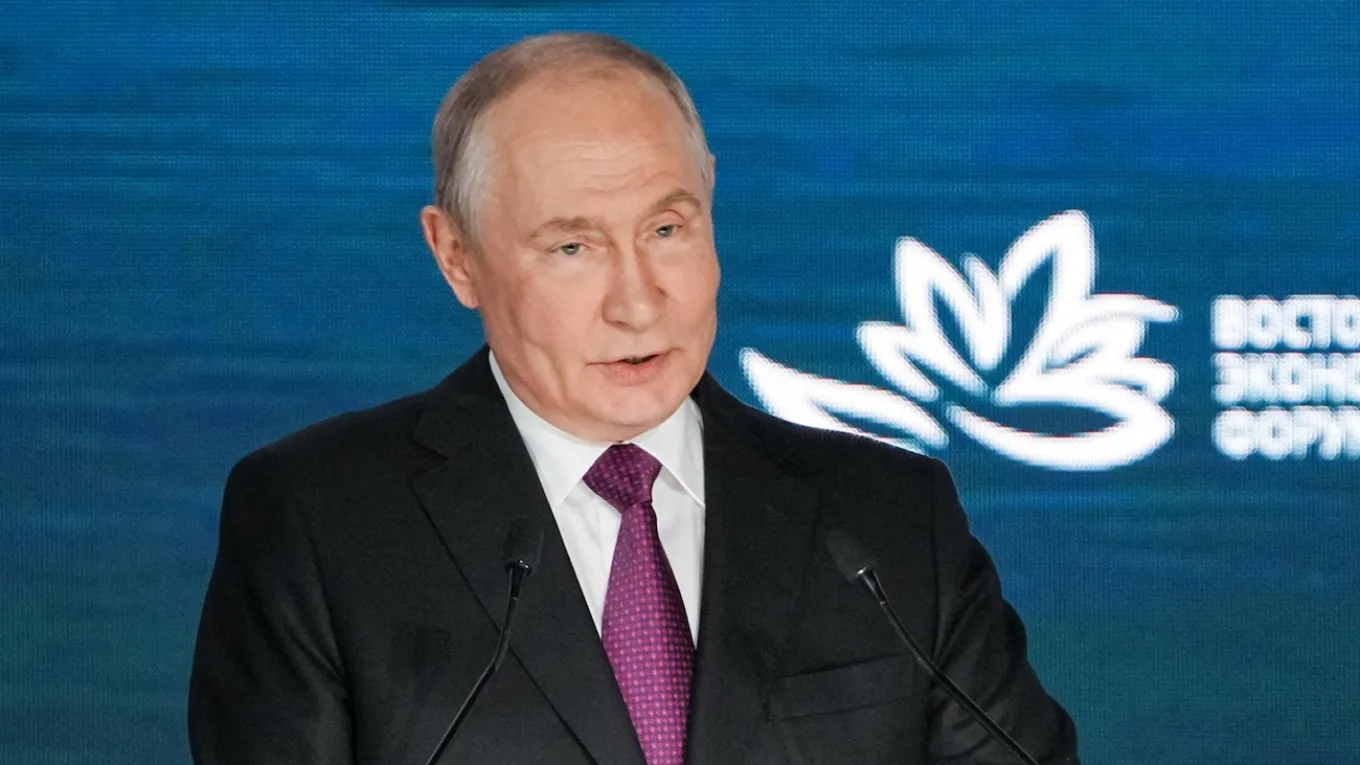
Russian President Vladimir Putin stated that the country’s citizens should be prepared for further gasoline shortages. According to him, the Russian authorities did not anticipate a series of attacks on oil refineries, which have caused fuel production to drop significantly.
During a speech at the Eastern Economic Forum, Putin effectively acknowledged that the Russian government had misjudged the risks to the oil refining industry. He noted that the Kremlin had considered oil refineries to be purely civilian facilities that should not be targeted, even during wartime.
When asked whether Russians would have to get used to gasoline shortages, Putin replied that the country must be prepared for any turn of events. At the same time, he stated that Russia is allegedly forced to respond to strikes on its refineries and to do so “in kind.”
According to the Russian president, damaged facilities are gradually resuming operations, and oil companies are strengthening the protection of their facilities. Putin also stated that they plan to restore about 10% of the capacity that remains damaged in the near future.
He added that as long as the war against Ukraine continues, strengthening air defense must remain the primary means of protecting Russian oil refineries.
Amid attacks by Ukrainian drones, the Russian fuel market has faced a massive shortage. Since the beginning of the year, Russian refineries have been struck at least 70 times, leading to a significant drop in oil refining volumes.
By the end of August, gasoline production in Russia was meeting only about 70% of domestic demand. Due to the fuel shortage, at least 17 regions have imposed restrictions on fuel sales, including limits on the amount of fuel that can be purchased and a system of sales based on even and odd license plate numbers.
In August, at least seven Russian refineries fully or partially halted operations due to drone attacks. On September 2, the Kinef refinery in the Leningrad Oblast—Russia’s second-largest—completely ceased operations.
To cover the shortfall, Moscow has already begun importing gasoline by sea from India, Morocco, and Turkey, and has also increased fuel purchases from Belarus.
This is reported by Russian propaganda media.
Recall that the ISW stated that Russia is unable to overcome the fuel crisis.
CIA Director John Ratcliffe’s visit to Russia this week took place under conditions of heightened secrecy. The decision to send the head of U.S. intelligence to Moscow in person was made personally by U.S. President Donald Trump.
During his secret visit to Moscow this week, CIA Director John Ratcliffe conveyed to the Russian side a pessimistic assessment of the course of the war against Ukraine and called on the Kremlin to begin serious negotiations before Russia’s military and economic situation deteriorates further.
On August 27, the European Commission stated that it had not been informed in advance of CIA Director John Ratcliffe’s visit to Moscow. At the same time, the EU emphasized that it continues to strengthen its own defense capabilities.


