
Russia triples production of Iskander missiles with help from China
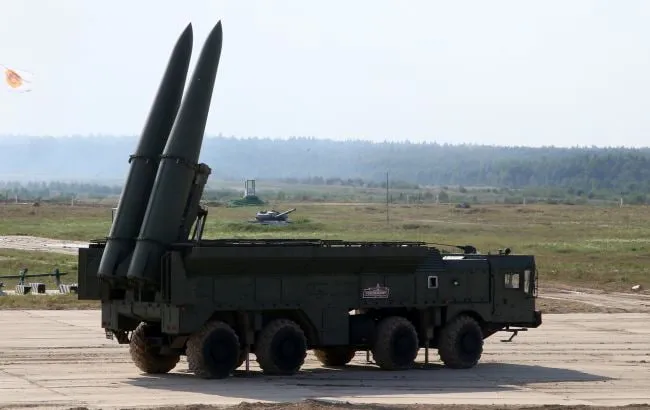
Russia was able to triple the production of ballistic missiles for the Iskander-M systems. According to analysts, a key role was played by the import of components and technologies from China, which allowed the production of weapons to accelerate significantly.
This was reported by the CSIS analytical center.
China became a key supplier to Russia
Analysts note that China became a key factor in restoring Russian military production after the introduction of Western sanctions.
In 2024, trade between China and Russia reached almost $250 billion, compared to $190 billion in 2022. China’s share in Russia’s foreign trade rose to 33.8%, compared to 11.3% in 2014.
Dual-use goods play a particularly important role, which Russia uses for military purposes. These include computer chips, machine tools, radars, sensors, and detectors, which Russia cannot produce in the required quantities on its own.
In addition, in 2024, China accounted for 70% of Russia’s ammonium perchlorate imports — a critical component of fuel for ballistic missiles.
Shipments of drone bodies, lithium batteries, and fiber-optic cables necessary for drone production, which Russia uses in the war against Ukraine, were also recorded.
According to Ukraine’s Defense Intelligence (GUR) cited by Defense Express, as of December 2025, Russia was producing about 50 9M723 missiles per month, and its stockpiles were estimated at 200 units. For comparison, from February 2022 to January 2023, Russia produced only 36 such missiles in total.
Thus, Chinese exports directly contributed to a threefold increase in production rates for Iskander missiles, which Russia uses to strike Ukrainian cities.
At the same time, the Chinese Ministry of Foreign Affairs officially denies that Beijing is helping Russia produce ballistic missiles.
Russia aims for technological self-sufficiency, but is unlikely to achieve it — FT.
The European Union is considering drastically tightening sanctions on Russian oil. Plans include abandoning the price cap mechanism and introducing a complete ban on key maritime services for its transportation.
Polish Foreign Minister Radosław Sikorski said in Brussels that during the EU foreign ministers’ meeting, he would raise the issue of sanctions against oil refineries working with Russian oil.
