
Russia Could Rebuild Its Army to Pose a New Threat to NATO in 5–7 Years – Foreign Affairs
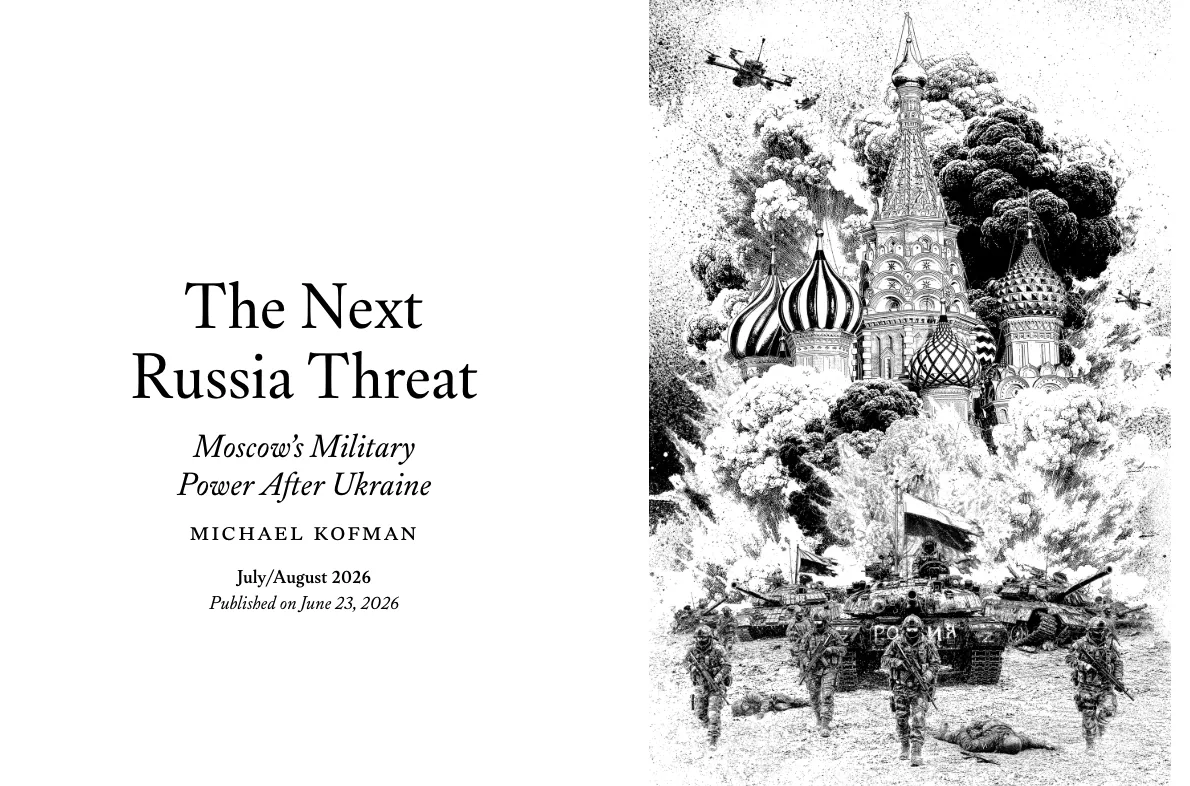
Despite significant losses in the war against Ukraine, Russia is capable of restoring its military capabilities to a level that would pose a serious threat to NATO within five to seven years after the end of hostilities, according to assessments by *Foreign Affairs*.
According to military analyst Michael Kofman, despite at least 400,000 killed and 600,000–800,000 wounded in combat over four years of full-scale war, the size of Russia’s active-duty army has grown from about 850,000 before the invasion to 1.3 million today. Most units have doubled or tripled in size, and most of them have added new drone, reconnaissance, assault, and electronic warfare units. Following Ukraine’s lead, Russia has created a separate branch of the military dedicated to operating drones—the Unmanned Systems Forces.
The losses of military equipment are also colossal: according to publicly available data, as of early May 2026, Russia had lost more than 14,000 armored vehicles and 2,100 artillery systems. At the same time, the Kremlin has pulled thousands of pieces of equipment from storage, refurbished or manufactured thousands more, and North Korea has supplied over 300 artillery systems. Currently, Russia likely has at least as many armored vehicles as it did at the start of the war, and production of the latest T-90M tanks exceeds 200 units annually.
The growth in drone production is particularly noticeable: Russia launches an average of 6,500 attack drones against Ukraine every month, and in 2025, it manufactured over 70,000 such systems. Contracts have been signed for at least another 100,000 drones for 2026. “Glavkom” has previously reported that drone production in Russia grew by 117% over the course of a year, while the rest of the defense industry is losing momentum.
At the same time, Kofman emphasizes that a quantitative recovery does not automatically mean a return to combat readiness. The Russian Armed Forces have lost a significant portion of their experienced officers capable of coordinating large-scale offensive maneuvers and are now fighting in small assault groups of one or two soldiers each. Training for new contract soldiers often lasts no more than two weeks. A culture of centralized decision-making, falsification of combat reports, and a lack of authority among junior commanders continue to hamper the troops’ effectiveness, even despite technological innovations.
The analyst highlights the resource constraints facing the army’s reconstruction: a shortage of skilled labor, an unemployment rate of 2.2%, and competition for personnel between the defense sector and the army. In 2026, Russia’s military spending is expected to reach $180 billion, or $400–500 billion when adjusted for purchasing power parity. “Glavkom” reported that in the first quarter of 2026 alone, the share of military spending in the Russian Federation’s budget exceeded 46% for the first time.
Kofman argues that the alliance lacks its own experience in countering drone threats similar to those Russia is using against Ukraine, and that NATO’s ground forces still do not have sufficient air and anti-drone defense capabilities. According to the analyst, the allies must make difficult decisions now regarding the structure of their armed forces to avoid repeating the miscalculations made at the start of the war in Ukraine.
Read also:
Russia’s fuel crisis is worsening: gasoline is running out at gas stations and lines are growing.
Russia has allowed lower-quality gasoline due to the fuel crisis.


