
Russians Face Prison Time for Videos of Ukrainian Drone Attacks — WSJ
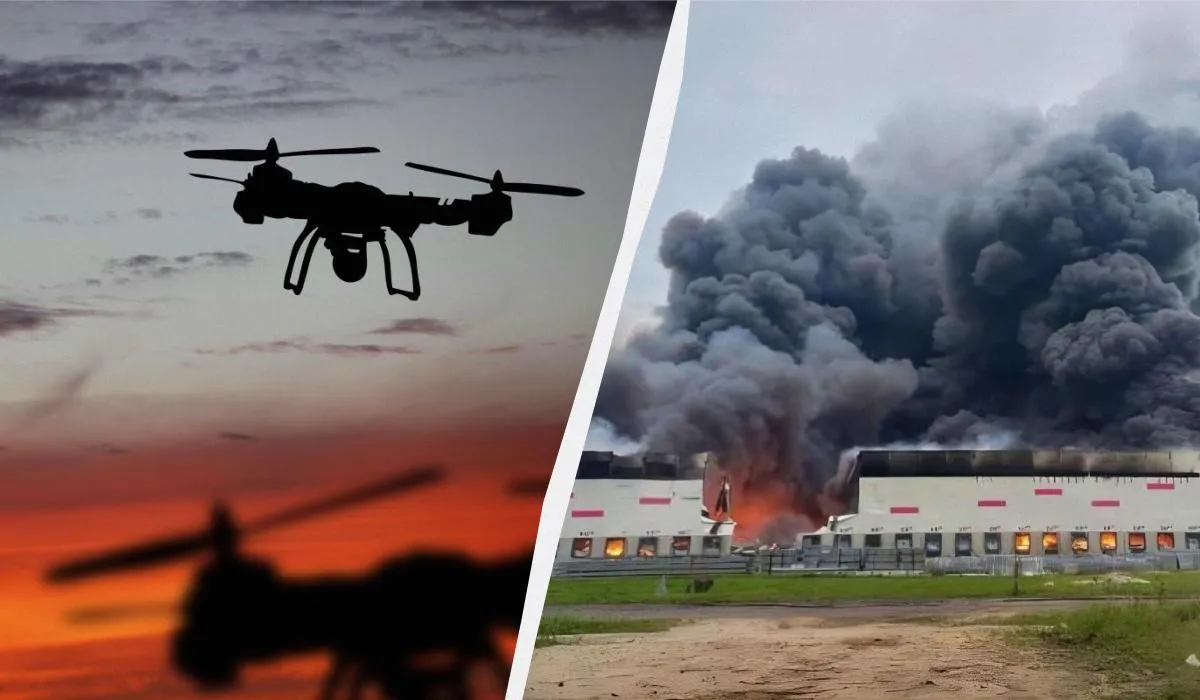
Russian authorities are stepping up pressure on people who film and post videos of Ukrainian strikes on Russian territory. According to The Wall Street Journal, restrictions on filming the attacks have already been imposed in about two-thirds of the country’s regions, and Russians face criminal charges and even accusations of treason for publishing such footage.
The Kremlin justifies the bans as a security measure, but critics believe the authorities simply want to hide the true consequences of the war from the Russian public.
In recent months, Ukraine has been increasingly using drones to strike targets deep inside Russia. Among the targets are warehouses, oil refineries, and facilities linked to Russian military production.
Against this backdrop, Russian authorities are attempting to limit the circulation of photos and videos following the attacks. In roughly two-thirds of Russia’s regions, various restrictions on photographing and publishing images of the aftermath of the strikes have been imposed in recent months. In May, as Ukrainian attacks intensified in the Moscow area, the city’s authorities specifically banned the publication of photos and videos showing the aftermath of the strikes.
Russian officials explain this by claiming that such footage could allegedly help Ukraine assess the results of the attacks and determine the approximate location of Russian air defenses. However, critics of the Kremlin see another reason behind this. In their view, the authorities are trying to prevent Russians from seeing with their own eyes how the war is affecting their lives.
“If there are no images of burning targets”
Abbas Gallyamov, a former speechwriter for Vladimir Putin, believes that for ordinary people, images often carry more weight than official statements. “If there are no images of burning targets, it will be much easier to maintain the illusion that everything is going according to plan,” he said.
According to the WSJ, Russia has been trying to control information online since the start of the full-scale war. However, these efforts have now intensified as Ukrainian drones have begun striking targets farther and farther from the border. Attacks are now being recorded not only in the European part of Russia. Ukrainian drones are reaching as far as Siberia, among other places.
In Russia, people are being summoned to the prosecutor’s office
It’s not just major media outlets or administrators of popular channels who are feeling the pressure. Andrei Broy, a local opposition politician from Yaroslavl, said he was summoned to the prosecutor’s office after posting a video. The only sound audible in the recording was that of a drone.
Moscow residents also say that people are now afraid to post photos and videos of drones. The reason is simple—they don’t want to attract the attention of law enforcement and risk criminal prosecution. Russian law enforcement officials and government officials regularly warn citizens about the consequences of such posts. They promise particularly severe punishments in cases where the video allegedly helps pinpoint the location of Russian air defense systems.
In such cases, people may face charges of treason and imprisonment for up to 20 years. In June, pro-Kremlin TV host Vladimir Solovyov called for punishing those who share such footage. “Everyone who sends such videos should be put in prison,” Solovyov declared.
Discussions of the strikes on Russia are more active than official statements
Despite the authorities’ attempts to limit the spread of the footage, Russians are actively discussing the Ukrainian attacks on social media. According to survey results, one of the most prominent topics has been the strikes on Wildberries warehouses in the Moscow and Tambov regions. These discussions have even surpassed those about attacks on Russian oil refineries in popularity.
At the same time, Russians often do not trust official reports on the consequences of the strikes. They place some of the blame on the Russian government and on Vladimir Putin personally. However, this does not mean that the public has stopped supporting the war. According to data cited by the WSJ, calls for so-called “retaliatory strikes” against Ukraine remain popular among Russians.
Why the Strikes on Wildberries Warehouses Are Important
Attacks on Wildberries facilities have drawn particular attention. At first glance, it might seem that these are just ordinary warehouses belonging to a large marketplace. However, as Foreign Policy reports, Wildberries plays a much more significant role for the Russian military. Due to problems with official military logistics, Russian military units often rely on private procurement, volunteer aid, and fundraising.
Within this system, Wildberries has effectively become one of the channels through which the Russian military can obtain necessary equipment. Therefore, strikes on such facilities are significant not only for civilian infrastructure or business; they can also impact the supply lines of Russian military units.
Against this backdrop, the Kremlin is attempting to simultaneously suppress both the Ukrainian attacks themselves and information about their consequences. The authorities want Russians to see as few images as possible of burning buildings, damage, and air defense operations, and are increasingly threatening criminal prosecution for attempts to share such videos. The Wall Street Journal reports on this.
On the night of August 1, drones launched a massive attack on the Russian city of Ufa in Bashkortostan, located approximately 1,500 kilometers from the Ukrainian border. Following the attack, a fire broke out at one of the oil refineries, and local residents reported a series of explosions.
On the night of August 1, the Ukrainian Defense Forces carried out a series of strikes against key military facilities of the Russian occupation forces in the temporarily occupied Crimea and in southern Ukraine. The strikes targeted warehouses, railway bridges, a maintenance base, a radio-electronic intelligence unit of the Russian Black Sea Fleet, and other military logistics facilities.


