
A conscript from Khabarovsk was sent to the front despite a court case regarding his contract (video)
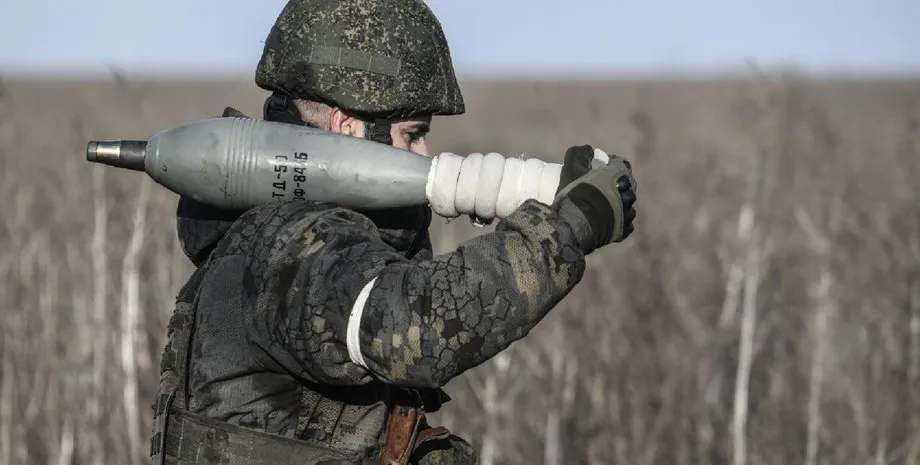
An 18-year-old Russian conscript may have been forcibly deployed to the war against Ukraine despite challenging his contract in court.
This is reported by Russian Telegram channels.
18-year-old conscript Danila Aksenov was drafted on November 20, 2025, into military unit 98563 (118th Separate Pontoon-Bridge Battalion, Khabarovsk). A few months later, according to his own account, he was pressured into signing a contract and then sent to the war in Ukraine two days before a court hearing regarding its termination.
On the night of February 9, 2026, after his 24-hour guard duty, Aksenov said he was taken “for indoctrination” to the guardhouse, where he stood without sleep until morning. Company commander Lieutenant Terentyev, after reviewing his correspondence with his mother, stated that Danil faced a prison term “for espionage” because of his phone, but if he signed the contract, “everything would be forgotten.” After two days without sleep, Aksenov wrote a report requesting that a contract be drawn up with him.
According to his mother, with whom an ASTRA journalist spoke, Aksenov was forced to sign the contract despite his flat feet. According to the professional psychological screening chart from the Komsomolsk-on-Amur military registration and enlistment office (in the possession of the editorial staff), he was recommended only for the lowest-level driver positions, Category III.
On the day the contract was signed, an “interview form” with the serviceman was drawn up—a document intended to confirm the voluntary nature of his enlistment. In the column “who conducted the recruitment activities,” “no one” was entered, and “the interview was conducted by”—also “no one.” At the same time, the recruiters were named by name both in Danil’s own explanation and in the responses from the VVO administration (Lieutenant Terentyev, Corporal Subotin, Privates Shurygin and Martynov)—the latter with the wording “no violations were found.” The exact date of signing varies across the documents: the report and the “interview record” are dated February 10, while the later explanation lists the 24th.
On April 17, Aksenov was transferred to the 69th Separate Cover Brigade of the 35th Combined Arms Army—formally as a “reconnaissance operator”—and transported to the military town of Knyaz-Volkonskoye near Khabarovsk. This happened despite the fact that Danilo had challenged the contract in court, and a hearing was scheduled for April 20. From Knyaz-Volkonskoye, Aksenov was flown to Rostov; on April 26, he made contact from under the occupied city of Mariupol.
According to his mother, at the 69th Brigade’s training ground, Danilo was assigned to the 1st Assault Company. He has twice requested to be assigned as a drone operator—“for some reason, I haven’t received a response.”
“They promise UAVs, but in reality, everything goes to the assault units,” she says.
According to her, his personal belongings were not returned during the transfer: he was left with “two handkerchiefs and a push-button phone.”
Aksenov’s mother claims that Danil’s case is not an isolated one: in Khabarovsk, she says, there is a “conveyor belt”—a scheme where “one day in court, and the next day a transfer to Knyaz-Volkonskoye”—that other conscripts have also gone through. These claims have not yet been independently verified.
The Khabarovsk Garrison Military Court adopted the Ministry of Defense’s position: the contract was “filled out and signed voluntarily,” and the servicemember’s consent to the assessment “is not mandatory.” According to his mother, the court never summoned any witnesses to the forced signing of the contract.
Danylo has not been in contact since May 14—he was sent on a combat mission from his unit’s base in Mariupol. It is impossible to determine his exact whereabouts.
Read also:
Ukrainian Armed Forces strikes against Russian invaders’ logistics are hampering supplies to the front.
The Security Service of Ukraine struck one of Russia’s key chemical industry enterprises, “Metafrax Chemicals,” which was working for the Russian Federation’s military needs; production processes at the facility were halted following the strike.
Ukrainian defense forces have intensified strikes on Russian logistics in the occupied territories, which is already forcing the occupying authorities to restrict traffic on key routes.


