
Satellite images showed the aftermath of the strike on the oil depot in Adler
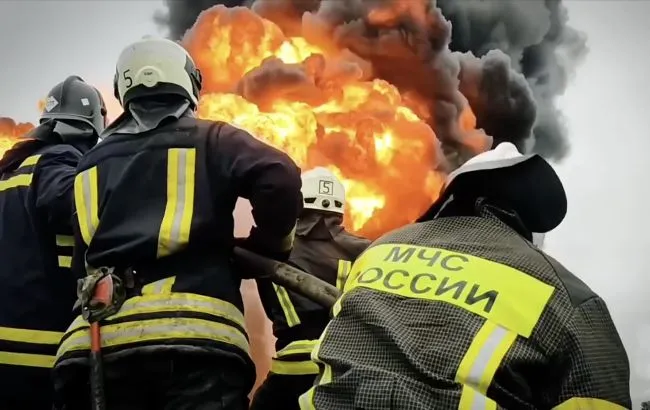
On the night of September 4, Ukrainian drones attacked the “Rosneft-Kubannefteprodukt” oil depot in Adler. Satellite images indicate that 5–6 of the 10 fuel tanks may have been completely destroyed by the strike and the ensuing fire. The special anti-drone nets that the Russians had installed to protect the tanks were unable to prevent the damage.
In Adler, the “Rosneft-Kubannefteprodukt” oil depot was severely damaged following an attack by Ukrainian drones. The strike occurred on the night of September 4. Following the attack, a fire broke out on the facility’s grounds, engulfing the fuel tanks.
According to the publication, satellite images show that between five and six fuel tanks may have been completely destroyed as a result of the attack and the subsequent fire. In total, there were ten such tanks on the oil depot’s grounds. In other words, if the analysis of the satellite data is correct, the facility may have lost approximately half of its fuel tanks following the attack.
The Russians covered the tanks with anti-drone nets
Particular attention is drawn to how the Russians attempted to protect the oil depot from drones. Before the attack, the fuel tanks were covered with special anti-drone nets. Such structures are used to make it more difficult for drones to access critical facilities.
Russia has recently been actively installing such nets over military, industrial, and energy facilities. Their purpose is to physically prevent drones from flying directly to their targets. However, in the case of the oil depot in Adler, such protection—judging by satellite images—was unable to prevent a massive fire.
Some of the storage tanks were completely burned out after the attack. Thus, even the additional protection did not allow the Russians to avoid serious damage to the facility.
What the satellite images show
Satellite imagery allows us to compare the condition of the oil depot before and after the attack. In the images taken after the fire, damaged areas of the facility and storage tanks that, according to journalists’ estimates, were completely destroyed are visible. At the same time, it is difficult to determine the exact number of destroyed tanks based on a single satellite image. Therefore, the estimate of 5–6 tanks is preliminary.
There is also currently no comprehensive independent information regarding the volume of fuel stored in these tanks at the time of the attack. However, even the sheer number of damaged tanks indicates serious consequences for the facility.
Why Oil Terminals Are Important Targets
Oil depots are used for the storage and subsequent distribution of fuel. Therefore, damage to them can affect not only the facility itself but also subsequent logistics. In the case of “Rosneft-Kubannefteprodukt,” this involves fuel infrastructure in the Krasnodar Region.
Attacks on Russian oil depots and refineries have become routine during the full-scale war. Ukraine is thus attempting to strike at facilities that are vital to the Russian economy and the supply of its military. The Russian authorities, for their part, are trying to strengthen the protection of such facilities. One method is the installation of anti-drone nets. But the incident in Adler shows that the nets alone may not be enough to fully protect large fuel facilities.
What Is Known About the Attack
On the night of September 4, a drone attack was reported in the Adler area. A fire subsequently broke out at the oil depot. Satellite imagery now makes it possible to assess the extent of the damage. Preliminary estimates suggest that five or six of the ten storage tanks on the facility’s grounds may have been completely destroyed by fire.
The remaining tanks also require separate assessment, as even if they did not catch fire directly, they may have been damaged by high temperatures or debris. The final extent of the damage is currently unknown. Likewise, there is no confirmed data on exactly how much fuel was lost as a result of the fire or how long the oil depot will be unable to operate normally.
At the same time, satellite imagery already shows the main result of the attack: part of the facility’s fuel infrastructure was seriously damaged, despite the anti-drone defenses installed by the Russians. The Russian service “Radio Free Europe/Radio Liberty” is reporting on the consequences of the strike, citing satellite images.
On the morning of September 4, drones attacked a petrochemical plant in Sterlitamak, in the Republic of Bashkortostan (Russian Federation). A fire broke out at the facility following the attack.


