
Russia is using foreigners to carry out sabotage operations in Ukraine, recruiting them via Telegram
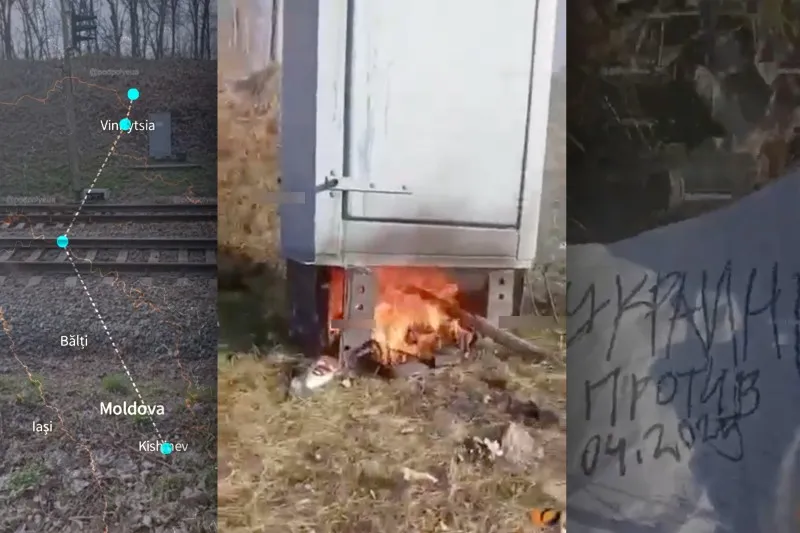
Russia is using foreigners to carry out sabotage operations in Ukraine, recruiting them via Telegram for small sums of money. The resulting arson attacks and sabotage are then portrayed as acts of “internal resistance” to fuel propaganda and create the illusion of instability within the country. This joint investigation was conducted by Slidstvo.Info, RISE Moldova, and the Organized Crime and Corruption Reporting Project.
Pictured here is the interrogation of two Moldovan citizens recruited by Russians for sabotage operations in Ukraine. One of them came to burn down a Ukrzaliznytsia relay cabinet for $300 and received a 10-year prison sentence. In total, Ukraine has already detained about 20 foreigners who were used for arson and fake videos about “internal resistance.”
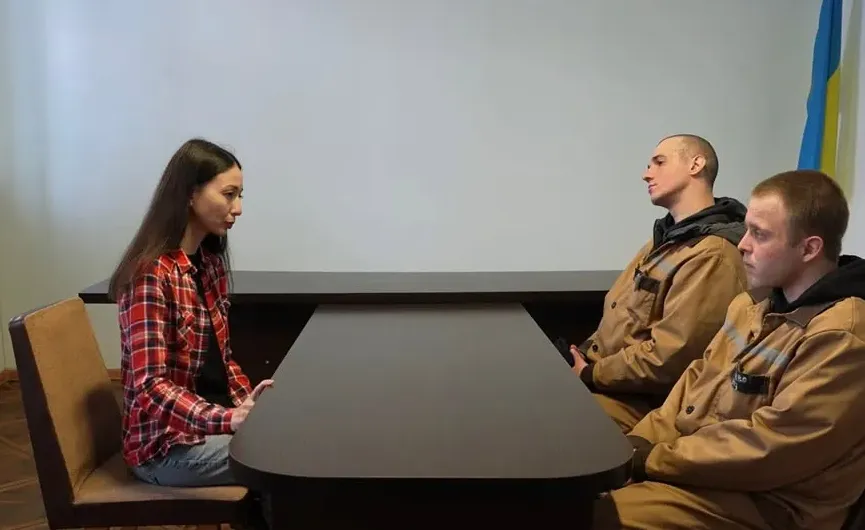
How the sabotage scheme works
A story that at first glance looks like a minor arson is actually part of a large and well-thought-out scheme. In central Ukraine, a 26-year-old man approached an ordinary-looking metal cabinet at a train station. Inside was equipment critical to train operations, signaling, and safety. Damage to such a system could lead not just to delays, but to a catastrophe.

He doused the equipment with a flammable liquid, set it on fire, and recorded everything on his phone. He then sent the video to the person coordinating his actions via Telegram. But the response was not gratitude, but criticism. They wrote to him: “Pour it into the cracks! The fire needs to burn properly.” This shows that to the organizers, the perpetrators are simply expendable.
This case is just one of dozens. Since the start of the full-scale war, such acts of sabotage have become significantly more frequent. Arson, damage to infrastructure, attacks on transportation, and even more complex operations—all of this is often carried out by people recruited through social media. Most often through Telegram.
The main feature of this scheme is its low cost and simplicity. No complex intelligence networks are needed, and no lengthy training of personnel is required. It’s enough to find someone with problems—no money, addictions, or a difficult life—and offer them “easy money.”
Who are these people and why do they agree?
Most of the operatives are not professional saboteurs. They are ordinary people, often young, who have found themselves in difficult circumstances. They don’t always understand what they’ve been drawn into. Sometimes, they don’t fully grasp it at all.
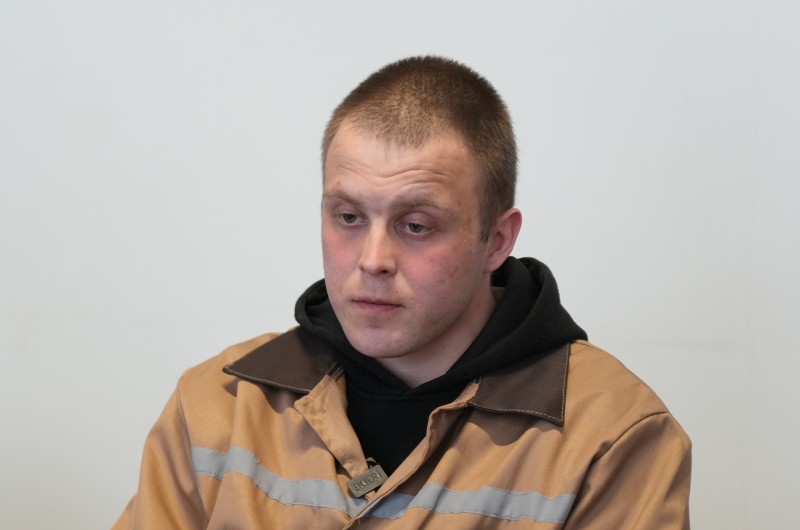
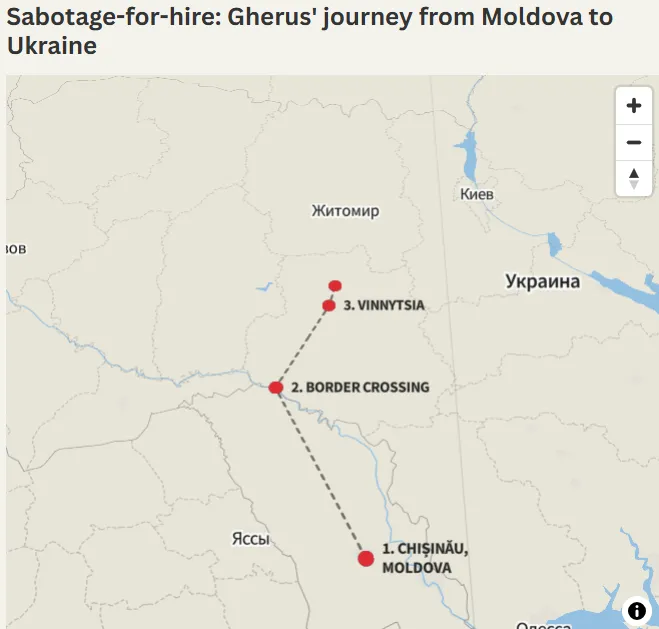
For example, one of the detainees, 26-year-old Viktor Gerus, said that after prison he couldn’t find a decent job. He was making pennies, barely enough for food. The offer to earn a few hundred dollars seemed like a chance to escape poverty. He didn’t even realize right away that it was connected to the war. He received his assignment and went to a small train station in the Vinnytsia region. There, he walked around for a long time, looking closely, and then approached an unremarkable gray cabinet. It was a relay cabinet—it controls the signals and train movements. If damaged, it could paralyze traffic or even cause an accident.
Viktor doused the bag with a flammable liquid, set it on fire, and shoved it into the cabinet. He filmed the whole thing on his phone and sent it to his “handler” on Telegram. But the reply wasn’t what he expected. “Pour it into the cracks! It should burn properly,” they wrote to him. “This is bullshit, it’s just smoldering. They won’t pay us for this.”
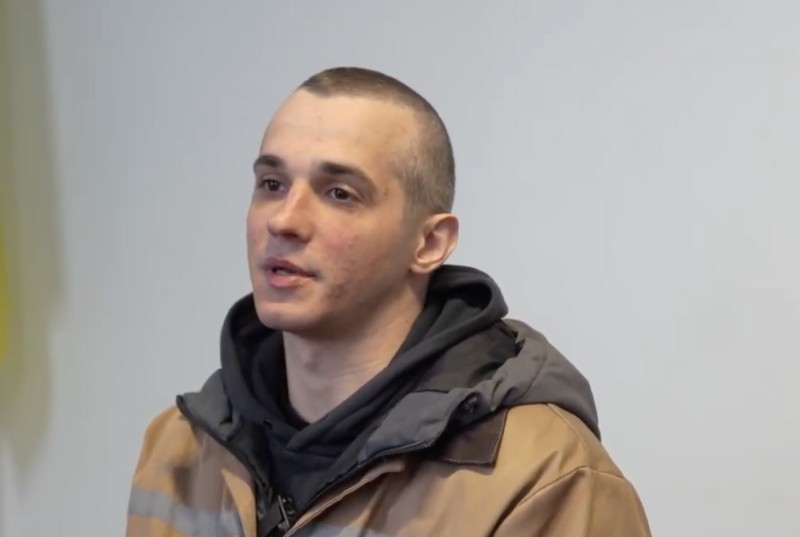
His friend Iurie Lupu, who went with him, also had problems with the law and his health. Someone messaged him and offered him a “side gig.” He didn’t know who was behind it. He didn’t know what the consequences would be, but he agreed.
People like this often say the same thing: they didn’t want to harm Ukraine. They don’t support the war. But money and desperation won out. And only after their arrest do they realize they’ve become part of a bigger game.
One of them said outright: “I realized something was wrong when they asked me to write a line for the video.” It was then that he felt this wasn’t just arson, but part of some bigger story.
Money as the main motivation
The sums are small. In this case—$300 for two people. They were given $200 upfront, with another $100 promised afterward, but for someone without an income, it looks like an opportunity. And often, people don’t even think about what they’re actually doing. “I didn’t want to harm Ukraine. I’m against the war,” Viktor said after his arrest.
How propaganda works
The most interesting part begins after the sabotage. Videos of the arson are posted on pro-Russian Telegram channels. But they present it completely differently from how it actually happened. The captions claim it’s supposedly the work of the “Ukrainian underground.” That it’s “resistance against the government.” That Ukrainians themselves are opposing the state. And that such cases are becoming more frequent.
To make it look convincing, the perpetrators are forced to record videos with captions. For example: “Ukraine against mobilization.” Or other phrases meant to create the desired narrative. In reality, these people are foreigners or random participants. They have no connection to the “resistance movement.” But for propaganda, that doesn’t matter. The main thing is to create an illusion.
Experts say this is one of the main goals of such operations. It’s not so much about destroying a target as it is about influencing perception. To sow distrust. To show that “there are problems within the country.”
Why is this dangerous
The physical damage from such sabotage is sometimes minor. But the psychological impact is much greater. People see the news, videos, and reports and begin to doubt. This creates a sense of instability. As if something is happening inside the country. As if there is some hidden conflict. And that is exactly what the organizers are aiming for.
Analysts explain: such operations are part of hybrid warfare. They are not about the front lines. They are about information, trust, and public sentiment. One expert noted: “It looks like local actions, but in reality, they are directed from outside.” And that is precisely why they are difficult to track and stop.
Who is behind the scheme
Ukrainian law enforcement believes that Russian intelligence agencies are behind these operations. But proving this directly is difficult. Pseudonyms, cryptocurrency, and anonymous accounts are used. The coordinators do not contact the operatives directly. They assign tasks, receive videos, and pay. Everything is done remotely. This minimizes the risks for the organizers.
Experts call this the “shadow economy of sabotage.” Like freelancing, but for crimes. There’s a task, there’s a perpetrator, there’s payment. And all of this without any guarantees for those who agree. At the same time, the perpetrators themselves are the most vulnerable link. They are quickly found, detained, and convicted. While the organizers remain in the shadows.
Why Moldova?
Many of the foreigners are Moldovan citizens.
The reasons are simple:
— economic problems
— easy access to Ukraine
— knowledge of the language
This makes people more vulnerable to recruitment.
What is known so far
At least 18 foreigners have already been convicted in Ukraine for similar crimes. Hundreds more Ukrainians are facing charges related to sabotage. Many of them operated using the same scheme. The perpetrators include people from various countries. However, citizens of neighboring states appear particularly frequently. This is explained by the ease of travel and economic problems.
Similar cases are being reported across Europe:
— arson
— sabotage
— attempted attacks
And everywhere, the same pattern:
social media → money → simple task → video → propaganda
Law enforcement warns: such cases may recur. And it is important to understand how this scheme works. Because the main goal is not just arson or an explosion. The main goal is to change how people perceive reality.
This story isn’t about a single arsonist or a single act of sabotage. It’s about a system that uses people as tools. Cheap, disposable, and defenseless. And while some are looking for easy money, others are using this for a bigger game. A game where the main stakes aren’t physical targets, but trust and stability. That’s exactly why it’s important to talk about this. And to explain how it works.
As a reminder, a weapons supply scheme orchestrated by Pushilin has been exposed.
“DPR” leader Pushilin made a cynical remark about the “Russian spirit” amid protracted fighting.
As a reminder, “DPR” leader Denis Pushilin was wounded in Lyman.
Also, “DPR” leader Pushilin appointed a new Gauleiter in occupied Mariupol.


