
Ukraine is creating a maritime shield using drones and robots – Reuters
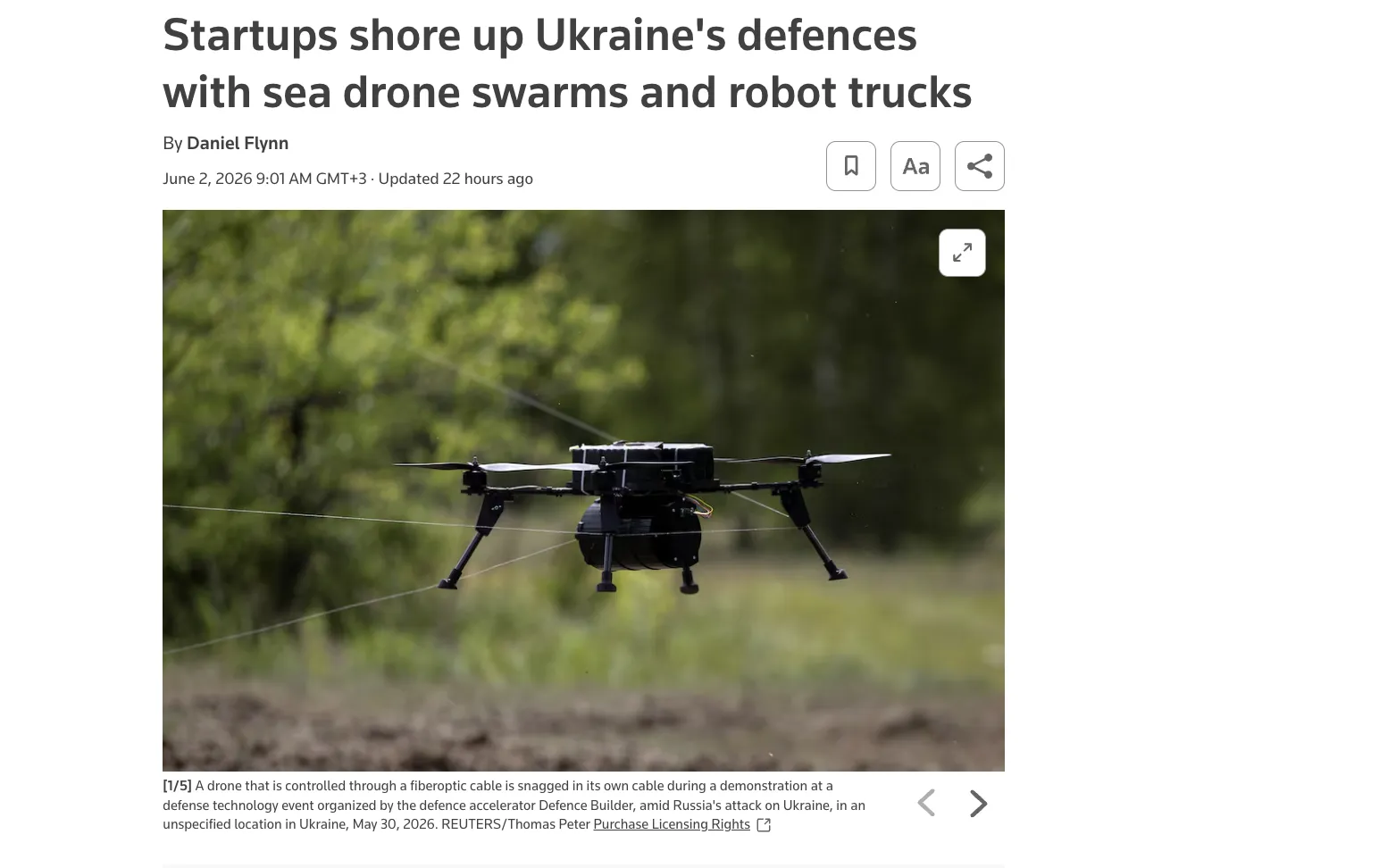
Tech startups are increasingly stepping up to bolster Ukraine’s defenses by developing swarms of marine drones and autonomous robotic systems. One such initiative is a project led by a former U.S. submarine commander who is working to create a maritime shield to protect Ukraine’s coastline from Russian attacks.
Charles Maher—a former U.S. Navy officer—didn’t just ask himself this question; he set out to solve it. He founded the Danish company BlueShadow and, together with units of the Ukrainian Armed Forces, is developing a system that looks like something out of science fiction: four squadrons of 12 autonomous boats each will patrol the Black Sea 10–12 km from the coast and intercept enemy targets.
The first squadron, armed with missiles and interceptor drones, is scheduled to begin operations in early 2027.
BlueShadow is one of eight companies that showcased their developments to the Ukrainian military last weekend through the private accelerator Defence Builder. It’s something like a “weapons incubator”: startups receive $10,000 in seed funding, four months of mentorship, and most importantly—direct access to military personnel who can immediately test and evaluate the product. In return, the accelerator takes a small equity stake.
“Business is business, but we’re all serving a greater purpose,” says Defence Builder CEO Line Rinvig. “To ensure that the solutions needed to win this war receive financial support.”
Defence Builder is part of the Investor Club—an association of about 25 institutions raising funds for the Ukrainian defense sector. And the numbers speak for themselves: publicly disclosed investments in the sector have skyrocketed from $1.1 million in 2023 to $105 million in 2025.
Ordering weapons has become easier: brigades purchase products directly through Brave1 Market and DOT-Chain—a sort of Amazon for weapons, featuring 800 items from 200 manufacturers. And just like on Amazon, you can leave a review.
Thousands of drones have turned the area near the front line into a place where it’s best for people to stay out of. That’s why remotely controlled vehicles have become one of Defence Builder’s main focuses.
The Estonian startup Telearmy solves this problem simply: starting in 2023, it will install remote control systems in standard trucks and armored vehicles on the front lines—and an operator will drive the vehicle from hundreds of kilometers away. Company founder Ann Laansoo showed journalists a modified BRDM-2M and explained that the system is suitable for almost any vehicle.
“It’s no longer possible to send soldiers to the front lines, and our technology provides a layer of protection that frees the soldier from having to be there,” he said.
There is another problem that startups are addressing: Ukraine lacks “medium-range strike” drones to target Russian logistics bases and supply lines. The solution came in the form of Wingtech’s development—the Haba, a reusable fixed-wing bomber with a range of up to 300 km that is resistant to electronic jamming. The drone has been in combat for over a year; recently, a major Ukrainian defense contractor invested in Wingtech so that the company could finally ramp up production.
This is reported in a Reuters article.
Read also:
Russian dictator Vladimir Putin has made yet another cynical statement, claiming that the full-scale war in Ukraine is allegedly nearing its end.
Putin has authorized the army to invade other countries to free Russians who have been imprisoned


