
Ukrainian drones struck key facilities at the Omsk Oil Refinery
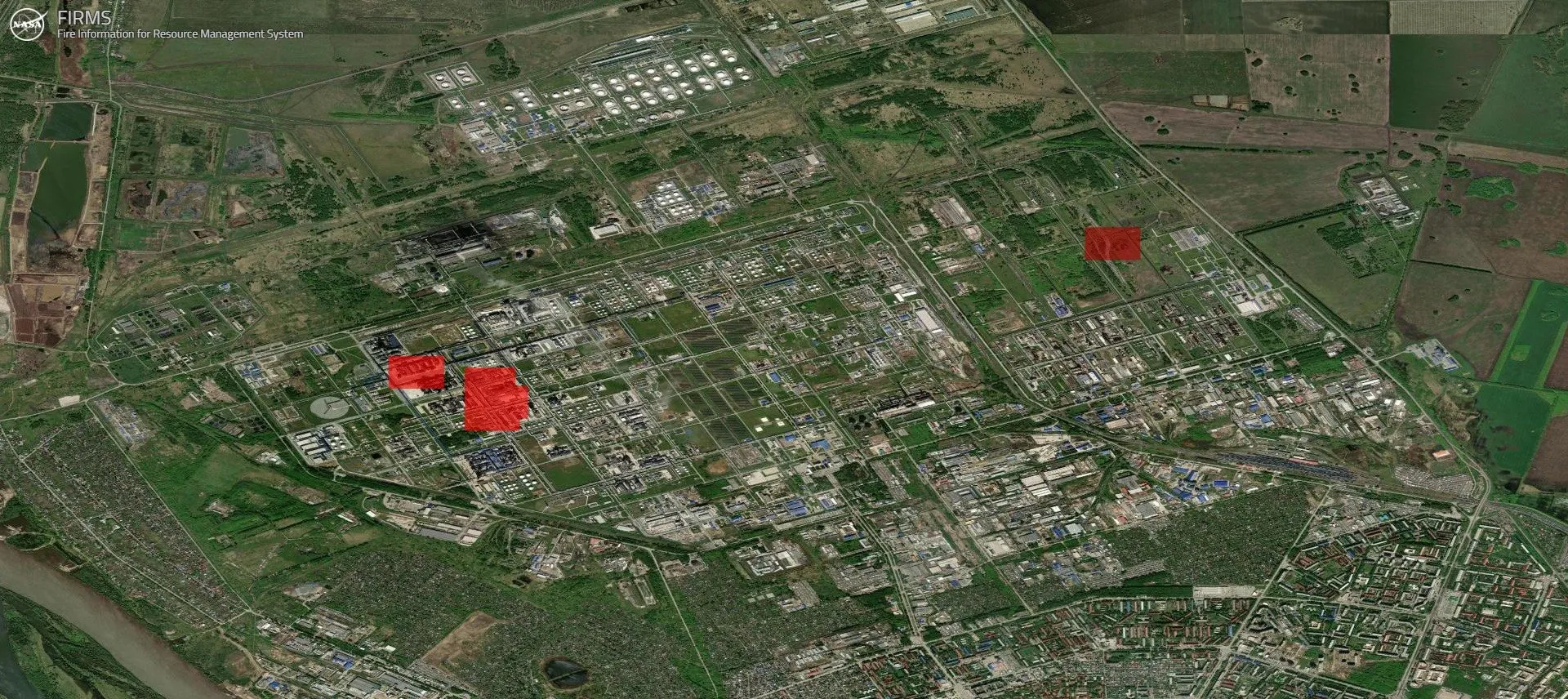
On July 6, satellite imagery captured large-scale fires on the grounds of the Omsk Oil Refinery in the areas where the key AVT-10 and AVT-11 processing units are located—the newest and most powerful of the refinery’s four units. Damage to these facilities at Russia’s largest oil refinery will have critical consequences for the production process of the entire plant, which is now 70% out of operation.
AVT-type units (atmospheric-vacuum tubular units) form the backbone of any oil refinery, as they are where the primary processing of crude oil takes place. The AVT-10 and AVT-11 units separate crude oil into fractions under high temperatures and pressure, producing feedstock for the subsequent production of gasoline, diesel fuel, and jet fuel. A distinctive feature of the ELOU-AVT-11 unit is its enormous design capacity of 8.4 million metric tons of crude oil per year, making it one of the most important elements in the company’s production chain.
The AVT-10 is an older unit with lower capacity. Its capacity is significantly lower, typically ranging from approximately 4.5 to 6 million metric tons per year, depending on the current state of modernization. Although it has undergone upgrades (including the replacement of columns and the modernization of automation systems during a large-scale plant reconstruction in the 2010s), its architecture is simpler compared to that of AVT-11.
The simultaneous loss of both of these units means that the refinery has lost not just two random units, but in fact more than half of its total crude oil primary distillation capacity, which amounts to over 21 million metric tons per year. Without the AVT-10 and AVT-11 in operation, the other secondary refining units simply have nothing to process, as the flow of feedstock (gasoline, diesel, and fuel oil fractions) is critically reduced.
Damage to the rectification columns and tube furnaces halts further secondary refining processes, preventing the plant from producing high-octane AI-92 and AI-95 gasoline, “Euro-5” diesel fuel, and TS-1 and RT grades of jet fuel. Given that the refinery was actively supplying fuel to the Russian army’s invading forces, the prolonged repair of such complex, high-tech equipment creates a direct shortage of petroleum products for the Russian Federation’s military logistics.
At the Omsk Oil Refinery, in addition to the damaged AVT-10 and AVT-11 units, there are two other similar primary oil refining units in operation—the AVT-6 and AT-9 (atmospheric distillation unit). The main difference between the AVT-6 and AT-9 units and the damaged AVT-10 and AVT-11 units lies in their outdated technology, significantly lower capacity, and limited functionality. Their combined capacity typically does not exceed 7–8 million metric tons per year. They are physically incapable of compensating for the loss of giants like the AVT-11. The refinery can continue to operate using these units, but production volumes of high-quality fuel (especially jet fuel and high-octane gasoline) will drop dramatically, as these units are technologically incapable of meeting the secondary refining needs of the Omsk Oil Refinery.
The General Staff of the Armed Forces of Ukraine confirmed the strike on the Omsk Oil Refinery, located nearly 2,500 kilometers from the state border. A direct hit followed by a fire was recorded on the refinery’s premises.
The plant specializes in producing a wide range of fuels, lubricants, and petrochemical products. In particular, it produces high-octane automotive gasoline grades AI-92, AI-95, and G-Drive 100; Euro-5-compliant diesel fuel; and TS-1 and RT aviation kerosene. The plant also produces benzene, paraxylene, orthoxylene, raw materials for carbon black, and motor and industrial oils.




