
In Russia, drones attacked the Syzran Oil Refinery in the Samara Region

In the Samara Region of the Russian Federation, drones attacked the Syzran Oil Refinery, one of the key facilities in Russia’s fuel and energy sector.
This was reported by the region’s governor, Vyacheslav Fedoryshchev.
Two people were killed and several others were injured as a result of the drone strikes.
The Syzran Oil Refinery, owned by Rosneft, plays a vital role in supplying fuel to both the civilian sector and the Russian military.
Among the key reasons for the facility’s strategic importance are:
- high refining capacity—the plant is capable of processing up to 8.9 million tons of crude oil per year, which accounts for about 3% of Russia’s total oil refining
- fuel supply to Russian regions—the facility supplies gasoline, diesel, and bitumen to the Volga region and central Russia
- supplying the Russian military—the plant produces diesel fuel and lubricants for military equipment
- Supply of jet fuel — the fuel is used by Russian military airfields from which missile and bomb strikes are carried out against Ukraine
The facility is one of Russia’s largest oil refineries and produces automotive gasoline, diesel fuel, jet fuel, bitumen, and lubricants.
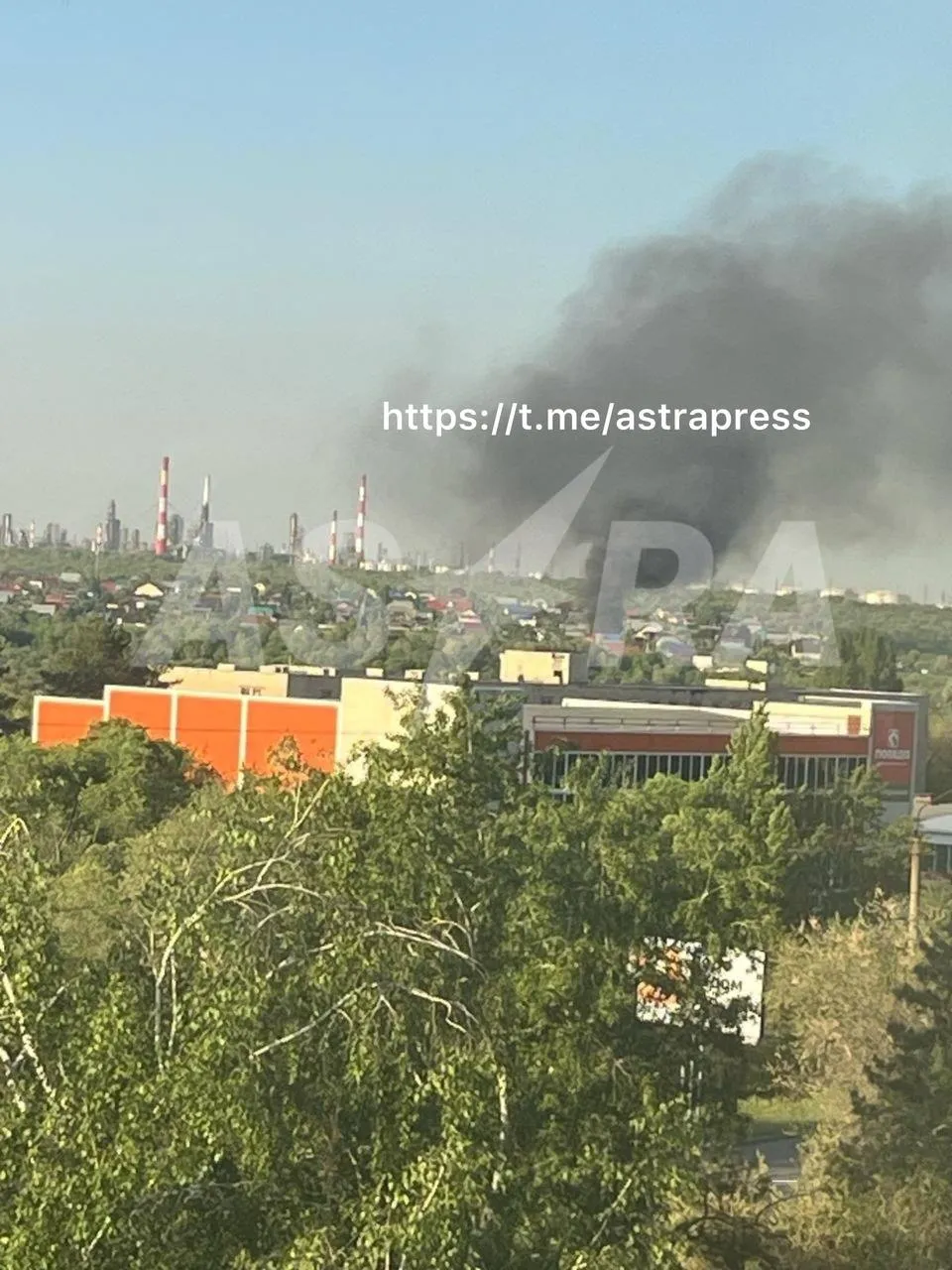
The Syzran Oil Refinery has previously been targeted by drone attacks. In particular, the facility sustained serious damage last spring and summer, and the previous strike on the plant was recorded about a month ago.
It was previously reported that following a drone attack on April 18, the plant partially suspended oil refining due to equipment damage.
Following the previous strike, the plant shut down the AVT-6 primary oil refining unit in emergency mode.
Its capacity is 17,100 tons per day, accounting for 71% of the plant’s total capacity.
Systematic attacks on Russian oil refineries complicate fuel supplies to the Russian military, create a fuel shortage in Russia’s domestic market, force the Kremlin to spend significant resources on infrastructure repairs, and weaken the aggressor country’s logistics and military economy.
The Syzran Oil Refinery is a critical component of the Russian army’s fuel supply and military logistics, so strikes on such facilities have not only economic but also strategic military implications for Russia.
Unmanned aerial vehicle (UAV) forces, in coordination with other units of the Defense Forces and the Security Service of Ukraine (SBU), carried out a successful strike on a Russian facility where UAV crews were being trained, munitions were being produced, and equipment was being repaired.
In Russia, following the drone attack, fires broke out at the Lukoil-Nizhegorodnefteorgsintez oil refinery in the city of Kstovo, Nizhny Novgorod Oblast, and on the grounds of the Azot chemical plant in Nevinnomyssk, Stavropol Krai.
On the night of May 20, a series of explosions rocked the Stavropol Krai in Russia, followed by reports of damage to the Nevinnomyssk Azot plant. The plant is one of the largest producers of ammonia and ammonium nitrate in the Russian Federation. Information regarding the extent of the damage and the consequences of the attack is being clarified.


