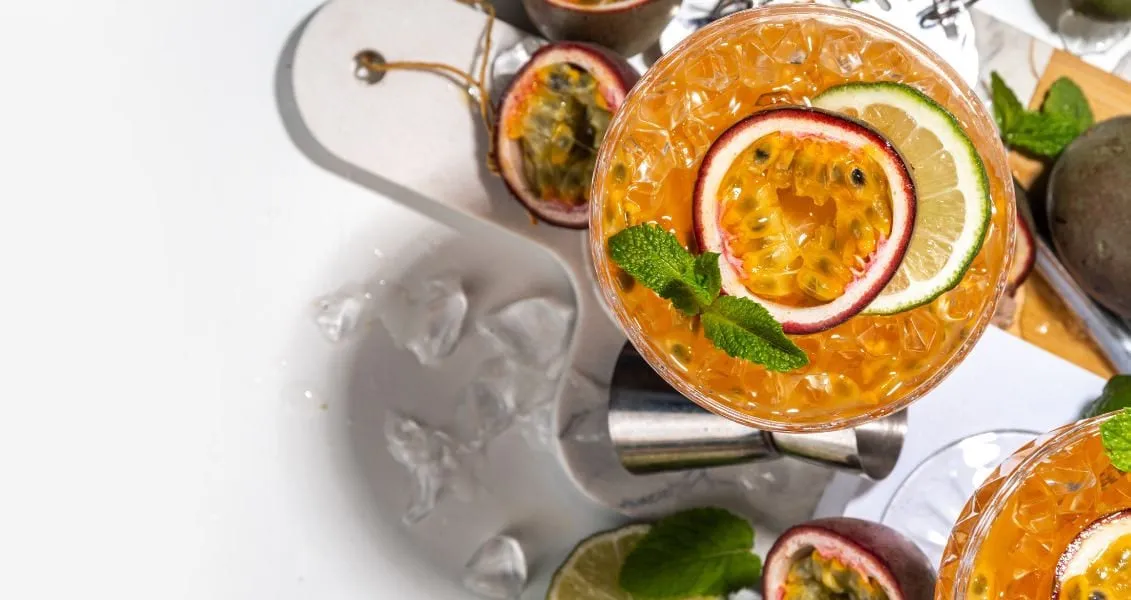
Every year on May 28, the world celebrates World Passion Fruit Martini Day—an informal culinary holiday dedicated to one of the most vibrant flavors in modern mixology. This day has become an opportunity to promote fruit-based mixes in bar culture and a symbol of a creative approach to mixology.
The History of the Passion Fruit Martini
The passion fruit martini originated as a variation of classic tropical cocktails that emerged in Brazil as early as the 1940s. At that time, cachaça—a local sugarcane spirit—became the base for many drinks, actively used in simple yet vibrant mixes with lime and sugar.
Over time, bartenders began experimenting with new fruit flavors, and it was passion fruit that gave the drinks their characteristic tropical sweet-and-sour note. This made the cocktail more aromatic and distinctive, and also contributed to its popularity among fans of exotic combinations.
In the 2000s, these fruit martinis began to spread rapidly in the UK, particularly in London, where they became part of modern cocktail culture. Thanks to their vibrant flavor and striking presentation, the drinks quickly gained international recognition.
How World Passion Fruit Martini Day Came to Be
This themed holiday was officially established in 2021 by Funkin Cocktails. Its goal is to draw attention to modern cocktail culture, the development of the art of bartending, and a creative approach to creating new flavor combinations.
Today, this day is celebrated in bars and restaurants around the world, as well as on social media, where people share themed photos, non-alcoholic alternatives, and creative drink presentations.
Current popularity and trends
The passion fruit martini has become part of a global trend toward fruity, light, and aromatic mixes. Its popularity can be attributed to several factors:
its vibrant tropical flavor
visually appealing appearance
versatility in presentation
the ability to create non-alcoholic versions
Recently, non-alcoholic cocktail interpretations have been gaining increasing popularity, allowing people to enjoy the taste of passion fruit without alcohol. This makes the drink accessible to a wider audience and aligns with modern healthy lifestyle trends.
Why this holiday has become popular
World Passion Fruit Martini Day is not just about the drink, but also about the atmosphere. It brings people together around the idea of relaxation, experimenting with flavors, and the aesthetics of modern bar culture. Social media has played a significant role in popularizing this day, turning it into a small but notable culinary celebration.
Conclusion
World Passion Fruit Martini Day on May 28 is an example of how modern gastronomic culture creates new traditions. It combines the history of tropical drinks, the evolution of the art of bartending, and global trends toward bright, fruity flavors. And although the holiday is not official, it has already become part of global cocktail culture.
British doctors have issued recommendations on how to consume alcohol.
Russia has bannedalcohol from three Armenian producers.
In Ukraine, a scheme to import alcohol under the guise of diplomatic cargo was uncovered.