
For the first time since the Vietnam War, the U.S. Army has adopted a new grenade
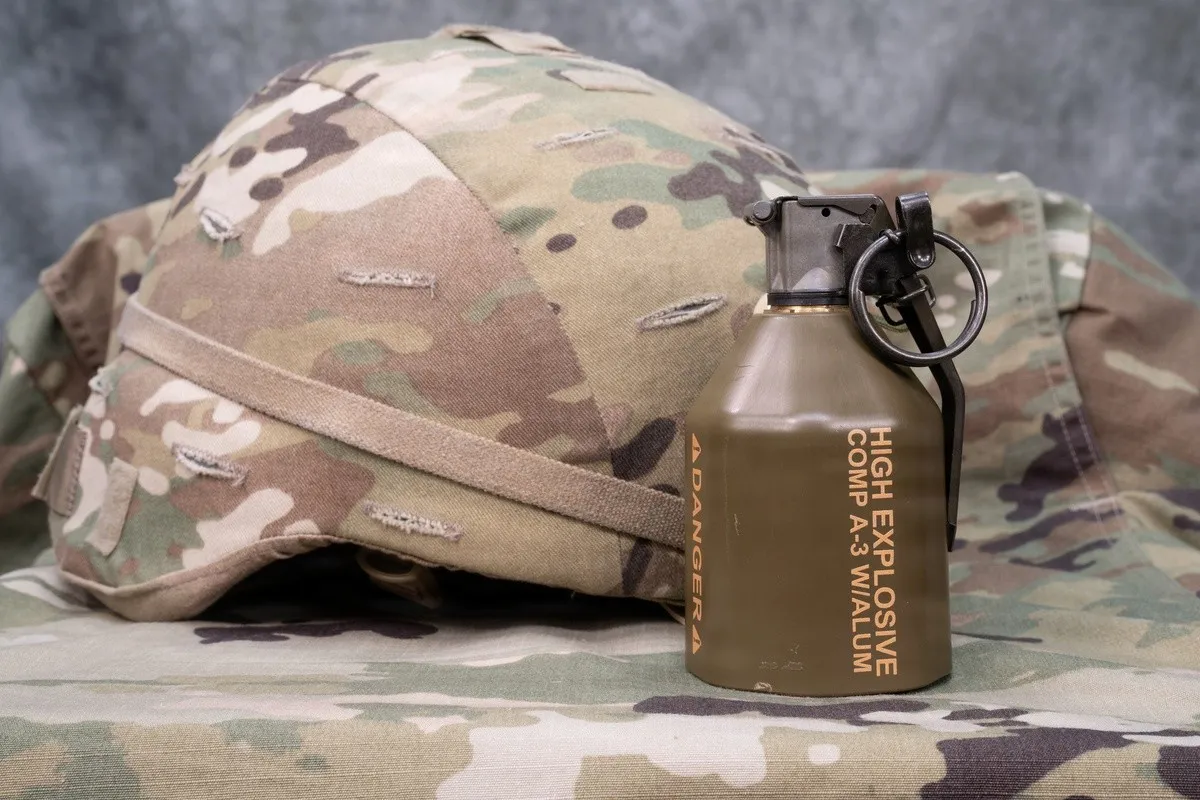
The U.S. Armed Forces are introducing the M111, the first new model of hand grenade in 58 years. This weapon was designed specifically for urban combat and clearing buildings, where the use of traditional fragmentation grenades poses a high risk to friendly forces.
CNN reports on this.
The main feature of the M111 is the use of a shock wave and overpressure to neutralize the enemy instead of scattering steel fragments. The grenade’s plastic casing completely vaporizes during the explosion, minimizing collateral damage to infrastructure.
Unlike the standard American M67 grenade, which strikes targets with shrapnel within the blast radius, the M111’s effect is based on the compression and stretching of body tissues under high pressure. The shock wave can penetrate obstacles, furniture, and interior walls, from which shrapnel may ricochet or become lodged. Military officials note that internal organs, the respiratory system, and the ears sustain the most damage. The use of this technology allows soldiers to operate more safely in confined “door-to-door” environments.
The M111 became the first high-explosive grenade in the U.S. arsenal since the Vietnam War, replacing the MK3A2 model phased out in the 1970s, which was dangerous due to its asbestos content. The new design uses the proven explosive hexagen and is based on combat experience from conflicts in the Middle East. Meanwhile, the M67 fragmentation grenade will remain in service for use in open terrain. At the same time, the U.S. Marine Corps has begun procuring Norwegian M21 grenades, which operate on the thermobaric principle.
In the U.S., successful tests were conducted on the new Rusty Dagger winged missile, developed by the American company Zone 5 Technologies as part of the ERAM program.
In the U.S., Hypersonix Launch Systems successfully tested the DART AE hypersonic aircraft, which is entirely made of high-temperature alloys using 3D printing.
