
Australia allocates nearly $27 billion for first three Hunter frigates
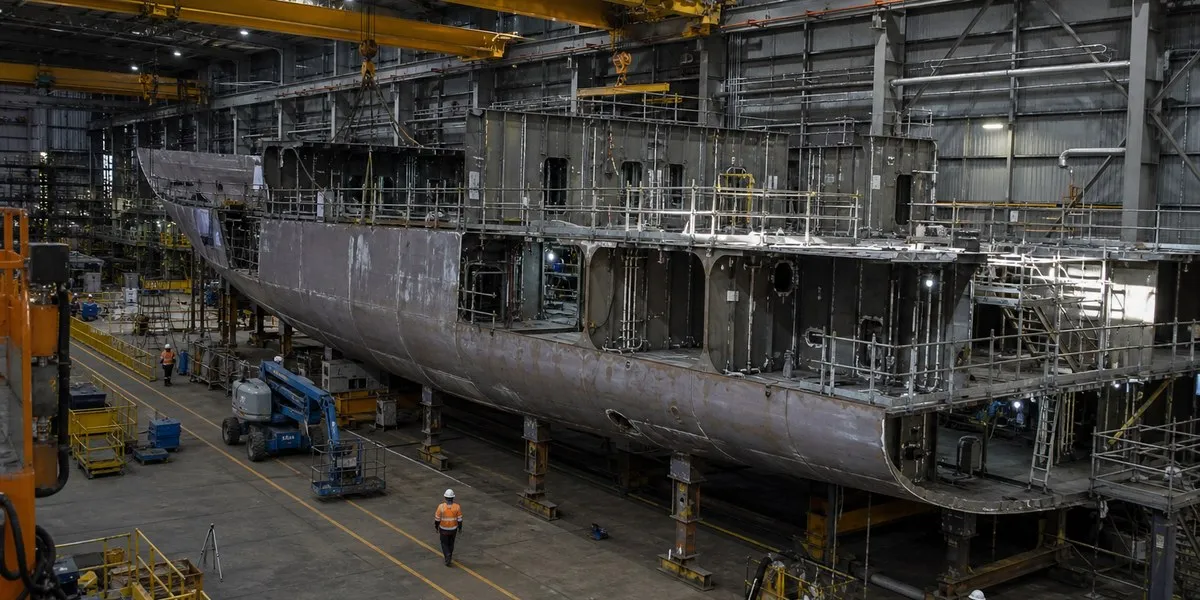
Australia has allocated nearly $27 billion for the construction of the first three Hunter-class frigates. The first of six ships at the Osborne shipyard in Adelaide recently passed an important construction milestone: two separate hull blocks were joined there. The frigate is scheduled to be handed over to the navy in 2032, ABC News Australia reports.
The stated amount covers both the construction of the ships and the development of shipbuilding infrastructure at Osborne in South Australia. Additional billions of dollars will also be required for the next three frigates, but according to the source, that amount will be significantly lower than the cost of the first batch.
Program reduction
In 2018, Malcolm Turnbull's government announced plans to build nine ships based on BAE Systems' Type 26 Global Combat Ship design. At the time, the program was estimated to cost $35 billion, with the first frigate expected to enter service in the late 2020s. In the 2020 Defence Force Structure Plan, the estimate for nine ships rose to $45 billion.
Following a review of the surface fleet structure, the number of Hunter frigates was reduced from nine to six. BAE Systems already has contracts to build the first three ships, which are due to join the fleet in the 2030s. A separate contract will be required for the second batch of three frigates.
Minister for Defence Industry Pat Conroy said the previous government had presented the program as the acquisition of an off-the-shelf platform, although the project in fact required substantial adaptation of the British Type 26 to Australian requirements. According to him, this created risks of delays and cost increases.
More current news is available on the UA.News Telegram channel Telegram.
Equipment and shipyard development
It was decided to add an Australian CEA phased-array radar and the US Aegis combat system to the base Type 26 design. These decisions increased the complexity and cost of the work. Conroy said Hunter would be the world's most advanced anti-submarine warfare ship and would have significant air-defense capabilities.
Marcus Hellyer, head of research at Strategic Analysis Australia, criticized the frigate concept. He noted that the ship attempts to combine the functions of an anti-submarine frigate and an air-defense destroyer. Hellyer also pointed out that Hunter will have 32 vertical missile launch cells, while many US Navy destroyers are equipped with 96 such cells.
One of the program's objectives was to restore continuous naval shipbuilding in Adelaide. After construction of three Hobart-class destroyers was wound down in 2016, workers at the Osborne shipyard had to seek employment in other industries or states. Steel cutting for the first Hunter began only in 2024, although ship construction in Adelaide had previously been planned to start in 2020.
Andy Coxall of BAE Systems Australia, who is responsible for coordinating frigate construction, said rebuilding industrial capabilities is part of the contract alongside the construction of the ships. In the future, the shipyards are expected to be able to produce one Hunter frigate every 18–24 months. Facilities for the future construction of at least five AUKUS-class nuclear-powered submarines are being built next to the Hunter shipyards at Osborne.


