
An ERR News columnist criticized the priority given to car traffic in Tallinn
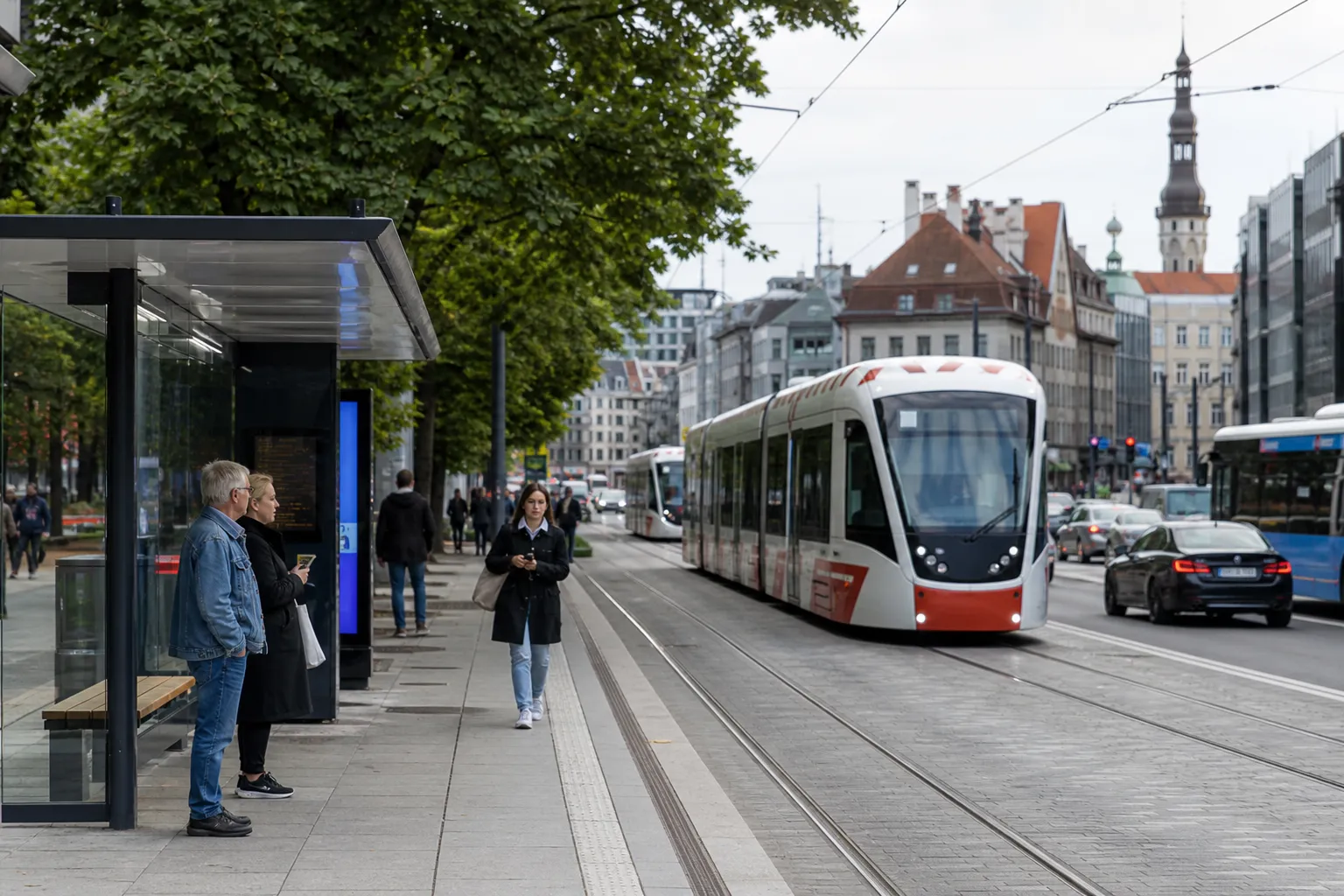
Indrek Ibrus, a columnist for ERR News, believes that the debate over the reconstruction of Pärnu Road in Tallinn is not just about the number of lanes or the location of tram stops. In his view, the issue is whether a city street should be a space for people or a transit corridor for cars.
In early August, Tallinn’s deputy mayors and representatives of the Union of Architects discussed the Pärnu Road reconstruction project but remained at odds. One point of contention was the distance between tram stops: the city wants to increase it to over 600 meters in certain sections to speed up tram traffic. Aet Ader, president of the Union of Architects, stated that in European city centers, stops are typically spaced 200–400 meters apart, as longer distances make it more difficult for the elderly, children, and people with limited mobility to use public transportation.
The architects also asked whether the option of having fewer traffic lanes had been considered. In their view, this could free up space for short-term stops by couriers, taxis, and delivery vehicles, as well as for benches and trees along the street. According to Ibrus, the city responded that traffic must be able to bypass even minor obstacles.
Read more breaking news on the UA.News Telegram channel.
The author linked this discussion to the coalition agreement signed in December 2025. The agreement calls for an increase in road construction, the preservation of green waves at traffic lights, the avoidance of congestion charges and climate-neutral zones, as well as efforts to abolish the state tax on cars. The document also mentions bridges, overpasses, and the reconstruction of Liivalaja Street to ensure traffic flow and capacity.
Ibrus also drew attention to Ader’s remarks that mobility experts are working on the project, but the architects were unable to identify any spatial experts, particularly a landscape architect. In the author’s opinion, the design of Pärnu Highway should take into account the needs of pedestrians, public transportation passengers, local businesses, and the urban environment—not just the continuity of vehicular traffic.


