
Columnist points to inequality in funding for clean streets in Nelson Mandela Bay — Daily Maverick
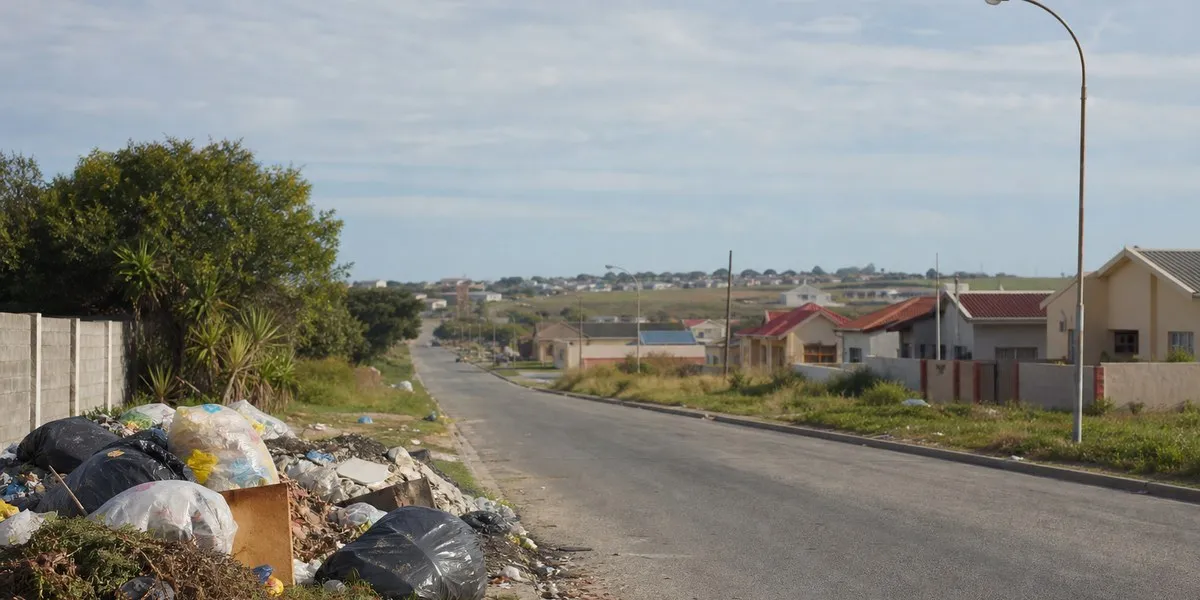
In Nelson Mandela Bay, South Africa, illegal dumping has become one of the most visible problems of local governance, especially in the Northern Areas. In a column for Daily Maverick, health economist and policy analyst Claire Botha writes about communities’ unequal capacity to fund street cleaning and maintenance.
According to her, a municipal representative acknowledged that the authorities cannot deal with illegal dumping on their own and need residents’ cooperation. Botha believes that this position simultaneously shifts part of the discussion about local government capacity onto residents’ willingness to act independently.
Special rating areas
One of the mechanisms in Nelson Mandela Bay is special rating areas, or SRAs. Property owners within a designated area agree to pay an additional levy on top of regular local charges in order to fund cleaning, security and environmental measures in their area.
Such an area has already been established in Richmond Hill, with a focus on restoring the area. In Central, this mechanism is intended to respond to the decline of the urban environment, while in Kini Bay it is more focused on environmental management. Summerstrand and Newton Park are still considering introducing this model.
More current news is available on the UA.News Telegram channel Telegram.
Unequal financial capacity
Botha notes that SRA revenue directly depends on property values and the level of levy payments. In her view, wealthier areas can fund cleaners’ work and regular maintenance, while lower-income areas, despite having no less need, will raise significantly less money.
The author points out that for households living on social grants, informal trade or unstable incomes, even a small additional levy may be unaffordable. In her assessment, the situation is also complicated by inherited housing, informal ownership arrangements and cases in which several families share one title deed.
Botha proposes that communities report recurring illegal dumping sites, document neglected areas and organise targeted clean-ups. At the same time, she stresses, responsibility for service provision must remain with the municipality rather than being shifted onto residents. The author calls for combining municipal investment and targeted infrastructure funding with community action for which a financial contribution is not a condition of participation.




