
Why does Saudi Arabia import sand when it has an entire desert?
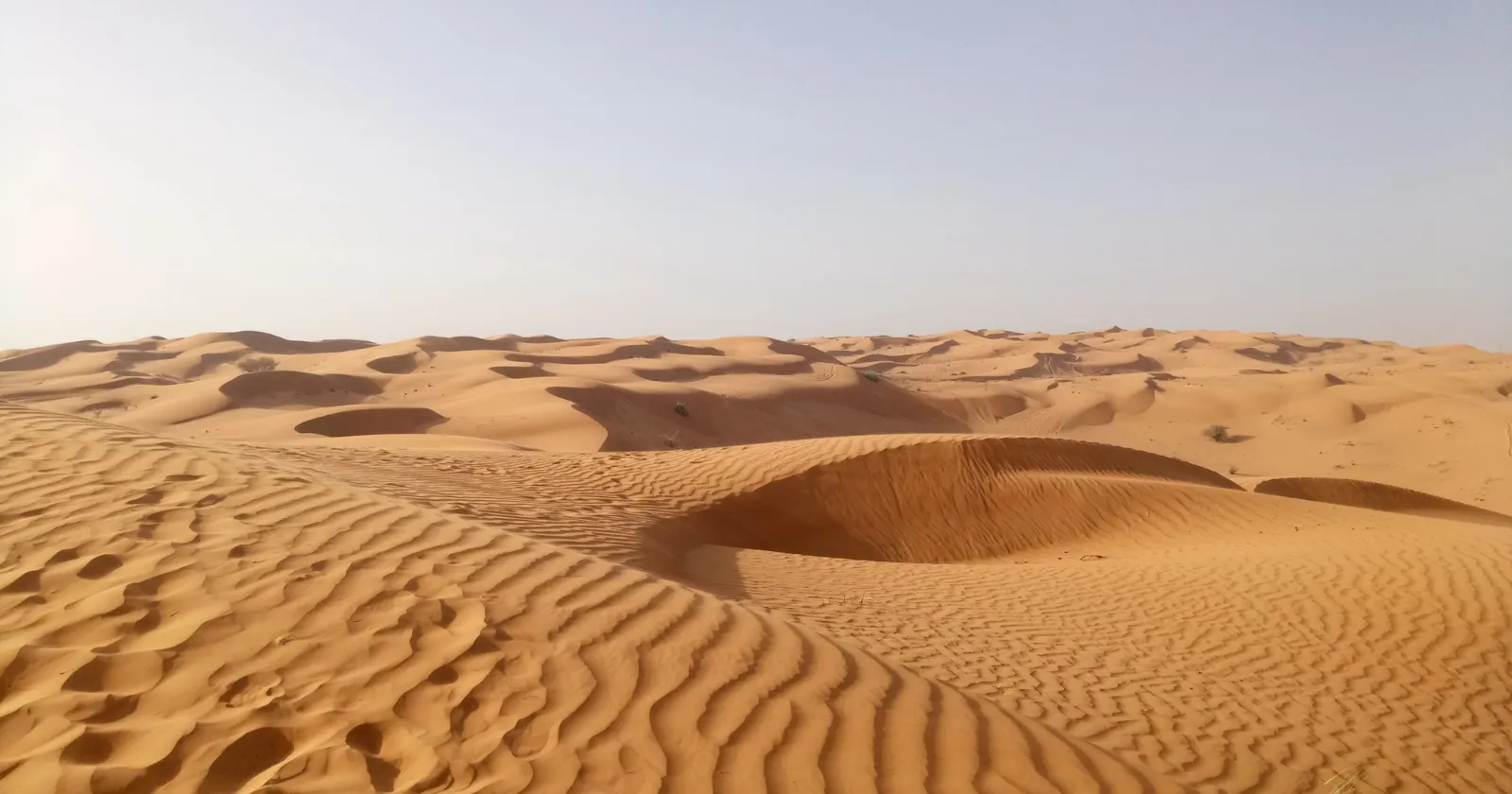
Saudi Arabia spends significant amounts of money each year on importing construction sand, even though the country is almost entirely covered by a vast sandy desert. This fact may seem surprising, but it stems from a strict technological necessity dictated by the fundamental laws of materials science.
The main reason lies not in the quantity of sand, but in its unique physical properties. Over thousands of years, under the constant influence of the wind, grains of desert sand have undergone intense friction, causing them to become excessively fine, smooth, and rounded. Under a microscope, they have a beautiful, regular shape, but they are completely unsuitable for major construction projects. In a concrete mix, such sand behaves like ball bearings—the particles simply slide over one another without forming strong structural bonds with the cement. The use of desert sand leads to the formation of dangerous micro-voids, which critically reduces the strength of building structures.
For the construction of skyscrapers, the creation of artificial islands, and other large-scale infrastructure projects, a completely different type of sand is needed—from rivers, lakes, the seabed, or special quarries. Particles formed in an aquatic environment or during the mechanical crushing of rock have an uneven, “sharp” shape and a rough surface. This ensures ideal adhesion in the mortar, allowing the concrete to achieve maximum strength and withstand enormous loads. This is precisely why Middle Eastern countries, including Saudi Arabia, are forced to remain among the world’s leading importers of this construction material.
Spacedaily reports on this.
Saudi Arabia has succeeded in transforming treated wastewater from Riyadh into a full-flowing river with lush banks, stretching across the Arabian Desert into the Wadi Hanifa valley.


