
Why Venus Is Hotter Than Mercury Despite Being Farther From the Sun
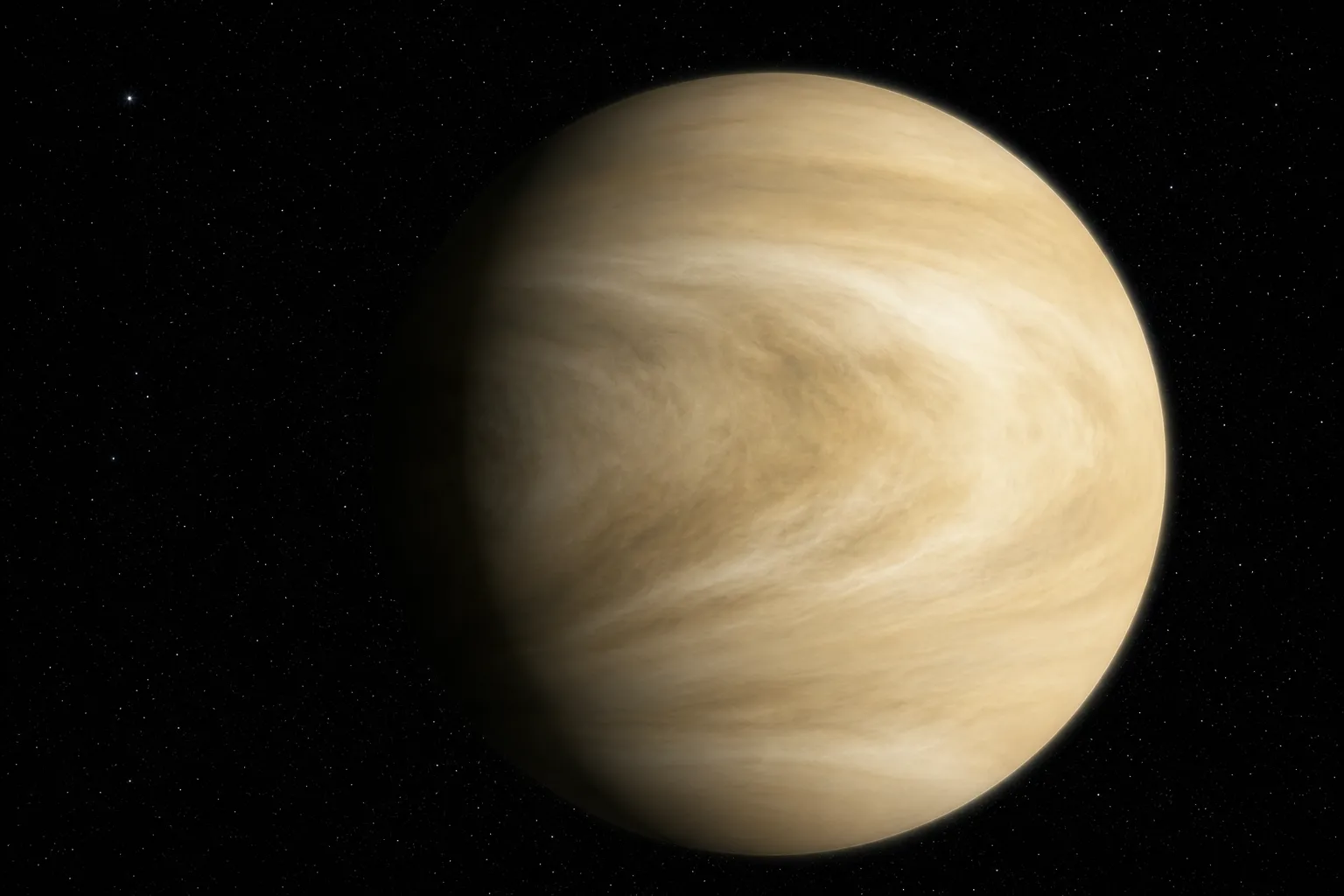
Venus, the second planet from the Sun, has the highest surface temperature in the Solar System, although its orbit lies about 50 million kilometers farther from the star than Mercury’s orbit. The maximum temperature on Venus reaches about 480°C, compared with about 430°C on Mercury, Live Science reports.
The role of the atmosphere
Distance from a star determines the amount of sunlight reaching a planet, but it does not explain how much energy the planet reflects, absorbs and radiates into space. According to Stephen Kane, an astrophysicist at the University of California, Riverside, these properties can be no less important for temperature than distance from the Sun.
Mercury has virtually no atmosphere. Sunlight directly heats its rocky surface during the day, but after sunset, heat is quickly radiated into space. As a result, temperatures on the nighttime side can fall from about 430°C during the day to minus 180°C at night.
More current news is available on the UA.News Telegram channel Telegram.
Venus’s greenhouse effect
Venus’s atmosphere is about 90 times denser than Earth’s and consists almost entirely of carbon dioxide. The surface and lower layers of the atmosphere absorb solar energy and emit it as infrared radiation. Carbon dioxide absorbs this radiation and re-emits it repeatedly, including toward the surface, maintaining an extremely high temperature.
Thick clouds of sulfuric acid reflect about three-quarters of the sunlight reaching Venus back into space. Kane estimates that only about 3% of this light reaches the surface. If Venus had no atmosphere and cloud layer, its rocky surface would be cooler than Mercury’s, because the planet would receive only about 29% of the sunlight that reaches Mercury.
Planetary scientist Paul Byrne of Washington University in St. Louis said that Venus has compelling evidence of past and present volcanic and tectonic activity linked to the accumulation of greenhouse gases. He described modern Venus as a planet in a post-runaway greenhouse state: its heat does not come from its interior but is the result of an already formed atmosphere that retains infrared energy.




