
By 2030, AI could consume as much water as 1.3 billion people
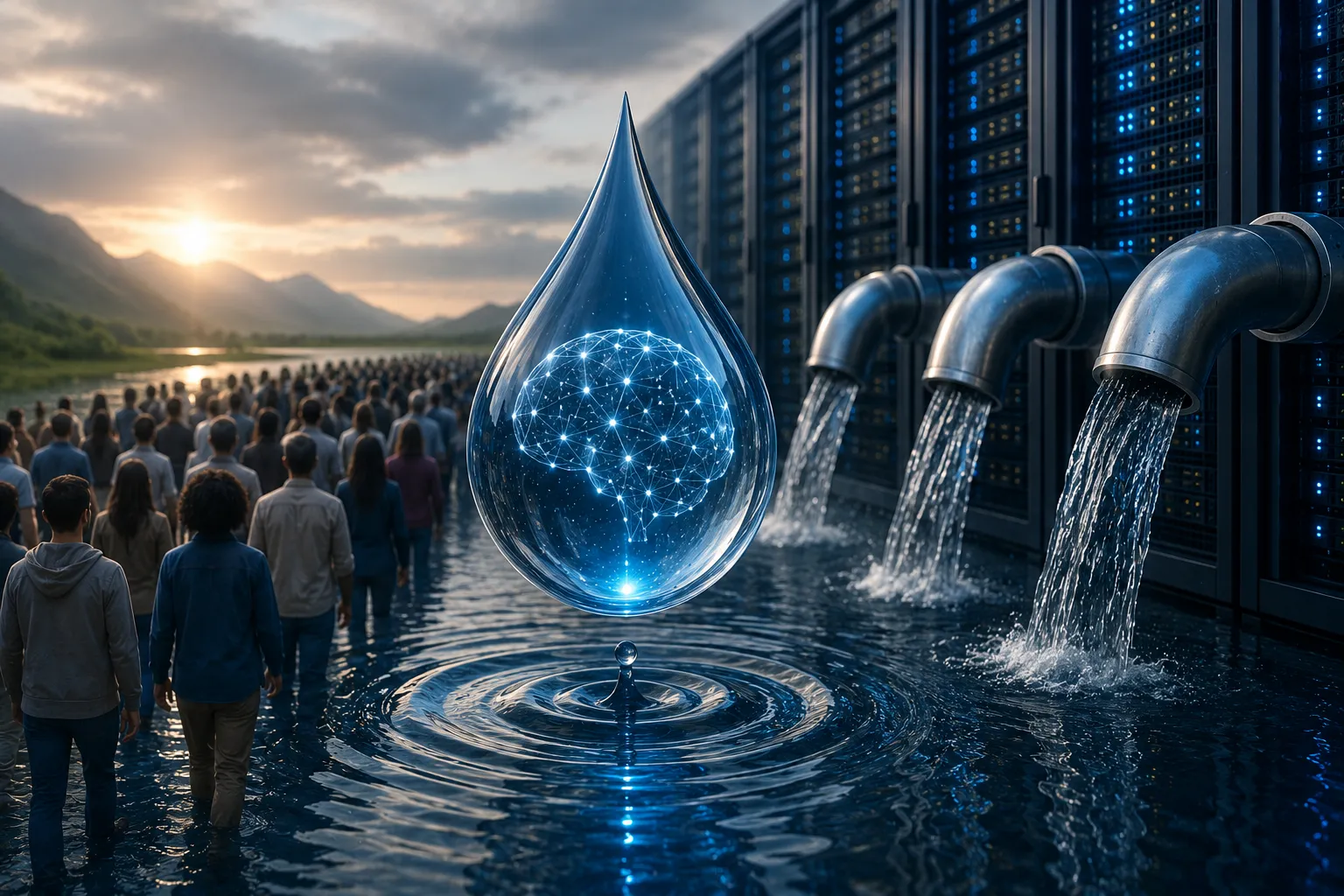
The United Nations has analyzed the environmental impact of data centers that power artificial intelligence systems and presented projections for their future development. According to estimates, in 2025, data centers worldwide consumed 448 terawatt-hours of electricity. If they were a separate country, they would rank 11th in the world in terms of electricity consumption—between France and Saudi Arabia.
By 2030, this figure is expected to double. AI will require 945 TWh—nearly 3% of projected global electricity consumption.
Water usage is expected to reach 9.3 trillion liters—equivalent to the basic annual water needs for domestic use of 1.3 billion people in sub-Saharan Africa.
As for land, the UN estimates that data centers will occupy 14,500 km², which is roughly twice the area of the Jakarta metropolitan area, home to over 32 million people.
The report notes that the energy required by AI to generate a typical image is enough to power a 10-watt LED light bulb for 17 minutes. Meanwhile, the energy required for a highly complex video is enough to power that same bulb for 42 hours.
If we convert the “cost per query” into water, it amounts to about two tablespoons (29 ml) for a single image, but for a complex video, the figure rises to 4.1 liters—which is nearly a two-day supply of drinking water for one person.
Another factor is the equipment’s lifecycle. By 2030, artificial intelligence infrastructure could generate up to 2.5 million tons of electronic waste annually. This is equivalent to recycling nearly 250 Eiffel Towers every year.
In the UK, Google’s AI Overviews service has been restricted.
A million for a phone vulnerability: Google will pay up to $1.5 million for Android vulnerabilities
Google is introducing new AI features in Gmail


