
Scientists have studied the brain of an ancient snake for the first time
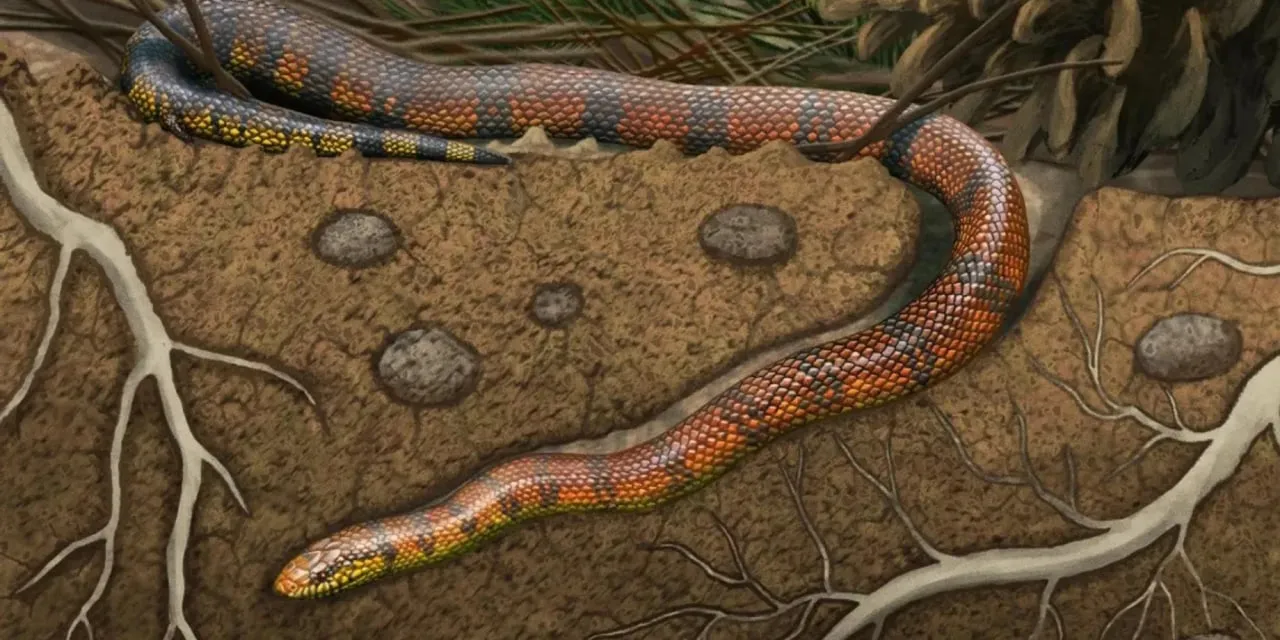
For the first time in history, scientists have been able to study the brain of an ancient snake that lived during the Cretaceous period. To do so, they examined an exceptionally well-preserved fossil of the ancient reptile.
The study provided scientists with new insights into the brain structure of early snakes and allowed them to trace the characteristics of their development. As a result, researchers were able to better understand how snakes evolved and what changes helped these animals take on the form we are familiar with today.
According to the scientists, understanding snake evolution remains a challenging task due to the scarcity of paleontological data, as well as the profound anatomical changes that accompanied their ecological diversification. However, scientists now appear to have finally solved this long-standing mystery—thanks to a fossil of an ancient snake from Brazil.
The fossil has been named Tametara mirim and dates back approximately 85 million years, to the time of the dinosaurs. Scientists believe it is one of the oldest known fossilized snakes. Even more significant is that the ancient snake has been preserved in stunning three-dimensional form—it is the first known fossilized snake with preserved body parts found in Brazil. This allowed the team to reconstruct Tametara mirim with incredible detail, including a fully three-dimensional image of its brain.
The team then examined this brain cast, as well as the reconstructed cranial nerves and inner ear. The scientists were also able to compare the fossil with other previously known snake fossils, as well as with modern relatives. They observed an incredible diversity.
According to the study’s lead author, Dr. Tiago Simões of Princeton University, all evidence suggests that snakes had achieved a surprisingly wide range of ecological and neuroanatomical diversity by the late Cretaceous period, about 80 million years ago.
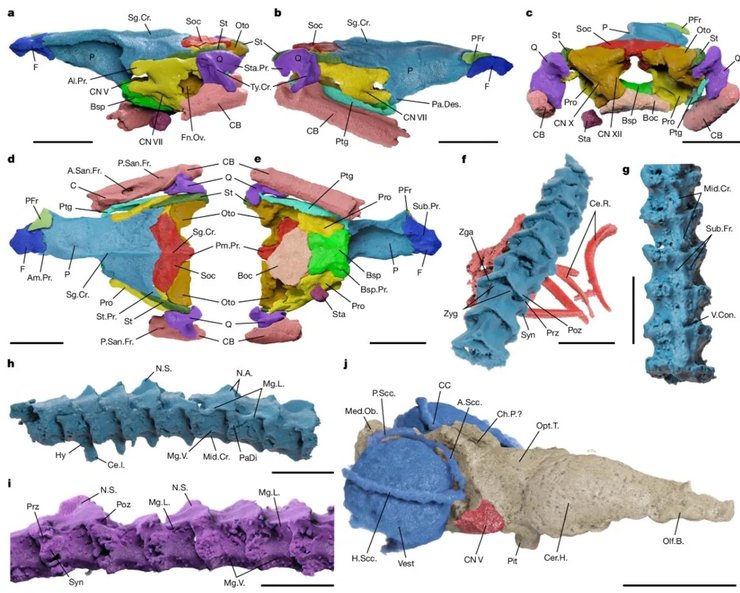
The authors also found that the shape of the brain and its microstructure can be used to determine the lifestyle of ancient snakes. Based on this, the team was able to determine that Tametara mirim was likely a burrowing snake. Meanwhile, a previously described fossil snake from Argentina, named Dinilisia, was better adapted to crawling on the surface.
The new data, combined with previous discoveries, suggest that early in their evolution, snakes took advantage of different types of habitats. Simply put, snakes were not perfectly adapted to any one specific habitat.
IFLScience reports
on this.
Scientists have warned of a dangerous drop in oxygen levels in Earth’s water bodies.
Astronomers have discovered the faintest exoplanet
Astronomers have confirmed for the first time the presence of an atmosphere on a rocky exoplanet located in its star’s so-called habitable zone. This discovery marks an important step in the search for worlds where conditions for life could potentially exist.




