
Study: China Could Meet About 60% of Military Demand for Drones
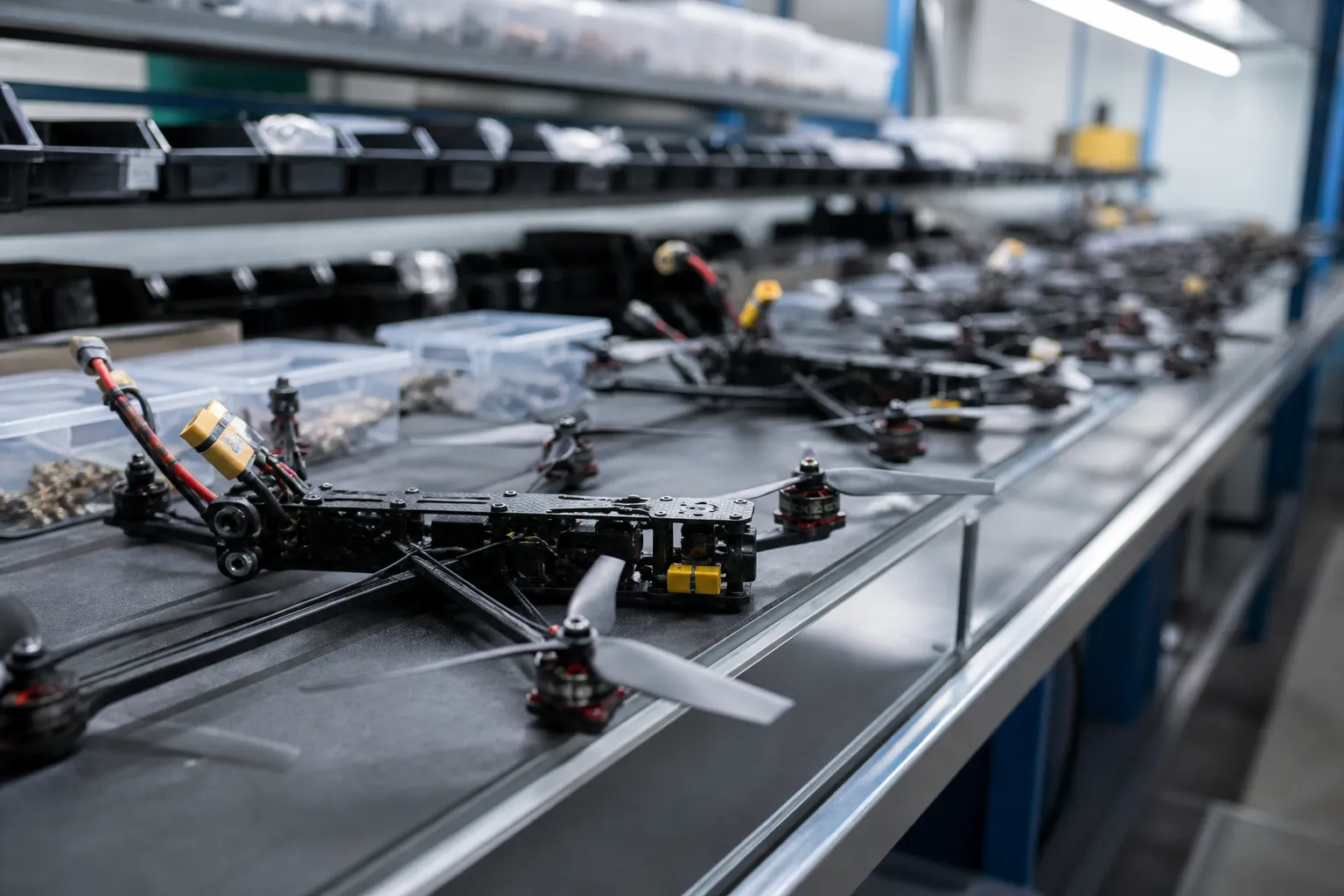
Even under full mobilization, China’s industrial system could meet about 60% of military demand for drones in the event of a sudden war. This assessment comes from a study by a team at the Beijing Institute of Technology, as reported by the South China Morning Post.
The study was published on July 24 in the Journal of System Simulation. It was led by Professor Zhang Jihai, director of the Center for National Defense Mobilization Research. The authors applied an artificial intelligence-based model that covered a multi-level supply chain—from component and subsystem manufacturers to the final drone assembly plant.
The simulation also took into account inventories, production capacity, backlogs, budgets, production safety, and the ability to convert civilian facilities for military production. The researchers noted that expanding production capacity cannot quickly eliminate the shortage, as setting up new production lines takes time.
For more breaking news, follow the UA.News Telegram channel.
In one scenario, demand for drones tripled after the war began. The system responded by drawing on stockpiles, implementing overtime work, building new production lines, and converting civilian facilities. However, the overall fulfillment rate for military orders in this scenario reached only 63.4%.
Zhang’s team compared 30 simulations: one without mobilization, one with mobilization following established rules, and one using an AI-based strategy. The median order fulfillment rates were approximately 34%, 51%, and 58%, respectively. According to the authors’ calculations, the AI strategy yielded an average result 8.4% higher than the rule-based approach.
Increasing the available funding for mobilization from 60% to 140% of the baseline level raised order fulfillment from 54.9% to 62.3%. Further increases in spending had a smaller effect due to plant construction timelines, conversion capabilities, and other physical constraints. An unnamed Chinese arms expert cautioned that the results should be viewed primarily as a research scenario rather than a forecast of an actual war.




