
Experts call Tallinn and Tartu car-oriented — ERR News
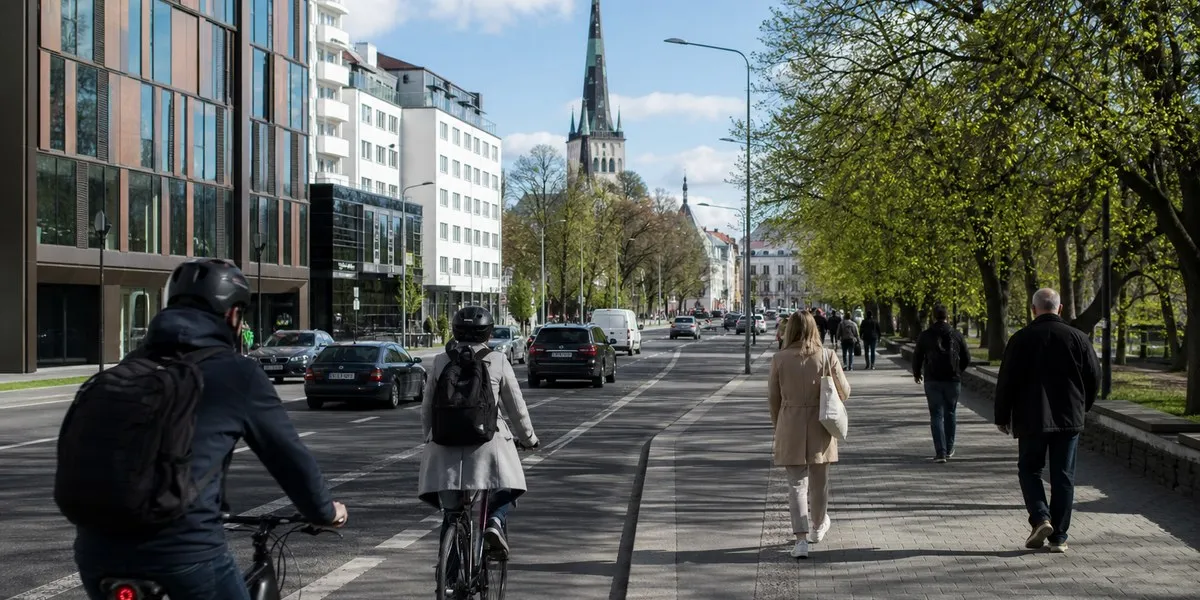
Canadian sustainable mobility experts Melissa and Chris Bruntlett said after a trip to Tallinn and Tartu in Estonia that cars still have priority in both of the country’s largest cities, despite the development of cycling and pedestrian infrastructure. This was reported by ERR News.
The couple, who are originally from Canada and have been living in Delft, the Netherlands, for the past seven years, travelled around Tallinn and Tartu by bicycle. According to Chris Bruntlett, the development of different modes of transport in the cities is uneven, and cycling and pedestrian infrastructure may seem inconsistent to users.
Tartu’s bicycle streets
The experts positively assessed Tartu’s two official bicycle streets, Tähtvere and Õnne. Chris Bruntlett noted that greenery, flowers and trees make these spaces more attractive and comfortable for residents.
More current news is available on the UA.News Telegram channel Telegram.
Melissa Bruntlett also noted that more children, adults and elderly people travel by active modes of transport in Tartu than in the capital. At the same time, she felt uncomfortable more often while cycling in Tallinn. In the Bruntletts’ view, Tartu has made greater progress in developing different mobility options, but the city should maintain this pace.
Infrastructure standards
The Bruntletts stressed that they are not calling on everyone to give up cars, as travelling by car may be necessary for people who live far from the city centre. At the same time, in their view, cities should not be planned solely with drivers’ needs in mind.
They believe that attractive alternatives to cars could reduce traffic congestion and improve access to services for people who cannot drive because of age, health conditions or financial circumstances. Chris Bruntlett said the situation could be improved by nationwide infrastructure design standards, including requirements for the width of pavements, cycle paths and materials used to build them. According to him, fragmented construction without an integrated network does not make cycling a full-fledged mode of transport, and it took the Netherlands 50 years to reach its current level of infrastructure development.


