
Experts in Japan explain how to raise multilingual children
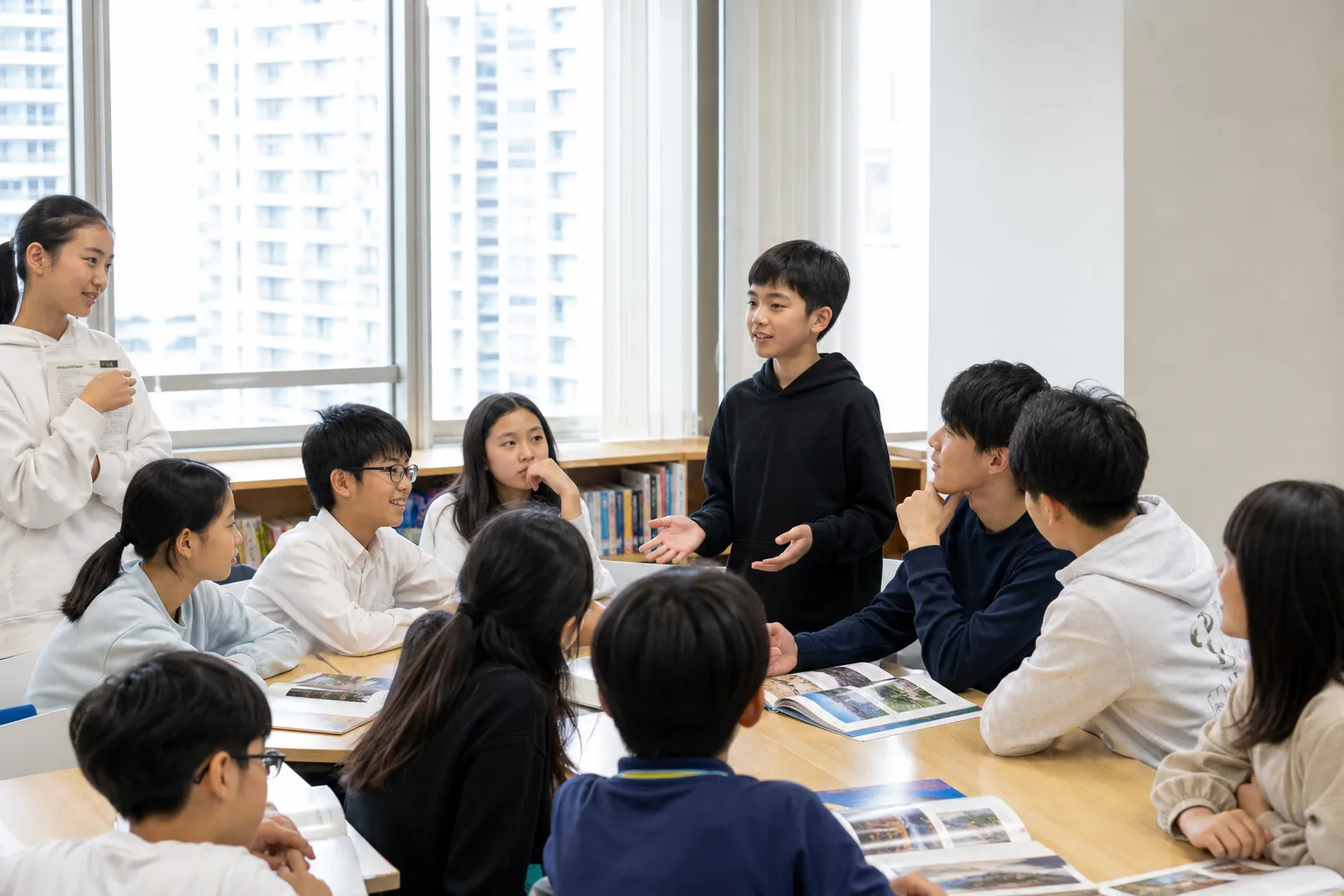
Experts and parents in Japan advise starting language practice at an early age, reading extensively, seeking opportunities to communicate in another language, and making learning engaging. This was reported by The Japan Times.
The number of foreign residents in Japan exceeded 4 million last year, so more and more families want their children to speak not only Japanese but also their parents’ languages. Janice Nakamura, a linguistics lecturer at Kanagawa University, notes that temporary difficulties in mastering one or several languages do not necessarily indicate a delay: children may catch up over time.
Reading from an early age
In a study by Nakamura and her co-author Susan Kwei, students aged 9 to 15 who grew up in Japan in bilingual families demonstrated English writing skills comparable to those of American schoolchildren. All participants attended English-language classes on weekends, and their families encouraged learning English at home. The best results were shown by children whose parents paid particular attention to reading from an early age.
Todor Panev, who is raising three sons in a Japanese-Macedonian-English-speaking environment, brought about 100 Macedonian children’s books to Japan. According to him, the family read from 10 to 20 books a day, and his eldest son, Niko, could already distinguish at the age of two which language he should speak with each parent.
More current news is available on the UA.News Telegram channel Telegram.
Communication outside the home
Nakamura recommends joining parent groups where children can use English or another language that is less common in Japan outside the home. If it is difficult to find such a community, calls with relatives and friends in another country, as well as trips to one’s home country when possible, can be useful.
Panev said that his son attended a Macedonian club at Takanawa Junior and Senior High School in Tokyo’s Minato district. According to him, participation in the club and the family’s annual trips to North Macedonia helped the children practice Macedonian.
Midori Inagaki, an associate professor at Juntendo University, warns parents against putting excessive pressure on children. Instead of forcing them, she believes it is important to create opportunities for natural use of the language. Nakamura also advises being flexible about language rules at home and speaking with children in the language that feels most natural for parents. If a child answers in Japanese to a question asked in another language, she suggests asking them to repeat the answer or asking how the other parent would say it.


